'Financially solid': Hamas revenues set to withstand war with Israel / Photo: GIL COHEN-MAGEN - AFP

 FIFA chief Infantino hit by Norwegian double complaint

 Exiled Catalan separatist leader Puigdemont cleared to return to Spain
 Stock markets climb as oil prices retreat

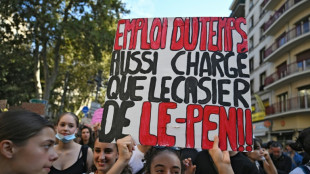 'No future': Thousands mass in France for high school protests
 Nobel physics prize honours work on 'ghostly messengers' from outer space

 Bulgaria searches for missing crew after drones hit two more ships in Black Sea
 Le Pen vows drastic cost savings to prevent French 'default'

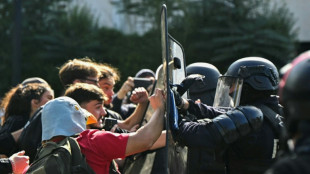 'Eats through a straw': French teens wounded in high school protests
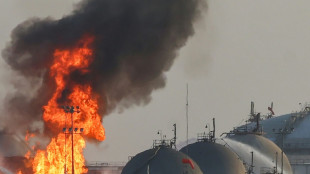
 Thousands mass in France for high school protests

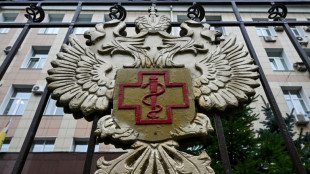 Moscow denies sanitary measures over plague reports
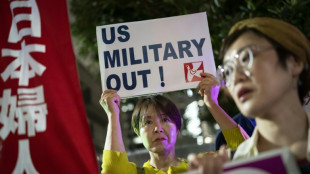
 Samoa look to recreate 2022 final run at Rugby League World Cup

 Asian stocks mostly up after tech-led Wall St record

 German factory orders plunge as recovery still fragile

 Coco Gauff calls out online racism following China open video review

 KVB Accelerates Middle East Footprint with Strategic MENA Regional Expansion
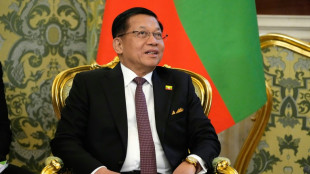
 Purple reign: Philippines seeks to keep grip on ube throne

 Seoul weighs steps to force North Korea landmine apology

 Yemen's Houthis say struck Riyadh airport, other Saudi sites

 Changer+ Launches Stablecoin-First Self-Custodial Wallet to Make Stablecoins Easier to Use

 White Sox down Guardians, Yankees on brink after Rays loss
 COP31 eyes modest steps as climate disasters multiply

 American Nobel laureate in medicine hopes to illuminate the brain
 Trump approves firing squad for convicted US military base shooter
 Grappling with 'homework scams,' US universities shun AI detectors
 Separatists win Quebec election in test for Canada PM

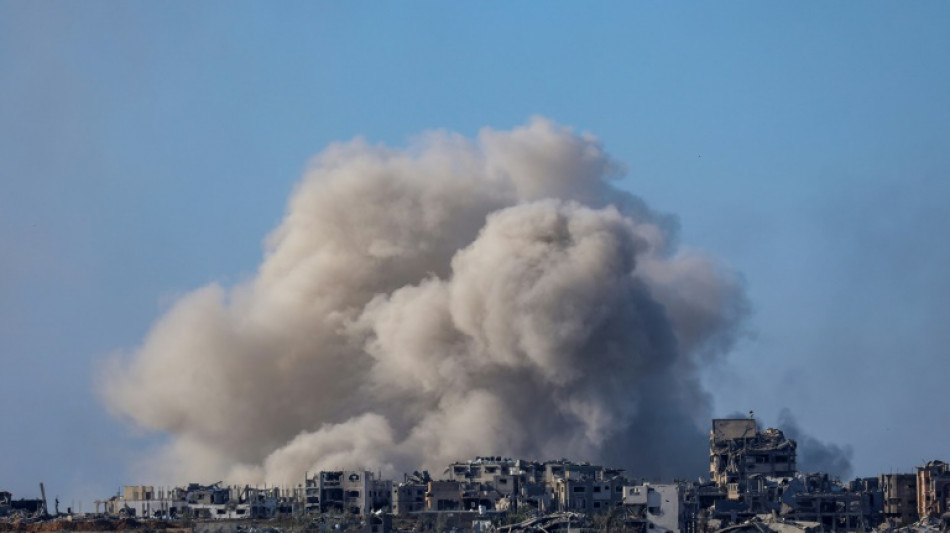
Hamas has been the focus of a relentless Israeli onslaught in Gaza but with resilient and diverse finances, it is expected to have a significant war chest at its disposal as the conflict drags on.
Israel's Prime Minister Benjamin Netanyahu has vowed to annihilate the Palestinian Islamist movement behind the October 7 attack -- the deadliest in the country's history.
The gunmen killed 1,139 people -- most of them civilians -- according to Israel, and took an estimated 250 hostages back to Gaza, where 129 are still believed to be held.
Over the past two months 18,800 people -- mostly women and children -- have been killed by Israeli bombardments in the Gaza Strip, according to authorities in the Hamas-ruled Palestinian territory.
But as Israel pursues its military objective, undermining Hamas's revenue streams will also prove a formidable task.
"Hamas is financially solid," Jessica Davis, president of the Canadian group Insight Threat Intelligence, told AFP.
"In the last decade, if not longer, they have been creating a resilient finance network," she said, explaining the group had set up investments and sources of income in many countries without being disrupted.
These sources include "small businesses and real estate" in countries such as Turkey, Sudan and Algeria, she added.
Hamas also relies on an informal network of donations.
It has become "very good at developing and operating a very complex system of money changers", said Yitzhak Gal, an Israeli expert on the Palestinian economy, explaining the exchanges run through Turkey, the UAE, Europe and the United States.
The number of donors has not necessarily decreased since October 7.
"Despite its atrocities, Hamas seems to have gained support amongst certain population segments internationally as a perceived resistance vanguard," Lucas Webber, co-founder of the specialist website Militant Wire, explained.
- 'Who will live and who will die' -
For years, the group's major backer has been Tehran.
Estimates put Iran's annual contribution at between $70 million and $100 million, through a diverse range of sources that includes payments in cryptocurrency, suitcases of cash and transfers via foreign banks and the informal "hawala" system.
According to Gal, Iranian aid in the form of military equipment was smuggled in years past from Egypt via tunnels dug between Gaza and the Sinai desert, which are now blocked.
Following Hamas' 2006 election victory, and its seizure of power the following year after clashes with rivals, the distinction between money intended for the territory's now 2.4 million inhabitants and the group's own finances has blurred.
"Anything coming in goes into Hamas and they decide who will live and who will die," Gal said.
Of the Gaza Strip's $2.5 billion budget, $1.1 billion comes from the Palestinian Authority, with Israel's agreement, said Gal, who is a specialist at the Mitvim think tank.
The international community funds UNRWA, the UN agency for Palestinian refugees.
Qatar pays the salaries of civil servants, such as doctors and teachers, and gives $100 per month to the territory's 100,000 poorest families -- totalling $1.49 billion in payments between 2012 and 2021, according to Doha.
- 'One big refugee camp' –
In 2021, the gas-rich emirate, which hosts the Hamas political bureau in its capital with the blessing of the United States, pledged $360 million in annual funding to the coastal Palestinian territory.
Doha has denied providing financial aid to Hamas.
"Without exception, all of Qatar's aid is fully coordinated with Israel, the US government and the United Nations," a Qatari official told AFP.
"All goods such as food, medicine and fuel pass directly through Israel before entering Gaza," they added.
Last week, Qatar's lead hostage negotiator and diplomat, Abdulaziz Al-Khulaifi, indicated that the Gulf emirate's funding for Gaza would continue.
In October, Washington imposed sanctions on 10 "key members of Hamas", and the West is considering coercive measures. But cutting off Hamas completely will likely be impossible.
"The prospect of a long term complete destruction of Hamas finances is not realistic," Davis said.
"You can disrupt it, you can take out key players, you can minimise sources of funds, but the network, the infrastructure will always be there and if the group still has supporters, they can be leverage to help them," she added.
Gal explained Hamas' future finances would be linked to how the future of Gaza, a tiny territory wedged between Egypt, Israel and the Mediterranean is resolved.
"When the war stops and normal life resumes, the question will be: will this whole financing system resume or change?" he said.
"Gaza is now one big refugee camp. Who will be in charge of providing food, water and shelters to these refugees, Hamas or another organisation, another mechanism?"
G.Machado--PC