
Between China and the US, trade takes a different route / Photo: CLAUDIO CRUZ - AFP

 Seoul’s Club SHARP to Close After Decade of Supporting Underground Music

 Alavita Founder Anne Harles Outlines Organic Expansion Strategy

 Florida woman charged after deputies report finding cocaine and sales ledger

 Heat end Knicks’ NBA Cup defence with 108-105 victory

 Black Friday laptop promotions cover Apple, Lenovo, HP and gaming models

 Black Friday fashion sales bring discounts of up to 80 percent

 Shark reduces prices on top-rated stick and robot vacuums

 Anthony Lee’s Journey from Fashion to Art Education at HoMA

 Black Friday discounts arrive on tested Yeti coolers and drinkware

 UK survey records sharp rise in young adults reporting no sexual experience

 Audi RS 3 long-term test leads debate over the ideal everyday performance car

 Ontario family seeks return of Chevrolet Bolt after charging cable shock

 Canada launches $6.5 billion strategy to transform forestry sector

 Calgary Catholic schools report strong results and growing classroom complexity

 Bombay HC Orders Bank of Baroda to Pay Rs 1.5 Crore to Octogenarian After Unilateral FD Deduction

 Danny Trejo Claims Legal Threats Prevented Him From Quitting Ben Shapiro ICE Film

 Workday weighs South African public-sector demand while keeping data in EU

 iOCO acquires procurement software specialist Intellection

 RunCzech Advent Running Challenge Offers Prague Half Marathon Entries

 EasyEquities says small group of client accounts targeted in attack

 Regulator examines E9Pay after hacking losses reach 2.5 billion won

 North Korea and Russia agree to expand joint economic projects

 Seoul monitors reports of possible Kim Jong-un visit to China

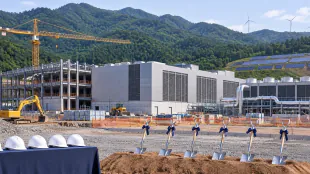 Lee joins launch of 2.4-gigawatt AI data centre project in Gangwon
Are the US and Chinese economies on the verge of decoupling? Trade data might suggest so, as the Asian giant, Washington's largest trading partner for a decade, has been supplanted by Mexico and is seeing its market share shrink.
"Decoupling" or "derisking" vis-à-vis China are themes repeated over and over by President Joe Biden's administration, but also by his Republican rivals, led by Donald Trump, in this general election year during which China is likely to be the main foreign policy topic.
But the reality is not necessarily so obvious, analysts say, pointing to the growing complexity of supply chains which make it more difficult to identify the trade flows between the world's two largest economies.
On the face of it, there can be no doubt the divergence of the US and Chinese economies is underway; in absolute terms, Chinese imports have not fallen particularly sharply, but regarding market share the decline is significant.
China's share of US imports fell from 22 percent in 2017 to 16 percent today, according to Caroline Freund, an economist specialising in international trade at the University of California.
"That's a really sharp decline in China's share of US imports," she told AFP. "It takes it back to the level China was in 2007, before the global financial crisis."
"Decoupling is definitely happening," she said, adding this isn't necessarily due to shrinking imports from China, but rather the result of a more rapid expansion of trade with other partners like Mexico.
Trade data published by the US Department of Commerce show a more marked increase in Mexican imports, benefiting in particular from the US-Mexico-Canada agreement, or USMCA.
But Mexico is far from alone.
Asian countries -- and Vietnam in particular -- are also benefiting greatly from the redefinition of trans-Pacific trade.
"Yes, Mexico has captured some of that, but the majority of the relocating of production away from China, is now occurring in Taiwan, South Korea, India, Vietnam," former Mexican ambassador to Washington, Arturo Sarukhan, told AFP.
The main reason for the shift, according to Dragoman Global analyst Henry Storey, is that these countries take advantage of their proximity to China, and are therefore able to attract Chinese investment.
- Investing to circumvent -
Vietnam in particular has seen its exports to the United States soar in recent years, rising from $21 billion in 2012 to $136 billion in 2022, to become one of its major trading partners, although the majority of operations there are actually final assembly.
US Treasury Secretary Janet Yellen visited the Southeast Asian nation last summer to stress the importance of Vietnam in US supply chains without China, underscoring the dramatic change in America's trading relationships.
While the symbol of this visit was a photo of Yellen on an electric scooter assembled in Vietnam, it later transpired that most its components had come from China, the US press discovered afterwards.
It is difficult to trace the origin of products entering the United States, even though assembly is most often the stage at which the famous "made in" label is applied.
And so Chinese companies can often get around trade restrictions.
"Although China is losing market share, I think overall its exports are still trending very strongly," said Storey from Dragoman Global.
"Since Trump's tariffs were imposed in 2018, the fastest growing area of exports is actually the central and western provinces of China," he added.
"The value added share of US imports from China has fallen less than the direct imports," said Freund from the University of California. "So we're getting indirect imports from China via places like Mexico and Vietnam."
This has had a knock-on effect: Chinese investment in Mexico, which until now has been very low, is now rising sharply, causing concern in Washington.
"Mexico is an outlier if you compare it to the rest of Latin America because the Chinese footprint in Mexico is nowhere close to what it is in South American countries that are commodity exporters," said Sarukhan, the former ambassador.
Although the country is not a commodity exporter, there has nevertheless been "an increase in Chinese investment in Mexico," he added.
Washington has been paying close attention to this growing relationship.
During a visit to Mexico City in early December, Janet Yellen agreed with Economy Minister Raquel Buenrostro Sanchez to set up a US-Mexican working group to evaluate Chinese investment in the country, particularly in sectors deemed key by the United States.
A.Magalhes--PC