As Shiite rivals jostle in Iraq, Sunni and Kurdish parties targeted

 Israel army admits firing on car in death of five-year-old Hind Rajab

 Honduras places 80% of country on El Nino drought alert

 Some of Meta's safety tools were 'designed to fail': witness
 PSG Ligue 1 opener moved over state of Parc des Princes pitch

 UK PM launches bid to help homeless, donating part of his wages
 Golden Shoe winner Kane hopes for Ballon d'Or after 'best season ever'

 Kyiv's ex-defence chief makes risky bet by venturing into electoral grounds

 Coventry have survival inspiration says Lampard

 Reijnders leaves Man City for Saudi's Al Qadsiah
 Trump says will meet North Korea's Kim later this year

 Stocks waver, dollar drops as US Treasury moves to lower bond yields

 France recalls rare disease drug Tavneos after deaths
 Arsenal agree to sign Villa defender Konsa: reports
 Evacuation orders lifted in Belgian wildfire zone
 UK media skewered for 'hounding' black academic
 More than 7,300 excess deaths in France's historically hot summer so far
 US socialists score shock Florida win as Trump picks stumble

 Iran warns Gulf countries against helping US after UAE cuts trade ties

 Senior FIFA official withdraws support from embattled Infantino
 Lawson replaces injured Hadjar for Red Bull at Dutch GP

 Robots sort packages and serve fast food at Beijing showcase

 Leeds sign Swiss defender Elvedi from Monchengladbach

 Robinson double rocks Pakistan in first Test before rain stops play

 Queen Camilla says was 'difficult' keeping King Charles' cancer private
 UK PM launches bid to get rough sleepers off streets by Christmas

As Iraq's Shiite leaders jostle to secure a majority in the newly-elected parliament, Sunni and Kurdish minorities have been caught up in a spate of warning grenade attacks, analysts say.
In recent days, unknown attackers have hurled grenades at Kurdish and Sunni targets including political party offices and a lawmaker's home -- groups that could help Shiite cleric Moqtada Sadr win the critical parliamentary majority needed to make his choice of prime minister.
"It is a way of punishing the forces that have allied with Moqtada Sadr to form a parliamentary majority," said political scientist Ihsan al-Shammari.
"Their message is political," he added, calling the attacks "part of the mode of political pressure" adopted by some groups.
In multi-confessional and multi-ethnic Iraq, the formation of governments has involved complex negotiations since the 2003 US-led invasion toppled dictator Saddam Hussein.
- Horse trading for power -
No single party holds an outright majority, so the next leader will be voted in by whichever coalition can negotiate allies to become the biggest bloc -- which then elects Iraq's president, who then appoints a prime minister.
In previous parliaments, parties from Iraq's Shiite majority have struck compromise deals to work together and form a government, with an unofficial system whereby the prime minister is Shiite, the president is a Kurd and the speaker of parliament is Sunni.
But Sadr, who once led an anti-US militia and who opposes all foreign interference, has repeatedly said the next prime minister will be chosen by his movement.
So rather than strike an alliance with the powerful Shiite Coordination Framework -- which includes the pro-Iran Fatah alliance, the political arm of the former paramilitary Hashed al-Shaabi -- Sadr has forged a new coalition.
That includes two Sunni parties, Taqadum and Azm, as well as the Kurdistan Democratic Party (KDP).
It has infuriated the Coordination Framework -- who insist their grouping is bigger.
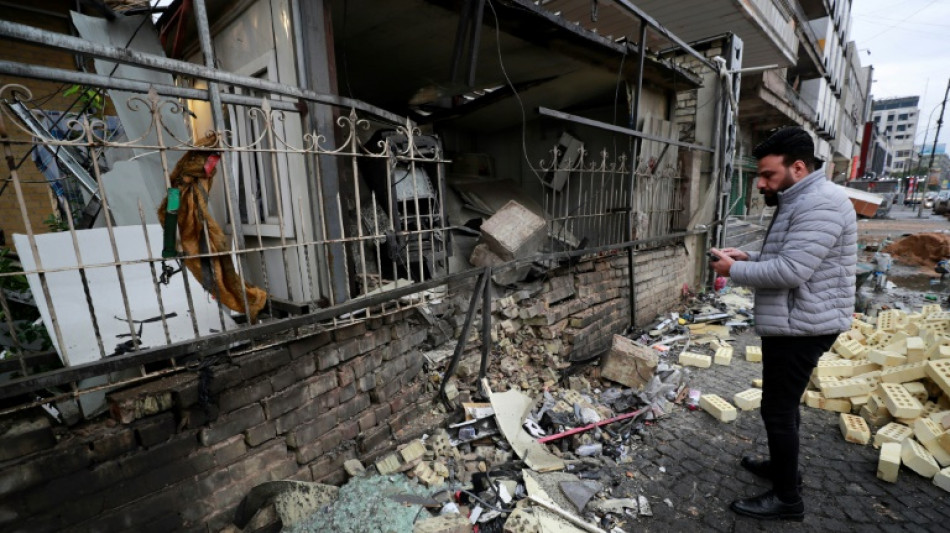
In recent days, grenades have been lobbed at the home of a Taqadum lawmaker, as well as at the party offices of Azm, Taqadum and the KDP in Baghdad.
On Sunday, flashbang stun grenades were hurled into the branches of two Kurdish banks in the capital Baghdad -- wounding two people.
The heads of both banks are said to be close to political leaders in Iraq's autonomous northern Kurdistan region.
There has already been unrest following the election, with Prime Minister Mustafa al-Kadhemi escaping unhurt when an explosive-packed drone hit his residence in November during what his office called an "assassination attempt."
No group has claimed the attack.
While the culprits of the recent grenade blasts have also not been identified, a security source charged that the attacks "convey the messages of the parties that lost in the elections".
The purpose, the security source claimed, is to "disrupt the formation of the government" --- implicitly pointing to the Coordination Framework, and in particular the Fatah alliance.
- 'They threaten violence' -
Fatah lost much of its political capital in the October 10 polls, having secured only 17 seats, compared to the 48 it had before.
It alleged the vote was rigged, but Iraq's top court rejected a complaint of electoral irregularities filed by Hashed.
Hashed, which maintains an arsenal of weapons, fighters and supporters, has sought a variety of ways to make itself heard outside parliament, including demonstrations and sit-ins.
"Rather than accepting defeat at the polls, they threaten violence," said Lahib Higel, of the International Crisis Group.
Sadr has considered striking deals with certain members of the Coordination Framework, such as Fatah chief Hadi al-Ameri, at the expense of other figures in the bloc, such as former prime minister Nuri al-Maliki, Higel said.
But such an arrangement "is not Iran's preference" Higel argued, adding that Tehran "would rather see a consensus that includes all Shiite parties".
However, she said Iran could settle for a deal where Shiite parties held sway.
"It is possible that they (Iran) would accept a scenario where not everyone is represented in the next government, as long as there is a sufficient amount of Shiite parties, including some Hashed factions," she said.
A.Magalhes--PC