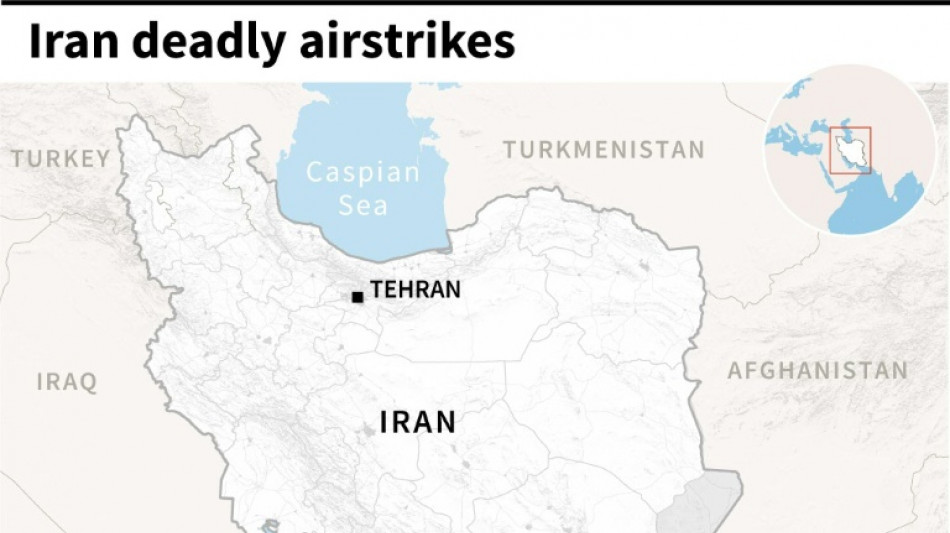
Baluchistan, explosive region on Iran-Pakistan borderland / Photo: Julia Han JANICKI - AFP

 Hotel Blacklist Launches New Accommodation Industry Risk Assessment Tool

 Bangladesh nuclear plant draws hope -- and worry
 US beat Canada 1-0 to wrap up four-win international break
 Turkey, Australia's joint COP31 leadership raises doubts

 For Turkish NGOs, COP31 offers rare space for action

 Sleep, appetite, gene-editing experts contend for Nobel chemistry prize
 Nobel Peace Prize haunted by the 'spectre' of Trump

 Africa launches own credit agency in bid for cheaper borrowing

 US, China, EU: three paths to regulating AI
 Australia's High Court rules against coal mine in landmark climate case
 Australia touts new funds for Pacific infrastructure at Fiji 'pre-COP'

 Eva Marie Saint, Oscar winner of Hollywood classics, dies at 102

 Australia probes app used in cheap smart glasses over privacy fears

 England needed to 'move on' from World Cup pain, says Tuchel

 O'Neill to stay at Celtic after period of "reflection"

 Kane marks 125th England cap with Wembley Nations League double
 Quebec's incoming separatist leader wants to block Crown from swearing-in

 Emmys gala will now stream its premier television awards

 Paramount completes Warner Bros takeover, creating Skydance
 Trump blames France unrest on Islam, migration
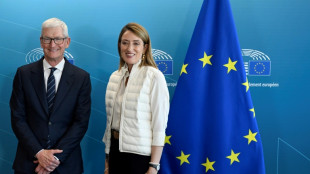 Apple's Cook praises EU over efforts to protect children online

 Nobel winner Halzen says years of October 'misery' finally over

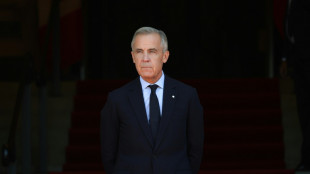 Quebec separatist win rattles Carney's unity push

 'Itching' for change: Shiffrin cuts back slaloms this season

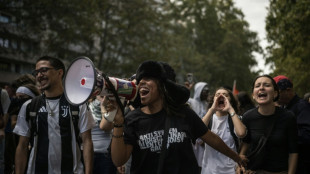 'Gen Z has risen up': Tens of thousands mass for tense France school protests
Baluchistan is a restive region shared by Iran and Pakistan where security forces on both sides of the border have for years battled militant groups but which now risks being the subject of escalating tensions between the neighbours.
Who are the Baluch?
Both Iran's southeastern province of Sistan-Baluchistan and Pakistan's western province of Balochistan are the most impoverished regions of their respective countries, vast and arid provinces constantly battling drought, with rampant unemployment.
They are home to the Baluch people, who number overall an estimated 10 million, the majority of whom live in Pakistan including also in the Sindh province, with several million in Iran and a much smaller minority in Afghanistan.
Iran and Pakistan share a border of nearly 1,000 kilometres (620 miles) along the provinces with smuggling activity, in particular of fuel, intense due to the porous nature of the frontier.
The Baluch are Sunni Muslims, which in Iran makes them a religious as well as an ethnic minority, with the dominant religion in the Islamic republic Shiite Islam.
What is the security threat in Iran?
Tensions have long simmered on both sides of the border but have rarely flared, as they have now, with both Iran and Pakistan striking what they call "terrorist" targets inside the respective provinces of the neighbouring country.
Nine people were killed in Pakistani air strikes on Thursday, Iranian state media said, two days after Iran carried out strikes against "terrorist" targets in Pakistan, which left at least two children dead.
There have been attacks inside Iran in recent months by the Sunni militant separatist group Jaish al-Adl (Army of Justice), which is blacklisted by Iran -- but also its arch foe the United States -- as a terrorist organisation.
Eleven police were killed in an attack claimed by the group in the town of Rask in December.
Jaish al-Adl was founded in the early years of the last decade after the disintegration of a similar group, Jundallah, which for years had carried out attacks against Iranian security forces but was weakened after the capture and subsequent execution of its leader Abdolmalek Rigi in 2010.
According to official Iranian media reports, he was arrested in extraordinary circumstances in February 2010 when Iranian fighter jets forced a passenger plane he was travelling on to Kyrgyzstan to land in Iran. He was hanged in June that year.
What is the situation in Pakistan?
On the other side of the border, Pakistani forces have for almost two decades also been fighting the latest iteration of an ethnic Baluch separatist insurgency, which has killed hundreds in attacks targeting security forces, government personnel and ethnically non-Baluch civilians.
Baluch separatists and rights groups say the military's crackdown on the insurgency has included widespread enforced disappearances and extrajudicial killings.
Since 2014, the separatists have also targeted projects associated with the China-Pakistan Economic Corridor (CPEC), a $58-billion project that is part of Beijing's Belt and Road Initiative (BRI) and large parts of which run through mineral-rich Balochistan.
Baluch separatists are far from the only group, however, to use the vast and largely ungoverned Pakistani region as a base.
Western governments have in the past accused Pakistan of allowing Taliban leaders to enjoy a safe haven there while there has also been activity of a branch allied to the Islamic State group.
What the are grievances of the Baluch?
Iran's Sistan-Baluchistan province faced new instability in 2022 when its residents joined in with nationwide protests that were erupting across Iran over the death of young woman Mahsa Amini in police custody.
While the protests had their own spark -- the alleged rape of a teenager by a police commander in custody in the province -- they reflected nationwide anger, and security forces cracked down on the demonstrations.
On September 30, 2022, over 80 people were killed, according to Amnesty, when security forces opened fire on a protest in Sistan-Baluchistan's main city of Zahedan in what became known as its "bloody Friday".
Activists have long complained the region has been the victim of economic and political discrimination by Iran's Shiite clerical leadership, with disproportionate numbers of Baluch hanged in executions, in particular on drugs charges.
Reflecting the economic impoverishment of the region, many Baluch work as fuel carriers -- known as sookhtbar in Persian. They smuggle fuel over the border to Pakistan where it can be sold at a higher price.
Dozens have been killed by Iranian security forces in recent years, according to activists.
Amnesty International said that in 2021 at least 19 percent of all executions in Iran were of members of the Baluch minority.
Baluch on the Pakistani side of the border also complain of being disenfranchised, and of income from the province's rich natural resources not being adequately spent on local governance and social needs.
Nogueira--PC