Democracy 'in the balance' as El Salvador's Bukele wipes floor with opposition / Photo: Handout - EL SALVADOR'S PRESIDENCY PRESS OFFICE/AFP

 Southampton boss Eckert given suspended ban over 'Spygate'
 Russia warns of 'false' information as second plague case reported
 IEA ready to release more oil reserves if necessary
 HSBC 'consults' over UK unit job cuts amid AI adoption
 UK court quashes five ex-traders' Libor rate rigging convictions
 XM Receives “Global Customer Experience Leader Award 2026” at the TrustFinance Performance Awards
 Stocks slide as oil climbs on Mideast flareup
 Heavy casualties in Ukraine after Russian strikes
 French wine harvest set to hit historic low
 Kyiv 'cannot agree' to EU membership limiting food exports: minister

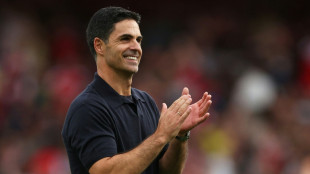 Arteta targets more Arsenal glory after signing new deal until 2030

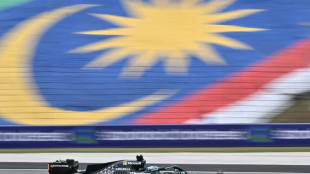 Russell hit with Singapore grid penalty for taking new power unit
 Spotify expands audiobooks to more than 180 markets

 French-Japanese duo wins chemistry Nobel for solving molecular 'mystery'
 England's Nations League surge helps heal World Cup wounds

 Mayor of opposition stronghold Izmir defects to Erdogan party
 Mertens beats Gauff to set up Swiatek clash at China Open
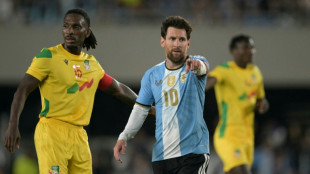 Benin full of pride at role in Messi's last dance

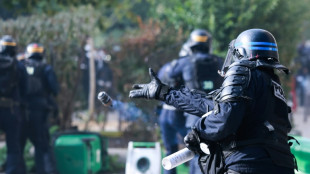 France suspends stun grenade use at student protests ahead of PM speech
 Indonesian court hears 'negligence' complaint against state over fires, haze

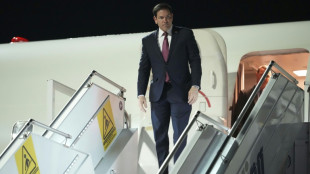 Rubio in Greece to urge against Western civilisation 'decline'
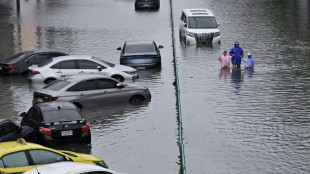
 Micron workers at Taiwan plant vote in favour of strike

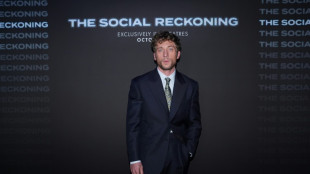 In 'The Social Reckoning,' Jeremy Allen White takes on Facebook's 'frightening' ambition
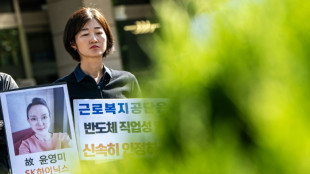 Chip industry activists call for South Korea to recognise cancer cases
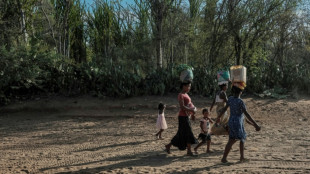 Famine-scarred southern Madagascar braces for El Nino
El Salvador's President Nayib Bukele has proclaimed his landslide reelection victory, attributed to a wildly popular crackdown on violent gangs, as an historic drubbing of the opposition in a democracy.
Observers and analysts now fear that democracy itself is at risk in El Salvador.
The 42-year-old leader, who has sarcastically embraced the monicker "dictator" which critics use to describe him, did not wait for official results to claim a sweeping electoral triumph just two hours after polls closed Sunday.
"According to our numbers we have won the presidential election with more than 85 percent of votes," Bukele said on X, adding that his party, Nuevas Ideas, had taken 58 seats in the 60-seat legislative assembly.
With such overwhelming numbers, Bukele "achieved an absolute concentration of power," said Tamara Taraciuk of the Inter-American Dialogue think tank's Rule of Law Program in Washington.
"Salvadoran democracy hangs in the balance," she told AFP.
Bukele had already used a somewhat smaller majority in the outgoing legislature to replace top judges and the attorney general, with whom he had clashed.
A new-look Supreme Court with Bukele-aligned judges subsequently allowed him to seek reelection despite a constitutional ban on successive terms.
On Sunday, Bukele demonstrated no qualms in crowing about utterly trouncing whatever political opposition was left in elections whose fairness have not been challenged.
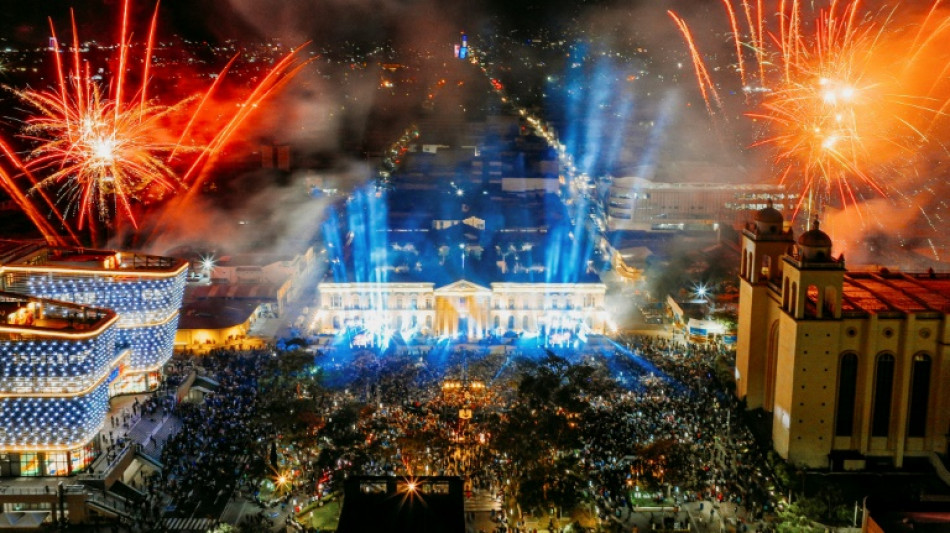
El Salvador, he smilingly told cheering crowds from a balcony of the National Palace, would be the first country with "a one-party system in a democracy."
- Blank check -
As of Monday afternoon, El Salvador's Supreme Electoral Tribunal (TSE) had not announced an official outcome.
But preliminary data on its website showed Bukele led the presidential race with 85 percent of 2.3 million votes counted -- the rest shared among five opposition candidates.
There were 6.2 million eligible voters at home and abroad.
The numbers mean "he will have a blank check to pursue his government agenda," said Gustavo Flores-Macias, an analyst at Cornell University in New York.
With an absolute majority in congress, he added, Bukele will be able to "normalize the drastic measures that have been adopted" under a state of emergency introduced almost two years ago -- a suspension of rights including the need for arrest warrants or individual trials.
"In the absence of institutional counterbalances, Bukele will have little incentive to adhere to the law when it does not favor him," said Flores-Macias.
"Once the counterweights are dismantled, it will be difficult to correct the course when Salvadorans decide" the president's powers must be curtailed, he added.
Former businessman and mayor Bukele swept to power in 2019 with 53 percent of the vote, upending an unpopular, corruption-riddled two-party system in power since El Salvador's civil war ended nearly three decades earlier.
Since then, he has presided over a war on gangs that has turned what was once one of the world's most violent countries into one where people say they finally feel safe.
Bukele's government has rounded up more than 75,000 presumed members of gangs blamed for the deaths of some 120,000 civilians in three decades.
The crackdown has come with accusations of arbitrary arrests, inhumane prison conditions, and even torture.
- 'It will be fine' -
Wearing his trademark baseball cap, Bukele on Sunday batted away rights concerns in a near hour-long press conference held while Salvadorans were still voting.
"We... changed the murder capital of the world, the world's most dangerous country, into the safest country in the Western Hemisphere," he insisted.
"The only way to do that is to arrest all the murderers."
Bukele has received congratulatory messages from China, Germany, Mexico and other Latin American nations, as well as the United States which underlined the importance of "good governance, inclusive economic prosperity, fair trial guarantees, and human rights."
Concerns about authoritarianism, public accountability and human rights do not seem to be uppermost on the minds of most Salvadorans, however.
Thousands celebrated Bukele's reelection with music and fireworks in a country where just two years ago they lived under a constant threat of violent death.
"It is very exciting for all Salvadorans to know that we have made history," cleaning woman Marta Rut, 36, told AFP in the capital.
"We are super happy. I hope there be more changes, to keep improving," she added -- a common theme among Salvadorans hoping Bukele will tackle the country's economic woes next.
"They say that he is a dictator. I don’t think it will go that far, as long as he listens to everyone it will be fine," added Alfredo Mezquita, 39, a telephone company worker.
B.Godinho--PC