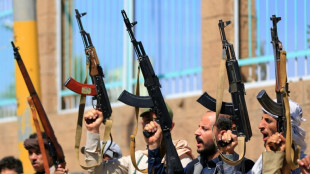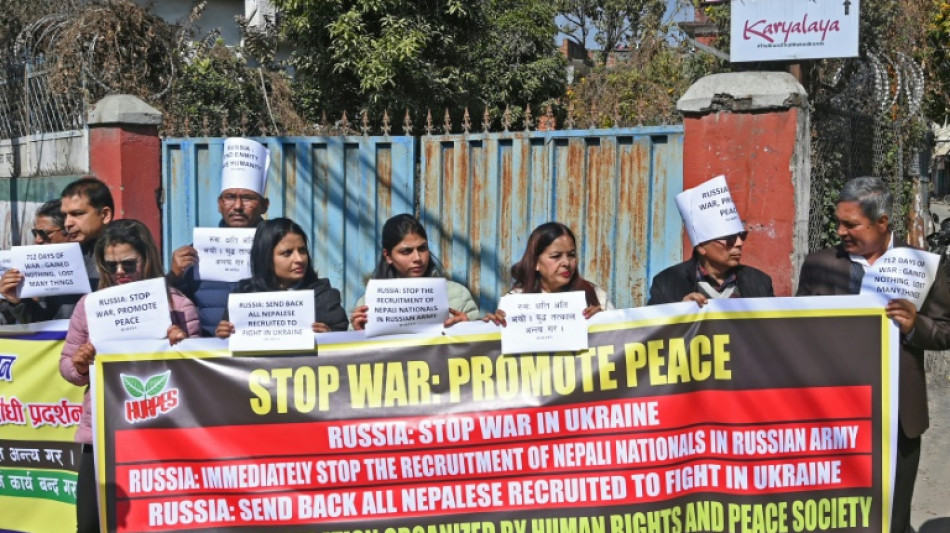
'There to die': Nepali mercenaries fight for Russia in Ukraine / Photo: Prakash MATHEMA - AFP

 Rubio touts US power, calls on Europe to emerge from 'slumber'

 Trump says 'we don't think' Russian plague is bio-weapon
 Five children among 26 killed in Ukraine after Russian strikes

 Man City should 'accept' punishment for rule breaches, says Lineker

 US woman who survived botched execution is awake and speaking
 From 1800s to modern pharma: a Nobel-winning chemistry quest

 Southampton boss Eckert given suspended ban over 'Spygate'

 Russia warns of 'false' information as second plague case reported
 IEA ready to release more oil reserves if necessary
 HSBC 'consults' over UK unit job cuts amid AI adoption
 UK court quashes five ex-traders' Libor rate rigging convictions
 XM Receives “Global Customer Experience Leader Award 2026” at the TrustFinance Performance Awards
 Stocks slide as oil climbs on Mideast flareup

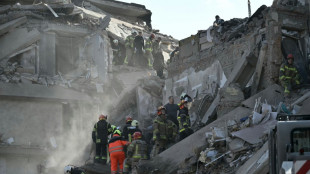 Heavy casualties in Ukraine after Russian strikes
 French wine harvest set to hit historic low

 Kyiv 'cannot agree' to EU membership limiting food exports: minister

 Arteta targets more Arsenal glory after signing new deal until 2030

 Russell hit with Singapore grid penalty for taking new power unit

 Spotify expands audiobooks to more than 180 markets

 French-Japanese duo wins chemistry Nobel for solving molecular 'mystery'

 England's Nations League surge helps heal World Cup wounds

 Mayor of opposition stronghold Izmir defects to Erdogan party
 Mertens beats Gauff to set up Swiatek clash at China Open
 Benin full of pride at role in Messi's last dance

 France suspends stun grenade use at student protests ahead of PM speech
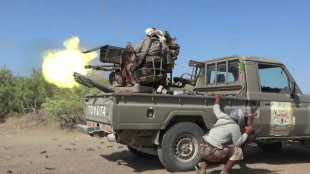
Nepali mercenaries are fighting for Russia in Ukraine, lured to kill far from their Himalayan homeland by promises of a passport and cash, but wounded returnees warn anyone tempted to join the war: "Do not come."
While Nepali soldiers-for-hire can bank in a month nearly double what they could earn in a year back home, conditions are brutal and many have been killed or wounded.
"I watched my friends die in front of me," said Surya Sharma, who asked to use a pseudonym for legal reasons.
"Nepalis going probably cannot even imagine how horrific the war is."
Shortly after the 24-year-old underwent basic training with Russian forces, his unit was attacked on their way to a frontline in eastern Ukraine.
"When the bombs and bullets were raining, I thought my life was ending, that that was it," he said. "I was there to die."
Combining tough Himalayan terrain with grinding poverty, Nepal has long been a source of ferocious soldiers to fight others' wars, with the British army's Gurkhas the best-known example.
But it is only legal for Nepalis to sign up for combat with a foreign military if there is a government agreement in place -- which only applies to Britain and India.
From early on in its war in Ukraine, Russia has used mercenaries, including the paramilitary group Wagner, before its aborted mutiny last June.
Neither Russia nor Ukraine will provide figures for how many foreign fighters are in their militaries, nor the number they are holding as prisoners of war.
But the Nepali government says more than 200 of the country's citizens have enlisted in the Russian army since it invaded Ukraine two years ago.
Sharma believes there could be 10 times as many, including students, ex-soldiers and even former Maoist combatants.
"We were among the early ones to join, but now there are many Nepalis, there must be 2,500 to 3,000," he said.
At least 12 Nepalis have been killed and another five are prisoners of war in Ukraine, the foreign ministry in Kathmandu said.
Returnees say the true number of dead is also much higher, and according to local media Nepalis have fought for Ukraine too.
To attract fighters, Russian President Vladimir Putin has offered Russian citizenship -- which allows recipients to work -- on top of monthly salaries as high as $2,200.
That tempts some in a country with a GDP per capita of little more than $1,300, according to the World Bank -- one of the lowest in Asia.
- 'Like a movie' -
Videos by Nepali recruits undergoing military training in Russia started to surface on TikTok last year, prompting one former veteran to enlist in July.
"It is a war, and we are taking a risk," the 39-year-old told AFP, asking not to be named because of the illegality of his actions.
The man, who had served for more than a decade in Nepal's army before working for the police in Dubai, accumulated about $15,000 in six months before being wounded and having to return to Nepal, and is using it to build a house.
"If there were good employment opportunities in Nepal, no one would go," he added.
Sharma, the 24-year-old, suffers searing pain every step he takes from the metal fragments buried in his legs.
He says he was duped by a Nepali agent.
Every year, hundreds of thousands of Nepalis seek employment abroad -- 400,000 officially, many others illicitly -- and many pay agents thousands of dollars to facilitate their journeys.
Sharma borrowed money to go to Russia on a student visa but discovered he was not allowed to work, and the only job he found was to fight.
"I had loans to pay at home and couldn't send money," he said in his rented room in Kathmandu.
Despite having no prior military experience, he "chose to join the army because I had heard that the money was good. It was not because I wanted to, but my situation forced me to."
He underwent a medical check-up before two months of basic training.
"I was employed with the government, but I've heard there are Nepalis fighting in private forces too," he said.
The recruits -- 15 of them Nepalis -- woke at six to start the drills.
"We learnt firing positions, how to make bunkers and how to target drones," he said.
But "the language is also a problem", he added. "We cannot understand the instructions they give, and in the battleground that can be dangerous."
Sent to the frontlines in Ukraine, Sharma's unit -- mostly Russian, with six Nepalis -- was ambushed even before they reached Kupiansk in the east.
Explosions killed several of Sharma's comrades and he was wounded in the legs and hand.
"Sometimes it felt like a movie."
He spent months in hospital before deserting as he neared recovery to seek help from Nepal's embassy in Moscow.
"I just couldn't return" to the front, he said. "So, I took a risk to return to Nepal, thinking I will either go to jail or home."
- 'Do not come' -
Nepal has banned its citizens from working in Russia or Ukraine in any capacity, to try to prevent their recruitment.
At least 12 people have been arrested in Nepal for sending people to fight for Russia.
The men are often taken via India or the United Arab Emirates and taught elaborate lies to dupe authorities, say police.
"Nepal is a country that believes in non-alignment and in peace," Nepal's Foreign Minister NP Saud told AFP.
"We do not have an agreement with Russia and have requested immediate return of those people."
The Russian embassy in Kathmandu did not respond to requests for comment.
Speaking to AFP by phone from his Russian hospital bed, one wounded Nepali warned his countrymen to resist the lure.
"No matter how much you prepare, it does not work when the bombs fall and the drones attack," said the 27-year-old.
"I request others -- do not come."
A.S.Diogo--PC