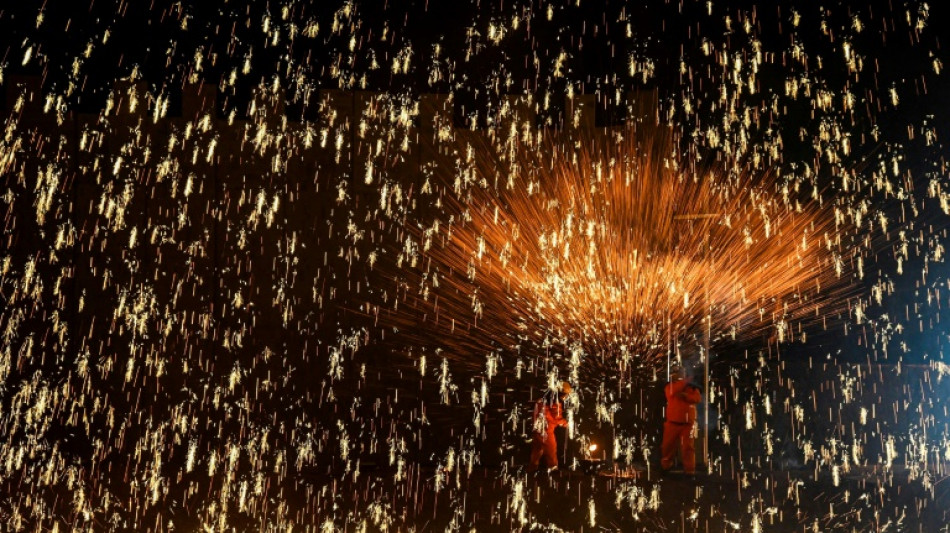
Debate smoulders over beloved Chinese New Year fireworks tradition / Photo: STR - AFP

 Rubio touts US power, calls on Europe to emerge from 'slumber'

 Trump says 'we don't think' Russian plague is bio-weapon
 Five children among 26 killed in Ukraine after Russian strikes

 Man City should 'accept' punishment for rule breaches, says Lineker
 US woman who survived botched execution is awake and speaking
 From 1800s to modern pharma: a Nobel-winning chemistry quest

 Southampton boss Eckert given suspended ban over 'Spygate'
 Russia warns of 'false' information as second plague case reported
 IEA ready to release more oil reserves if necessary
 HSBC 'consults' over UK unit job cuts amid AI adoption

 UK court quashes five ex-traders' Libor rate rigging convictions

 XM Receives “Global Customer Experience Leader Award 2026” at the TrustFinance Performance Awards
 Stocks slide as oil climbs on Mideast flareup
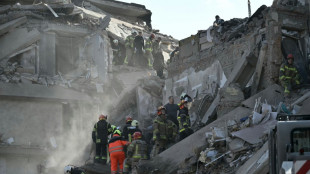 Heavy casualties in Ukraine after Russian strikes

 French wine harvest set to hit historic low
 Kyiv 'cannot agree' to EU membership limiting food exports: minister

 Arteta targets more Arsenal glory after signing new deal until 2030

 Russell hit with Singapore grid penalty for taking new power unit

 Spotify expands audiobooks to more than 180 markets

 French-Japanese duo wins chemistry Nobel for solving molecular 'mystery'
 England's Nations League surge helps heal World Cup wounds
 Mayor of opposition stronghold Izmir defects to Erdogan party

 Mertens beats Gauff to set up Swiatek clash at China Open
 Benin full of pride at role in Messi's last dance

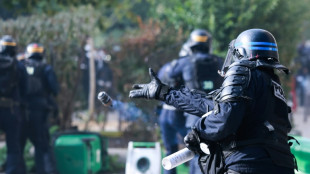 France suspends stun grenade use at student protests ahead of PM speech

Sparklers, rockets and spinning sunflowers with flammable petals -- the fireworks stores in China's Hangzhou are stuffed with treats for pyrotechnic-loving customers, who count themselves lucky to live somewhere they are allowed to set them off.
In the past, Chinese cities could sound like war zones in the weeks surrounding Lunar New Year, thanks to the centuries-old custom of lighting festive explosives to ward off evil spirits.
Nowadays those booms and bangs have disappeared from many towns over fire safety and air pollution concerns, sparking a debate over heritage and official overreach that has at times ignited into outright protest.
"Fireworks are a tradition passed down from generation to generation. Without fireworks, you feel there's a lack of Chinese New Year atmosphere and happiness," a Hangzhou store owner surnamed Ye told AFP.
This year, with the post-Covid economic recovery still somewhat of a damp squib, authorities keen to keep up morale and boost consumption have signalled a move towards slackening rules.
In December, lawmakers declared it was "illegal" for local governments to issue blanket bans on fireworks, after a number of smaller cities announced restrictions.
The same month, state broadcaster CCTV declared in an unusually forthright editorial that "the people of China have worked hard all year... and should have the right to enjoy splendid fireworks".
Despite the inherent danger involved in setting them off unsupervised -- last June three people were killed after fireworks hit homes in the northern city of Tianjin -- they remain immensely popular.
The bans became a flashpoint for pent-up resentment at the beginning of 2023, not long after the government abruptly ended the harsh Covid measures that had governed people's lives for years.
Firecrackers were set off in cities across the country in defiance of restrictions.
And in central Henan province in early January last year, crowds turned on officers trying to enforce the rules, flipping over a police car -- and throwing fireworks at it.
- Sneaky sparklers -
Hangzhou, a tech hub, is among cities that have already expanded the areas where people are allowed to light fireworks, and hundreds of authorised retailers dot its suburbs.
Three days before the Lunar New Year during a snowy lunchtime, a steady stream of people hurried into the Jiang family's one-room shop, staggering out with colourful boxes and sparklers poking out of red plastic bags.
"Last year the restrictions (on fireworks) were not completely lifted by the government, but this year they have been," said Gao Li, a customer in his 40s.
"I think this is more in line with what people expect, because it's a Chinese tradition."
Outside the shop, a delighted little boy tossed multicoloured bang snaps on the pavement, cackling as people jumped.
In Beijing and Shanghai -- the latter just an hour by train from Hangzhou -- even small fireworks like this are banned in virtually all urban areas.
Other cities impose ever-changing and often vague rules that are patchily enforced.
Residents sometimes resort to driving into neighbouring regions to buy fireworks before setting them off in secluded spots.
"We woke up in the middle of the night to secretly light some sparklers," a woman in southern Guangdong province boasted on Weibo this month.
"We were like thieves."
- 'Not a necessity' -
For authorities mulling future policy, economic interests are also at stake.
China's biggest pyrotechnic-producing province Hunan exported 4.4 billion yuan's ($620 million) worth of goods to other countries in 2023.
Bans can damage supply chains, as well as trust in the product, law professor Xie Zhiyong said in a recent interview published by CCTV.
The government has become increasingly concerned as China's post-Covid recovery fizzles in the face of flagging domestic consumption and declining business confidence.
That economic reality is evident in Hangzhou.
People are spending much less in the Jiang's store this year, one of the family members said.
"Fireworks are not a necessity," the 34-year-old woman said. "The economic environment this year is not very good... so sales have declined."
Other shop owners told AFP they had experienced the same.
"People don't want to see their money literally disappear in seconds," one said.
Still, fireworks remain a beloved fixture for many.
Niu, a 35-year-old picking out sparklers at the Jiang's store, said he loved passing the tradition down to his children.
"It is a wish for peace," he said. "A kind of beautiful blessing."
E.Ramalho--PC