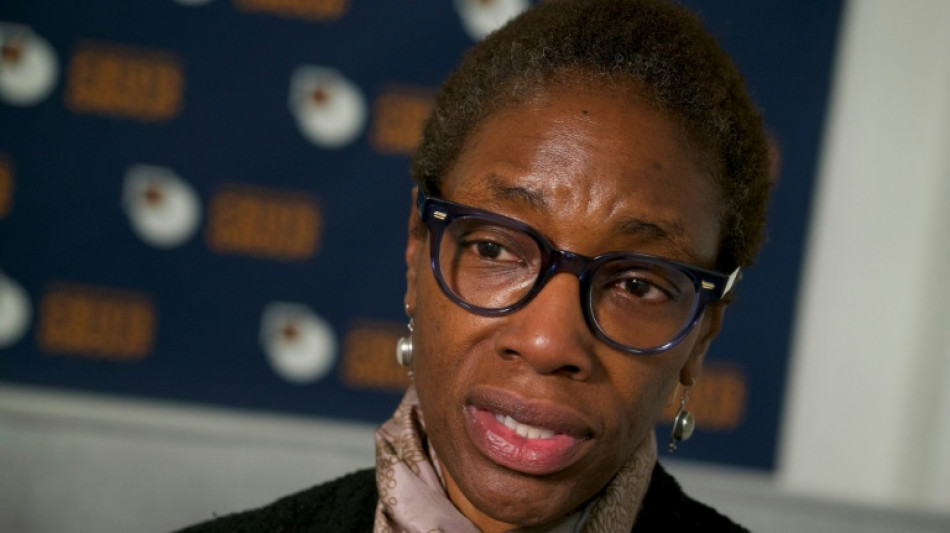
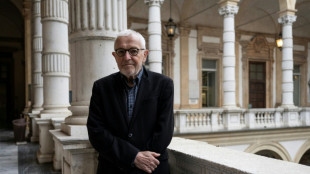
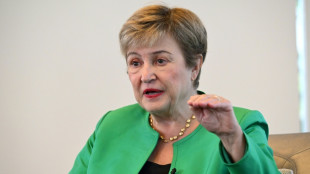
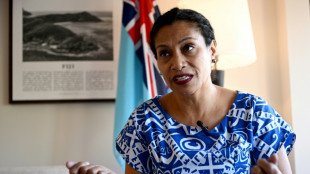
Crisis Group president fears 'major miscalculation' in Middle East / Photo: Bastien INZAURRALDE - AFP Photo

 Rubio touts US power, calls on Europe to emerge from 'slumber'
 Trump says 'we don't think' Russian plague is bio-weapon
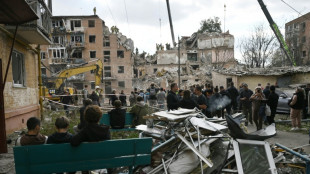 Five children among 26 killed in Ukraine after Russian strikes
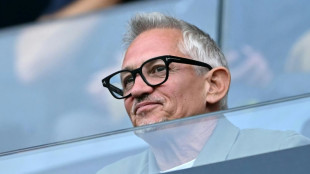 Man City should 'accept' punishment for rule breaches, says Lineker
 US woman who survived botched execution is awake and speaking
 From 1800s to modern pharma: a Nobel-winning chemistry quest
 Southampton boss Eckert given suspended ban over 'Spygate'
 Russia warns of 'false' information as second plague case reported
 IEA ready to release more oil reserves if necessary
 HSBC 'consults' over UK unit job cuts amid AI adoption
 UK court quashes five ex-traders' Libor rate rigging convictions
 XM Receives “Global Customer Experience Leader Award 2026” at the TrustFinance Performance Awards
 Stocks slide as oil climbs on Mideast flareup
 Heavy casualties in Ukraine after Russian strikes
 French wine harvest set to hit historic low
 Kyiv 'cannot agree' to EU membership limiting food exports: minister

 Arteta targets more Arsenal glory after signing new deal until 2030
 Russell hit with Singapore grid penalty for taking new power unit
 Spotify expands audiobooks to more than 180 markets
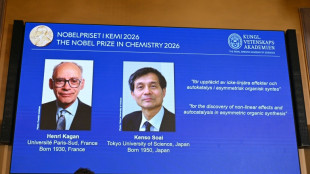 French-Japanese duo wins chemistry Nobel for solving molecular 'mystery'
 England's Nations League surge helps heal World Cup wounds

 Mayor of opposition stronghold Izmir defects to Erdogan party
 Mertens beats Gauff to set up Swiatek clash at China Open
 Benin full of pride at role in Messi's last dance

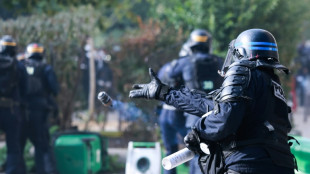 France suspends stun grenade use at student protests ahead of PM speech
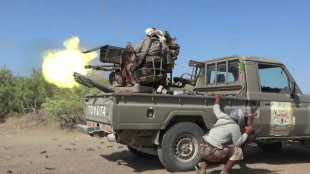
The risk of a "major miscalculation" in the Middle East is growing by the day as the war between Israel and Hamas rages on, Comfort Ero, president of the Crisis Group NGO, told AFP.
Ongoing conflicts across the globe, from Sudan to Ukraine, are also creating a bleak geopolitical landscape.
In an interview with AFP, Ero spoke of a world in crisis, but maintained that there was "still a glimmer of hope."
Here are excerpts from the discussion:
- Gaza possibilities -
Q: The ramifications from the Israel-Hamas war have been felt far beyond the region. What sort of possibilities exist in the short and medium term? What is the risk of escalation, particularly with Iran?
A: "There are talks now emerging of a 40-day sort of truce. And that's the foundation, getting that 40 days and then building up on that. So that's the most important piece of the jigsaw."
As for the possibility of a larger war, "I think the big three -- Iran, Israel and the US -- do not want to see escalation. But we are also seeing that every day we're one step closer to a major miscalculation. Averting that kind of catastrophe again becomes really important."
- Negotiations with Russia -
Q: Ukraine has been garnering less attention since the war in Gaza broke out in October, particularly as the conflict with Russia grinds on with no end in sight. Do you think there's room to start negotiations with Russian President Vladimir Putin?
A: It's difficult as US elections approach, Ero said.
Putin sees that "Ukraine has become a political football in Washington, sees that that sort of unity that was there between the US and Europe may be fraying because again, of how Ukraine has been caught up in the domestic politics of the US."
- US foreign policy -
Q: The US is careening towards a rematch between President Joe Biden and ex-president Donald Trump in the November election. What impact will this have on the country's foreign policy?
A: "People watching the US appear very nervous. And I think it's about the uncertainty and the unpredictability."
"I think the US is still seen as an influential player -- both positively and negatively -- internationally. But I think increasingly there's alarm, there's concern, there is uneasiness about the uncertainty, the unpredictability, just the polarization, the division."
- Room for diplomacy -
Q: Given the multiplication of conflicts around the world, is there still room for diplomacy?
A: "Diplomacy is being tested. There's places where we don't see diplomacy at work, where the battlefield dynamics go in a different direction, go in the wrong direction.
"Sudan, for example, is a classic case of where diplomacy is often being shunted to the side and where there's a preference to use war. We saw it last year in Azerbaijan's reclaiming of Nagorno-Karabakh. We're seeing it also in Myanmar."
"When you look at the conflict landscape, no region is untouched. Nowhere is sort of isolated from crisis. And yet there's a lot that you can do to do preventive diplomacy."
"At a time when we say that multilateralism is crumbling there is still a glimmer of hope there. The question is whether leaders are willing to seize the opportunity, whether they're able to craft and shape the opportunities to allow for diplomacy to flourish as well."
L.E.Campos--PC