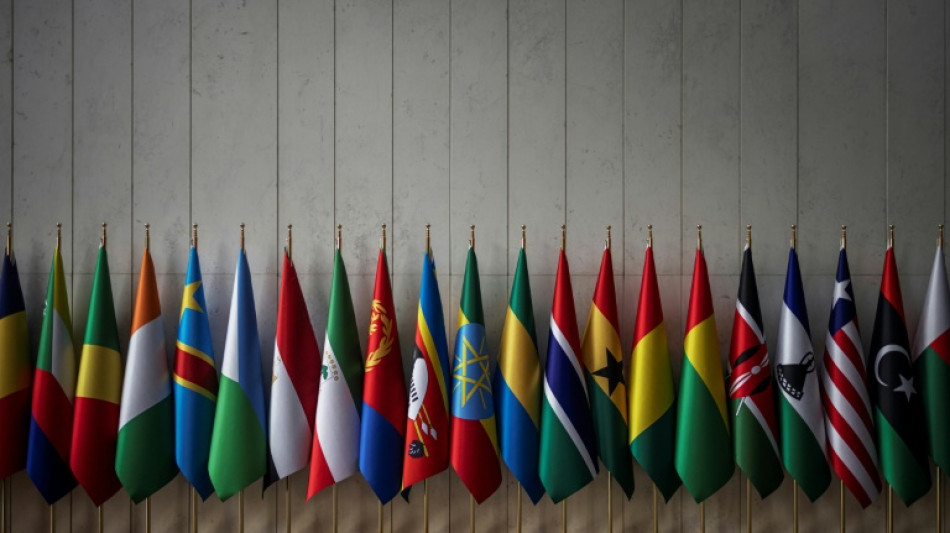
AU summit seeks to raise Africa's voice on global stage / Photo: Michele Spatari - AFP

 EU trade chief seeks to dial down China tensions
 'Never again Bolsonaro': thousands march ahead of Brazil election runoff

 After botched execution, US woman was nearly taken off life support before revival
 Searing AIDS drama 'Elsinore' opens London film festival

 Evicted pensioner who sparked Spain housing protests dies: tenant union
 Golf star Rahm quitting LIV tour over 'unacceptable' terms

 Thousands march fearing return of a Bolsonaro presidency in Brazil
 French PM denies police ordered to confront student protesters

 Rubio touts US power, calls on Europe to emerge from 'slumber'
 Trump says 'we don't think' Russian plague is bio-weapon
 Five children among 26 killed in Ukraine after Russian strikes

 Man City should 'accept' punishment for rule breaches, says Lineker
 US woman who survived botched execution is awake and speaking
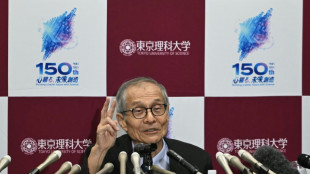 From 1800s to modern pharma: a Nobel-winning chemistry quest

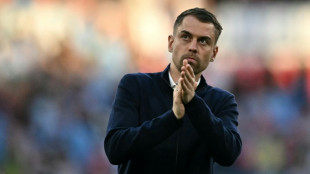 Southampton boss Eckert given suspended ban over 'Spygate'

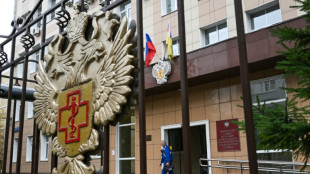 Russia warns of 'false' information as second plague case reported
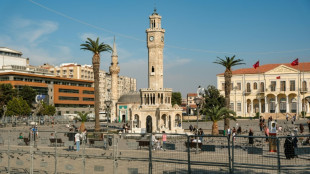
 IEA ready to release more oil reserves if necessary
 HSBC 'consults' over UK unit job cuts amid AI adoption
 UK court quashes five ex-traders' Libor rate rigging convictions
 XM Receives “Global Customer Experience Leader Award 2026” at the TrustFinance Performance Awards
 Stocks slide as oil climbs on Mideast flareup
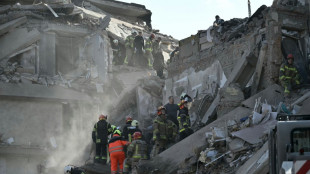 Heavy casualties in Ukraine after Russian strikes
 French wine harvest set to hit historic low
 Kyiv 'cannot agree' to EU membership limiting food exports: minister

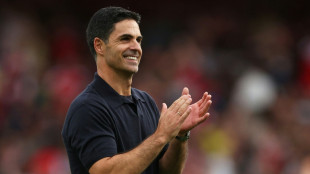 Arteta targets more Arsenal glory after signing new deal until 2030

The African Union's annual summit will open on Saturday against the backdrop of coups in Gabon and Niger and a political crisis in Senegal, posing challenges for the bloc as it seeks to amplify its international presence.
Set up more than two decades ago, the 55-member bloc has long been criticised for being ineffectual and for taking little decisive action in the face of numerous power grabs.
Gabon and Niger will be absent from the meeting in Ethiopia's capital, Addis Ababa, following their suspension over coups last year. They will join Mali, Guinea, Sudan and Burkina Faso, which are also barred from the summit.
The coups and the crisis in Senegal, which has been in turmoil since President Macky Sall pushed back this month's elections at the last minute, will likely dominate the agenda, said analyst Nina Wilen.
"I doubt that there will be any strong decisions," said Wilen, director of the Africa programme at the Egmont Royal Institute for International Relations think tank in Brussels.
The organization has so far had "very little influence on countries that have suffered recent coups", she said, adding that member states did not want to set precedents that could clash with their own interests.
Some 19 presidential or general elections are scheduled on the continent in 2024, portending more challenges for the AU.
- 'Working methods' -
The bloc has managed to avoid a crisis by defusing tensions ahead of the summit over the one-year rotating AU chairmanship, currently held by Comoros President Azali Assoumani.
The succession had long been blocked by the dispute between Morocco and Algeria, heavyweights of the North African region to whom the post falls this year.
After months of intense negotiations, Mauritanian President Mohamed Ould Ghazouani is expected to take over the chairmanship.
The episode highlights the divisions within the pan-African organisation even as it seeks to have a stronger voice within the G20 grouping which it joined in September.
Analysts say that the AU must act quickly to develop a consensus on how to conduct its business at G20, which represents more than 85 percent of the world GDP.
By joining the G20, "the AU will become a player in international politics," said Paul-Simon Handy, regional director of the Institute for Security Studies in Addis Ababa.
"Working methods will have to be found quickly," he said.
Solomon Dersso, founding director of the think tank Amani Africa, agreed but cautioned that the process "won't be... easy".
"Just like the European Union, this would require making constant negotiation and compromise," he told AFP.
"It becomes more difficult when you have 55 countries with diverse interests, but it's not impossible."
- 'States looking inward' -
But the AU's room for manoeuvre could be limited in the face of deepening security crises facing the continent.
Africa is reeling from deadly violence in the Sahel region, fighting in the Democratic Republic of Congo that has sparked regional diplomatic tensions, and conflicts in Somalia and Sudan.
"Member states are looking inward, closely protecting their sovereign prerogatives rather than investing in collective security," the International Crisis Group said in a briefing note ahead of the summit.
Another major subject of discussion is expected to be how the AU would transition to relying on African states to fund most of its budget rather than the foreign donors it currently depends on.
The United Nations Security Council in December adopted a resolution to finance AU-led peace missions, but capped it at 75 percent of the budget.
The summit "will have to reflect on the implications" of raising the remainder of the budget, according to Handy, especially for countries which have deployed military missions outside the AU framework.
L.Mesquita--PC