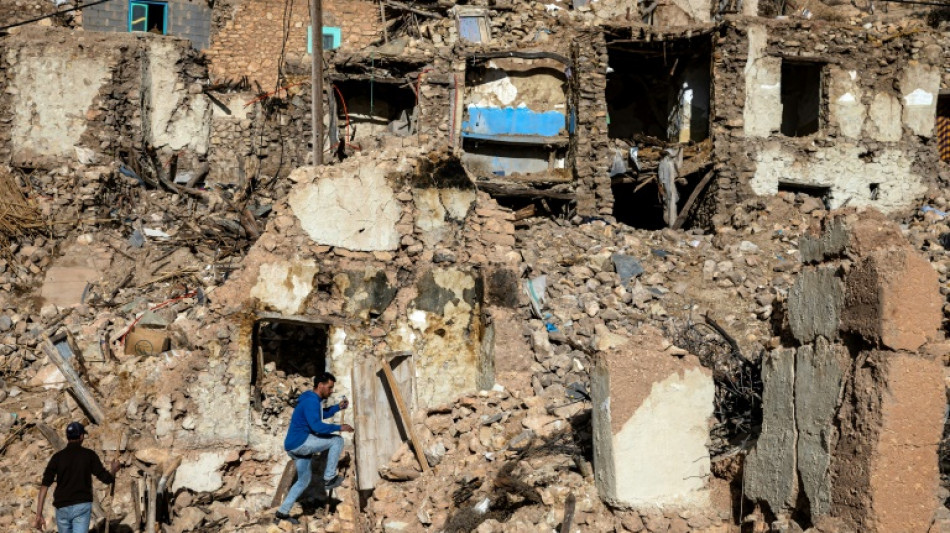
Long winter for Morocco quake survivors / Photo: FADEL SENNA - AFP

 Samsung expects 780% quarterly operating profit jump on AI boom

 Guardians survive with 9-3 win over White Sox

 Saudi Arabia says 3 dead at airports after Houthis claim attacks
 Stocks slide as oil sees volatile trading day over Iran war fears

 Microsoft pushes AI vision with new, expensive Surface laptop
 Five children among 28 killed in Russian strikes on Ukraine

 Odell Beckham Jr signs with Minnesota Vikings
 Saudi Arabia says three dead at airports after Houthis claim attacks

 Trump plans to turn Florida golf course into presidential retreat

 WHO says cannot conduct full risk assessment on Russia plague reports
 After botched execution, US woman is awake and shackled to bed
 New Zealand fly-half Mo'unga ruled out of Australia Tests

 Protests in major Turkish city after mayor defects to Erdogan party
 Climate change strips island's title of largest penguin colony: study

 Rubio says West must choose between national power or decline
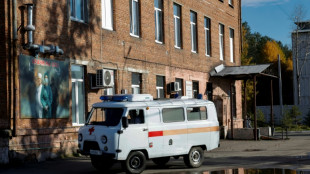 Russia's plague scare: What we know

 French luxury giant to fund redevelopment of two Paris streets: city hall

 Trump wants to turn Florida golf course into presidential retreat
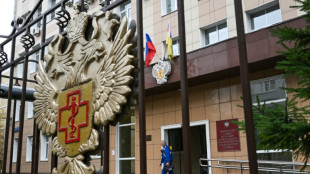
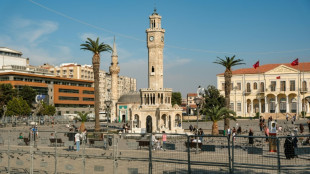 Mayor of Turkish opposition stronghold defects to Erdogan party
 Children among heavy casualties in Ukraine after Russian strikes

 Court orders German ex-spy chief kept in jail after spying, treason arrest

 Guinea caps bottled water prices after sachets banned

 Spared, married, hanged: the last weeks of Iranian protester Alireza Sepahi
 Nobel physics winner's pride at pioneering AI role
 IMF preparing El Nino assistance, concerned about AI bubble burst: chief to AFP
Long, cold months have passed since an earthquake levelled Abdallah Oubelaid's impoverished village in Morocco's High Atlas mountains.
Every day, he or other villagers come to inspect the debris. They hope to find pieces of wood for heating and cooking, or even to recover objects of value that have so far escaped them, and all the while a bitter Oubelaid wonders when he will get the government aid that he applied for.
"Every time I ask, they tell me it's going to happen," Oubelaid, 35, said. "But I have children to feed and to clothe."
Moroccan authorities said around 3,000 people died during the 6.8 magnitude earthquake that struck on September 8, leaving more than 60,000 houses damaged.
From Oubelaid's village of Douzrou, around 80 kilometres (50 miles) from Marrakesh city, residents give a death toll of about 80.
A pink and white mosque minaret stands out among the rubble of the village that clung to a corner of the mountainside.
The survivors, 150 families, found refuge a few kilometres away on rocky ground beside a road with a view of snow-capped mountains.
Around 120 of them have received help from the government. They either got a 2,500-dirham ($249) monthly stipend or 20,000 dirhams for reconstruction.
The rest, like Oubelaid, said they don't know why they received nothing.
- Protests -
By the end of January, the Moroccan government said around 57,600 families had received the monthly stipend and more than 44,000 households obtained the reconstruction aid.
Prime Minister Aziz Akhannouch said the government "sets itself the challenge of responding to the expectation of the local population with promptness and efficiency."
Yet some remain desperate for help.
Local media said hundreds of people from areas south of Marrakesh in Taroudant province and the town of Talat Nyacoub have demonstrated since January to protest the delayed payments and reconstruction aid during the difficult winter conditions.
Last month, a left-wing government member of parliament, Fatima Tamni, said while questioning Interior Minister Abdelouafi Laftit that reconstruction efforts "remain immersed in obscurity and improvisation".
She called on Laftit to take action, according to the Hespress news website.
The Moroccan government said some applications were rejected because residents did not live in the affected areas at the time of the earthquake or because their homes were still inhabitable.
In larger towns like Amizmiz, workers and backhoes are busy.
Things seem to have returned to normal, even as families still live in dozens of yellow tents donated by the authorities. Covered with tarpaulins for protection against the rain and mountain cold, the tents occupy every patch of empty land.
- 'It saved us' -
In their misfortune, the Douzrou survivors feel lucky that Moroccan and Dutch NGOs built barracks for them, and they are insulated from the cold.
"There would've been a lot more victims with the wind lately if we didn't have that," said Hamed Oumhend, 68, looking at the hut built beside others. From above, they look like rolls of aluminium foil.
"It saved us."
The elderly villager has been collecting signatures for a petition asking for the reconstruction of Douzrou -- a little lower on the mountain than their camp, in hopes it would be safer there.
They are determined to stay on their land but conscious of the fact that the name of the resilient village means "under the rock" in the local Berber language, also known as Amazigh.
They fear another disaster in the community whose isolation means few doctor visits and dwindling provisions, and where Oumhend said people are still in a state of shock.
They all lost a relative or barely managed to save themselves when their village disappeared.
"People had to crawl out of the rubble to get out of their homes," he recalled.
"Some are still traumatised."
X.Brito--PC