Kosovo's Serbs hit by lines, limited withdrawals after currency ban / Photo: STRINGER - AFP

 Rookie Henry named in Wallabies midfield to face All Blacks
 Housing crisis set to dominate Spain's snap election
 Gas, health care, utilities: high costs squeeze US midterm voters
 New Zealand Rugby seeks injunction over PNG Chiefs name
 Samsung expects 780% quarterly operating profit jump on AI boom
 Guardians survive with 9-3 win over White Sox
 Saudi Arabia says 3 dead at airports after Houthis claim attacks
 Stocks slide as oil sees volatile trading day over Iran war fears
 Microsoft pushes AI vision with new, expensive Surface laptop
 Five children among 28 killed in Russian strikes on Ukraine

 Odell Beckham Jr signs with Minnesota Vikings
 Saudi Arabia says three dead at airports after Houthis claim attacks

 Trump plans to turn Florida golf course into presidential retreat
 WHO says cannot conduct full risk assessment on Russia plague reports
 After botched execution, US woman is awake and shackled to bed
 New Zealand fly-half Mo'unga ruled out of Australia Tests
 Protests in major Turkish city after mayor defects to Erdogan party
 Climate change strips island's title of largest penguin colony: study
 Rubio says West must choose between national power or decline
 Russia's plague scare: What we know

 French luxury giant to fund redevelopment of two Paris streets: city hall

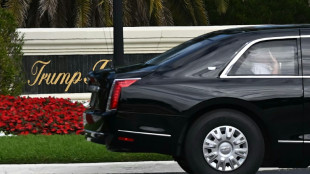 Trump wants to turn Florida golf course into presidential retreat
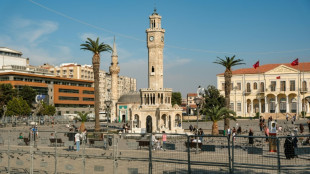 Mayor of Turkish opposition stronghold defects to Erdogan party
 Children among heavy casualties in Ukraine after Russian strikes
 Court orders German ex-spy chief kept in jail after spying, treason arrest
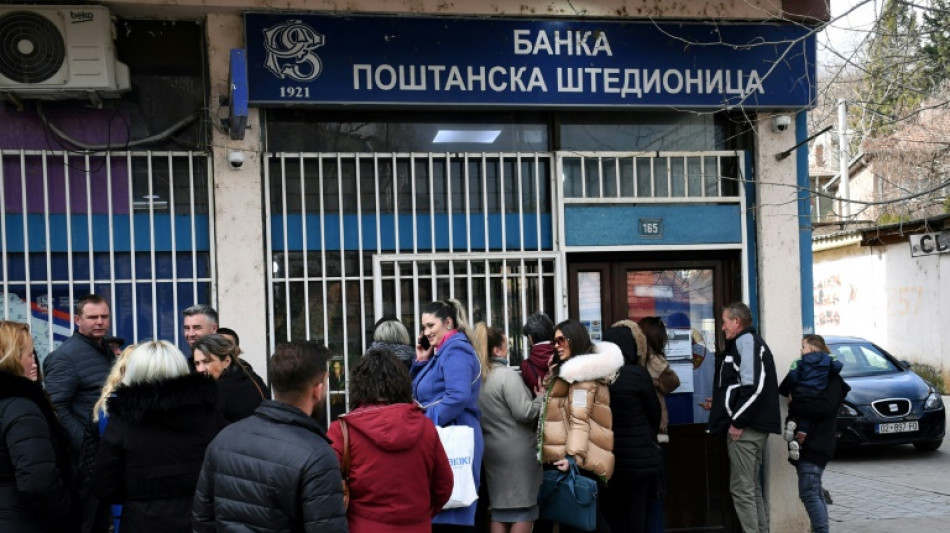
Long lines snaked around banks in northern Kosovo on Wednesday, as ethnic Serbs waited to receive salaries and pensions in limited tranches following a government regulation targeting Serbia's dinar currency.
The disruption comes weeks after a new rule entered into force in Kosovo on February 1 that made the euro the only legal currency for payments in commercial transactions and effectively banned the use of the dinar.
On Wednesday, Kosovo's Serbs working for government institutions in Serbia and pensioners were set to receive salaries in northern Kosovo, where many in the community are dependent on the payments.
Worries have been mounting for days over fears that cash was running short in the area, following the blocking of two deliveries of dinars after officials stopped cars transporting the currency at the border.
Serbia's central bank said the shipments were set to pay salaries, pensions, social benefits and other payments to Serbs in Kosovo.
On Wednesday, account holders were only able to withdraw limited amounts of dinars, according to an AFP reporter on the ground, usually in tranches of 5,000 to 10,000 ($46 to $92).
"It is most likely the dinar will be abolished because that is Pristina's position. What are we left with?" one pensioner told AFP, speaking on condition of anonymity.
Others said they would be forced to cross the border and travel to Serbia to collect their salary in full.
"Tomorrow, I plan to go to Raska and pick up my salary there," said Milica Ivanovic, a 25-year-old working at a Serbian government institution in northern Kosovo, referring to a town in southern Serbia.
"I can afford it but there are others who can't," she added.
- Rising tensions -
Kosovo's roughly 100,000-member Serb community has held tight to the dinar since a brutal late-1990s war between Serbia and ethnic Albanian insurgents saw Serbian troops and government personnel withdraw from the breakaway province.
"I don't think there is a Serbian family in Kosovo that is not affected by this decision," Aleksandar Rapajic, who works for the Advocacy Center for Democratic Culture in Kosovo's northern city of Mitrovica, told AFP.
"The only effect this decision has is to make life miserable for the Serbian community and to make it difficult to send money from Serbia," he added.
The move has seen already tense relations between Serbia and Kosovo inflamed.
Earlier this month, Serbia's President Aleksandar Vucic and Kosovo's Prime Minister Albin Kurti sparred over the new regulation during an emergency meeting at the UN Security Council in New York.
Kosovo officials have introduced a three-month transitional period, allowing time to resolve issues.
Despite criticism from several Western countries, Kosovo's government has continued to defend the regulation.
"Money cannot come across the border in bags, as it cannot in any democratic state, but it can come through bank accounts, withdrawn in euros," said Kurti earlier this month.
Serbia has never acknowledged Kosovo's 2008 declaration of independence, with the rivals regularly locked in fierce disagreements over bureaucratic matters in the former breakaway province, such as a recent spat over licence plates.
Kosovo adopted the euro as its currency in 2002, despite not being a formal member of the eurozone or the European Union.
The currency regulation follows a tumultuous year in Kosovo that saw an armed standoff between Serb gunmen and police at a monastery near the Serbian border in September. At least four people were killed.
A.Seabra--PC