-
 US, Ukrainians, Europeans to discuss 'new ideas' to end war
-
France pledges more teachers after school students vow no let-up
-
 Unproven 'cures' pushed online amid plague concerns
-
Bordeaux confirmed in sixth tier of French football

-
 Nigeria looks to ease fuel prices as election looms
-
Trump gives 'national treasure' Musk top US medal after rift
-
 Prosecutors in Maradona death trial seek sentences up to 12 years
-
MLB proposes shortening season, reforming playoffs

-
 Swiss captain Xhaka gets suspended fine for fake Covid cert
-
Crew splashes down after 8-month mission on International Space Station

-
 Ex-prince Andrew raid warrants ruled 'unlawful' but UK police maintain probe
-
Protests, clashes as S. African anti-migrant tensions reignite

-
 Two Latvians arrested inside UK military base: police
-
Russian data centre hit by drone in first for Ukraine war
-
 Eckert 'forever grateful' for Southampton support over spy scandal
-
'Fighting for our future': France high school students vow no let-up

-
 Venezuela's Maduro, wife hit with new US torture charges
-
Kyiv entering 'survival' mode amid Russian strikes surge: mayor tells AFP

-
 Argentina friendlies no fairy tale for African footballers
-
Verdict due in Mexico trial over murders of Australia, US surfers

-
 US suspending Microsoft from visa program: Vance
-
B2PRIME Welcomes Christina Barbash as Commercial Manager

-
 Man City must 'stick together' during crisis, says Haaland
-
Russia forcing Kyiv into 'survival' mode before winter, mayor tells AFP

-
 CAS opens hearing into Senegal AFCON title appeal
-
Closing arguments begin in Maradona death trial

-
 UK police agree searches for ex-prince Andrew's homes 'unlawful': judge
-
UEFA president Ceferin to stand for re-election in 2027
-
 After botched US execution, Christa Pike walking, mentally 'foggy': lawyer
-
Nearly 300,000 Nepalis at flood risk: study

-
 'Stunned' Madrid mourns pensioner who sparked housing protests
-
Riyadh kindergarten hit by interception debris as Houthis say targeted airport

-
 High school students turn out for new protests across France
-
Alex Bodi mizează, alături de CRIF, pe investiții transparente și pe prevenirea riguroasă a spălării banilor

-
 Bid by Italy's Intesa bank to take over MPS gets boost
-
Gulf Labs, Part of Thailand’s $27 Billion GULF Group, Goes Live as an Injective Validator

-
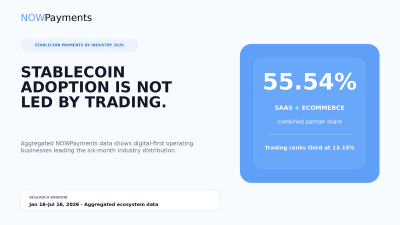 Stablecoins Are Quietly Becoming Business Infrastructure, NOWPayments Data Shows
-
EU okay for winter despite 'historically low' gas stocks: operators

-
 Oil surges, stocks sink as US reportedly eyes new Iran strikes
-
Rwanda to host F1 Grand Prix: sources close to both sides

-
 Woman in botched US execution walking, mentally 'foggy': lawyer
-
EU top diplomat says bloc in favour of UN Lebanon peacekeepers' extension

-
 Farhan hopes Pakistan's new combination takes off in Sri Lanka T20Is
-
Antonelli and Russell to run different Mercedes aero packages in Singapore

-
 Teenager Andreeva seals China Open semi-final with Bartunkova
-
WTO hikes 2026 trade growth forecast on AI boom
-
 Britain's Burnham says open to Germany joining warplane project
-
'I love that challenge': Hamilton prays for rain in Singapore

-
 Kovac's tough love has Dortmund dreaming of title charge
-
G.Bissau moves towards postponement of December general election

EU parliament adopts 'pioneering' rules on AI
The European Parliament gave final approval on Wednesday to the world's most far-reaching rules to govern artificial intelligence, including powerful systems like OpenAI's ChatGPT.
The AI Act focuses on higher-risk uses of the technology by the private and public sector, with tougher obligations for providers, stricter transparency rules for the most powerful models like ChatGPT, and outright ban on tools considered too dangerous.
Senior European Union officials say the rules, first proposed in 2021, will protect citizens from the risks of a technology developing at breakneck speed, while also fostering innovation on the continent.
EU chief Ursula von der Leyen hailed the vote ushering in a "pioneering framework for innovative AI, with clear guardrails."
"This will benefit Europe's fantastic pool of talents. And set a blueprint for trustworthy AI throughout the world," she said on X.
The text passed with support from 523 EU lawmakers, with 46 voting against. The EU's 27 states are expected to endorse the law in April before publication in the bloc's Official Journal in May or June.
Brussels has been sprinting to pass the new rules since OpenAI's Microsoft-backed ChatGPT arrived on the scene in late 2022, unleashing a global AI race.
There was a burst of excitement for generative AI as ChatGPT wowed the world with its human-like capabilities -- from digesting complex text to producing poems within seconds, or passing medical exams.
Further examples include DALL-E and Midjourney, which produce images, while others create sounds based on a simple input in everyday language.
But with the excitement came a swift realisation of the threats -- not least that AI-generated audio and video deepfakes would turbocharge disinformation campaigns.
"Today is again a historic day on our long path towards regulation of AI," said Brando Benifei, an Italian lawmaker who pushed the text through parliament with Romanian MEP Dragos Tudorache.
"We managed to find that very delicate balance between the interest to innovate and the interest to protect," Tudorache told journalists before the vote.
Rules covering AI models like ChatGPT will enter into force 12 months after the law becomes official, while companies must comply with most other provisions in two years.
- AI policing restrictions -
The EU's rules known as the "AI Act" take a risk-based approach: the riskier the system, the tougher the requirements -- with outright bans on the AI tools deemed to carry the most threat.
For example, high-risk AI providers must conduct risk assessments and ensure their products comply with the law before they are made available to the public.
"We are regulating as little as possible and as much as needed, with proportionate measures for AI models," the EU's internal market commissioner, Thierry Breton, said.
Violations can see companies hit with fines ranging from 7.5 million to 35 million euros ($8.2 million to $38.2 million), depending on the type of infringement and the firm's size.
There are strict bans on using AI for predictive policing and systems that use biometric information to infer an individual's race, religion or sexual orientation.
The rules also ban real-time facial recognition in public spaces but with some exceptions for law enforcement, although police must seek approval from a judicial authority before any AI deployment.
Digital civil rights group Access Now said the bans did not go far enough.
"The final text is full of loopholes, carve-outs, and exceptions, which mean that it will not protect people, nor their human rights, from some of the most dangerous uses of AI," it said in a statement.
- EU 'resisted pressure' -
Since AI will likely transform every aspect of Europeans' lives and big tech firms are vying for dominance in what will be a lucrative market, the EU has been subject to intense lobbying.
Watchdogs on Tuesday pointed to campaigning by French AI startup Mistral AI and Germany's Aleph Alpha as well as US-based tech giants like Google and Microsoft.
They warned the law's implementation "could be further weakened by corporate lobbying".
"Many details of the AI Act are still open and need to be clarified in numerous implementing acts, for example, with regard to standards, thresholds or transparency obligations," three watchdogs based in Belgium, France and Germany said.
Lawmaker Tudorache said the law was "one of the... heaviest lobbied pieces of legislation, certainly in this mandate", but insisted: "We resisted the pressure."
Organisations representing the European creative and cultural sectors welcomed the vote in a joint statement but urged the EU to ensure "these important rules are put into practice in a meaningful and effective way".
A.S.Diogo--PC