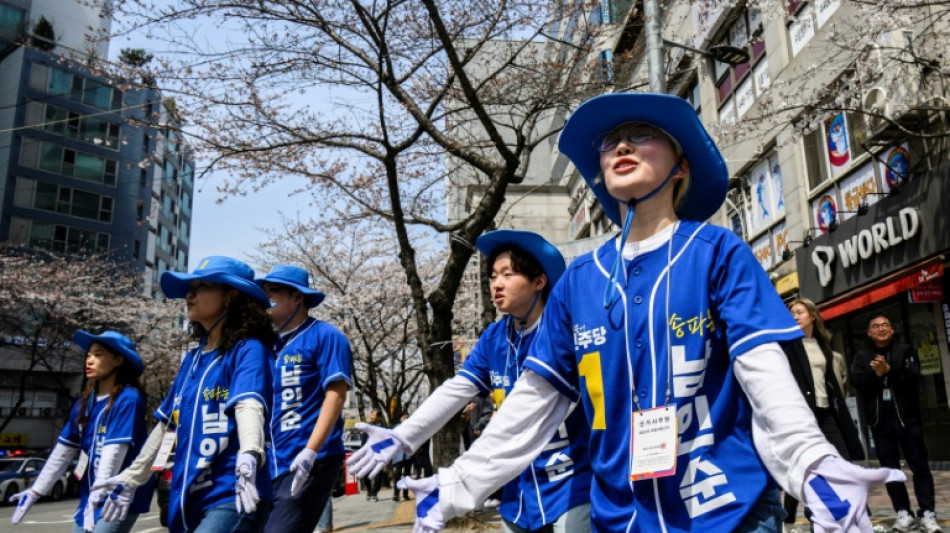
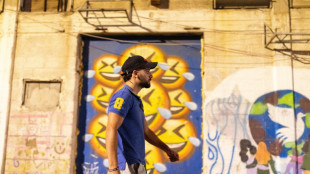
K-pop campaigning: S Korean candidates embrace song to pull votes / Photo: ANTHONY WALLACE - AFP

 'I completely trust the club,' says Man City boss Maresca
 '10 out of 10' Quintana reminisces over dream Vuelta win
 Maddinson given shock recall but fails to score
 Navi Pillay, South African rights champion, wins Nobel Peace Prize
 Saudi Arabia says three killed at airport as Yemen war expands
 Everton's US owners mull sale of club two years after takeover

 Ukraine takes Russia fight to 'scorching sands' of Sahel
 Chinese AI tool pulled to prevent 'misuse' after South Korea hacks
 Asian stocks mostly up as traders weigh AI, oil dips after surge
 Walking through flames: orangutans rescued in Indonesia fires
 LeBron shines in pre-season debut for re-tooled 76ers
 Okinawa resolution calls for revision of US forces pact after murder
 Verdict expected Friday in Mexico trial over murders of Australia, US surfers
 New York mayor says asking Trump to withdraw ICE after shooting
 Walking through flames: orangutan rescued in Indonesia fires
 James shines in pre-season debut for re-tooled 76ers
 Fuel, fertilizer costs strain US farmers' support for Republicans in midterms
 Trump's 'super intelligence' rebrand to sell AI faces uphill battle
 Fiji demands US provide evidence Chinese official paid bribes for Beijing
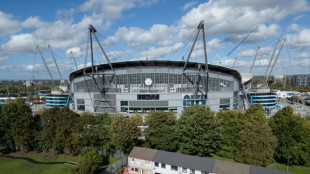 More than just football: How scandal-tainted City led Manchester's rebirth
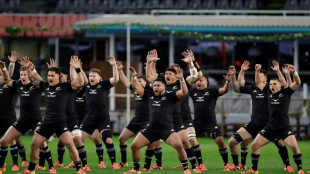 Record Eden Park streak creates tension for All Blacks
 EU trade chief seeks 'tangible outcomes' in China talks
 Man City face Anfield cauldron after guilty Premier League verdicts
 CNN, MS Now, Politico urge judge to extend White House access
 Trump administration to launch new vaccine research center

Thanks to quirks of South Korean election law and history, almost every candidate on the campaign trail has a theme song, a dance routine, and politically-tweaked lyrics to make their message hit home.
From K-pop chart toppers to "Baby Shark", still the world's most-watched song on YouTube, seemingly no music is safe from a South Korean political makeover.
At a rally for Democratic Party lawmaker Nam In-soon, running for a fourth term in office in Seoul's Songpa district, campaign speeches were interspersed with ear-splitting blasts of music, as uniformed campaign staff performed choreographed moves.
"This kind of campaigning helps raise voters' interest," Nam told AFP before next week's parliamentary election.
"I can convey my message and policy promises through the campaign songs," she said, adding that the tunes were carefully selected, and the lyrics thoughtfully re-worked, to help her engage with constituents.
This election cycle, Nam had chosen a hit K-pop song called "Jilpoonggado" -- which means "Stormy Road" in English -- for her campaign.
The original lyrics, which speak of giving people courage against a storm, were tweaked to request "storming courage" for the candidate, and end with: "ballot number 1 Nam In-soon! The right person to lead Songpa".
But the campaign also used Baby Shark and a few "trott" hits -- a kind of slower K-pop, popular with older South Korean listeners -- to cover their bases.
"We chose songs that can appeal to a wide range of age groups," Nam said.
- 'Really excited' -
K-pop campaigning is not only gruelling work for the candidates: campaign choreographer Kim Mi-ran performs an elaborate dance routine three times a day, every day for around two weeks before the vote, everywhere Nam goes.
"The party headquarters gave us some guidelines, but the candidate's staff have a lot of decision-making power," over song selection and dance routines, said Kim, who is not a full-time dancer but works as a civil activist outside election time.
"I talked to her staff to decide on a set of songs that go well with the candidate and choreographed accordingly," she said.
One of the songs, by a K-pop girl duo called Davichi, which is called Yeoseong Shidae or "Women's Era", was chosen as a means of hammering home the fact Nam is a rare female candidate in a sea of male politicians.
Only 14 percent of candidates running for the April 10 vote are women, and just 19 percent of sitting MPs are female from 300 seats.
"Politics can come across as boring and not interesting," Kim said.
"I think this cultural approach to the election campaigning can be a positive thing for the voters. I can feel people are really excited when they see us -- and they join in dancing!"
- Historic roots -
In many countries, for example France, the United Kingdom, or Pakistan, candidates are restricted to holding campaign events in designated spaces, such as sports centres, with proper approvals from authorities.
But under South Korean election law, all candidates are allowed to hold campaign events in the constituency's streets during a set two-week period before the vote, on the condition they don't violate a 127-decibel noise limit -- a level similar to a rock concert.
Nearly every candidate embraces this opportunity, and speaker-laden vans blasting music, filled with cheering, uniformed campaign staff have crisscrossed Seoul neighbourhoods canvassing for votes since campaigning started March 28.
At a joint rally Sunday for two of President Yoon Suk Yeol's party candidates, Lee Yong and Lee Chang-keun, a trott song entitled "You and Me" had been transformed into a party theme song.
"You and me both for the People Power Party, let's go together!" the new lyrics said, as cheerful supporters swayed along.
South Korea's commitment to vibrant, noisy political campaigning has its roots in the country's emergence from military rule into a democracy in the 1980s, Bae Kang-hun, a political consultant, told AFP.
"Many pro-democracy student activists in the 1980s who helped the country achieve a direct presidential election in 1987 went on to join the mainstream political scene," he said, referring to the seminal election that year which ended decades of military rule.
When these student protesters who helped topple the military dictatorship went into politics "they adapted many features of their pro-democracy demonstrations," for their rallies, he said.
This included "singing songs and doing choreographed moves, as they had once done on the streets calling for democracy against dictatorship government," he said.
"Those features have become mainstays of today's campaigning."
Ferreira--PC