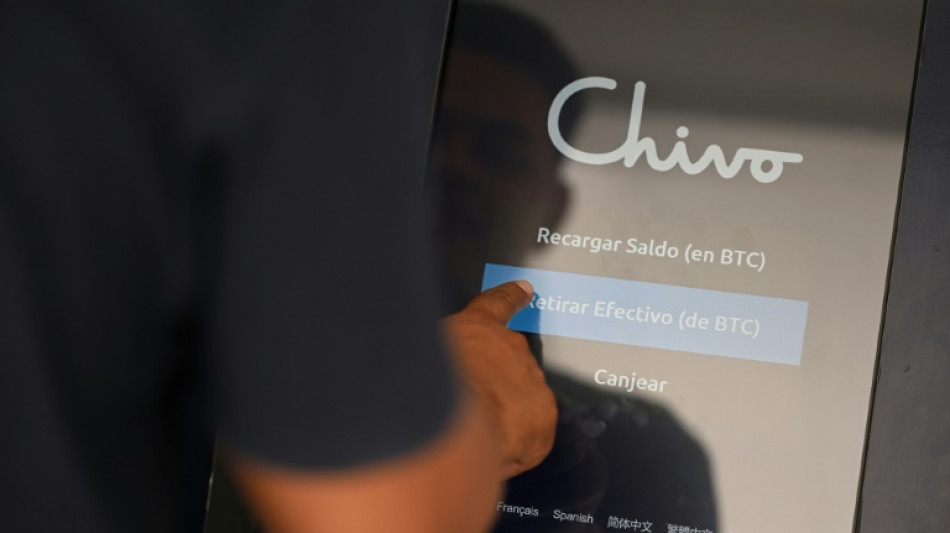
Record remittances provide lifeline in Central America / Photo: Marvin RECINOS - AFP

 Djokovic crashes out of Shanghai Masters in his first match

 EU says Turkey's crackdown on rights hampers membership bid

 Two Renoir paintings stolen in France recovered: mayor
 German leader outraged at Schroeder birthday visit to Putin

 Stocks up, oil retreats as Trump rules out pre-vote Iran attack

 South African judge Navi Pillay wins Nobel Peace Prize

 'I completely trust the club,' says Man City boss Maresca
 '10 out of 10' Quintana reminisces over dream Vuelta win

 Maddinson given shock recall but fails to score

 Navi Pillay, South African rights champion, wins Nobel Peace Prize

 Saudi Arabia says three killed at airport as Yemen war expands

 Everton's US owners mull sale of club two years after takeover

 Ukraine takes Russia fight to 'scorching sands' of Sahel
 Chinese AI tool pulled to prevent 'misuse' after South Korea hacks

 Asian stocks mostly up as traders weigh AI, oil dips after surge

 Walking through flames: orangutans rescued in Indonesia fires
 LeBron shines in pre-season debut for re-tooled 76ers
 Okinawa resolution calls for revision of US forces pact after murder

 Verdict expected Friday in Mexico trial over murders of Australia, US surfers

 New York mayor says asking Trump to withdraw ICE after shooting

 Walking through flames: orangutan rescued in Indonesia fires

 James shines in pre-season debut for re-tooled 76ers

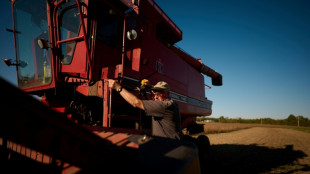 Fuel, fertilizer costs strain US farmers' support for Republicans in midterms

 Trump's 'super intelligence' rebrand to sell AI faces uphill battle

 Fiji demands US provide evidence Chinese official paid bribes for Beijing

Money sent home by migrants in the United States to Central America has risen to record levels, providing a lifeline for many of their relatives like Salvadoran mother of three Marta Alvarado.
Such remittances are now equivalent to a quarter of the combined economic output of the poverty-afflicted nations of El Salvador, Guatemala, Honduras and Nicaragua.
Alvarado described the money transfers as "a blessing" for her family.
"What my brothers send month after month helps not only me but also my mother and father, who are now elderly," said the 54-year-old, who works as a secretary in a health clinic.
"It helps them to support themselves, buy their food, clothing and medicine, and to do home improvements," she told AFP.
El Salvador, Guatemala, Honduras and Nicaragua together received almost $42 billion in family remittances in 2023, according to official data from central banks and the intergovernmental Central American Monetary Council.
The remittances even exceed the amounts generated by foreign investment, tourism or exports.
They are a key factor in boosting trade and consumer spending in nations with high poverty rates, according to experts.
- 'Life preserver' -
Remittances to the four countries increased from $19.0 billion in 2017 to $41.8 billion in 2023 -- a rise that experts attribute to greater migration, in particular to the United States.
The exact number of Central Americans living abroad is unknown, since many are irregular migrants.
But according to estimates by international and non-governmental organizations, the figure is around 10 million, or a quarter of the combined population of El Salvador, Guatemala, Honduras and Nicaragua, where most migrants hail from.
"People who don't find opportunities in their country are forced to leave," Henry Rodriguez, an economist at the National Autonomous University of Honduras, told AFP.
Remittances now represent almost 27 percent of the gross domestic product (GDP) in Honduras, 26 percent in Nicaragua, 24 percent in El Salvador and almost 20 percent in Guatemala.
They are "and will continue to be a life preserver for the Salvadoran economy for a long time," economist Carlos Acevedo, a former president of El Salvador's central bank, said.
"Without remittances we would have sunk a long time ago," he told AFP.
"If dollars do not enter, the financial system does not work -- nothing works in the country. And remittances are one of the main sources of dollar inflows," Acevedo said.
- Breaking cycle of poverty -
In Nicaragua, 17-year-old student Ligia Hurtado receives money sent by two aunts from Spain, which she uses to pay for university fees, housing, food and transportation.
In El Salvador, 61-year-old retiree Emerita Coto said her brother sends her $400 every month from New York, money that she uses to pay for a plot of land that she acquired on credit.
In contrast, money transfers are less important for countries with little emigration, and represent only around one percent of GDP in Panama and Costa Rica.
Multilateral organizations such as the World Bank and the Inter-American Development Bank promote the productive use of remittances, rather than for consumption.
They encourage investment in small businesses to support the development of nations with small economies and high poverty rates.
It is a view shared by Guatemala's new president, Bernardo Arevalo.
"Remittances can contribute more efficiently to breaking the cycle of poverty that motivates migration," he said.
Gustavo Juarez, who heads an association of Guatemalans deported from the United States, agrees.
"It would be good for a remittance to be invested in a business or a small enterprise," he told AFP.
In El Salvador's capital, Alvarado's 71-year-old mother Ester plans to open a store with some of the money that her children send.
"Soon she will have a business that can help her to have other income," Alvarado said.
X.Matos--PC