
-
 Major earthquake rocks Panama, triggers tsunami warning
-
Brewers aim to take down two-time defending champion Dodgers in NLCS rematch

-
 Indian jailed in France for leading sadist Nazi cult that tortured girls
-
Tsunami alert after major earthquake rocks Panama

-
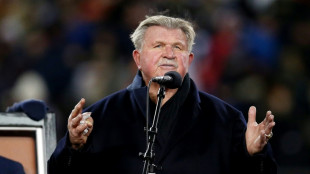 'Iron Mike' Ditka hailed as 'gold standard' NFL legend
-
Outer bands of Hurricane Isaias lash US Gulf Coast

-
 Flydubai co-pilot planned suicide attack on Tel Aviv airport: UAE prosecutor
-
Hope, Rutherford fire West Indies to record T20 chase of 250

-
 Mike Ditka: Chicago Bears icon as player and coach
-
Farhan leads Pakistan to T20 win over Sri Lanka

-
 Outrage over plan to livestream US military firing squad execution
-
Turkey sack coach Montella after Nations League woe
-
 US sanctions: a 'test of resilience' for ICC
-
US announces sanctions on ICC, hours after Nobel award to former judge

-
 NFL legend Mike Ditka dead at 86
-
Montenegro expels popular Russian war blogger wanted by US

-
 Hurricane Isaias set to strike Gulf Coast late Friday
-
Rubio calls on all Venezuela opposition figures to join talks with govt
-
 Trump forms panel to probe US Fed governor Lisa Cook
-
Australia struggle against South Africa quicks in first Test
-
 Clashes in Durban as fresh anti-migrant riots erupt in South Africa
-
Stocks advance as Trump rules out pre-vote Iran attack
-
 France students plan more protests, UN 'concerned' over violence
-
Australia struggle against South Africa's fast bowlers
-
 De Zerbi calls on struggling Spurs to react in Man Utd clash
-
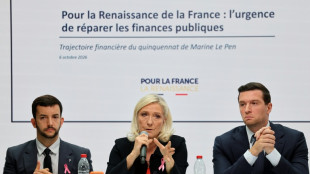
Massive debt puts France in a bind as investor doubts deepen
-
 US sanctions on ICC: a 'test of resilience'
-
Arteta urges 'respect' for process after Man City financial verdict
-
 Outrage over US military plan to livestream firing squad execution
-
'Human-authored' book labels gain ground amid AI scandals

-
 Argentina snap up defence guru Edwards ahead of World Cup
-
Man City whistleblower Pinto to stay under police protection

-
 BMW pulls car lease offer from German far-right politician
-
US leads fresh Ukraine peace push with Miami talks
-
 Brazil election offers Jair Bolsonaro a shot at revenge
-
Verstappen continues resurgence with pole for Singapore sprint

-
 Man Utd boss Carrick 'personally' affected by Man City verdict
-
Cuban ration book, symbol of the revolution, gathers dust

-
 Evolution Metals & Technologies Corp. Raises Fiscal 2026 Revenue Guidance 62% at Midpoint to $10–$11 Million and Reaffirms $400–$460 Million Fiscal 2027 Outlook
-
Stocks advance, oil retreats as Trump rules out pre-vote Iran attack
-
 Red Bull's Verstappen takes pole position for Singapore GP sprint race
-
Man City case causing 'uncertainty' for whole Premier League, says Iraola

-
 Chelsea star Palmer 'committed' to England insists Alonso
-
Talks with Iran can only succeed without threats, president says
-
 OpenAI denies firing researchers over AI safety warnings
-
Home hope Zheng sets up Mertens clash in China Open semis

-
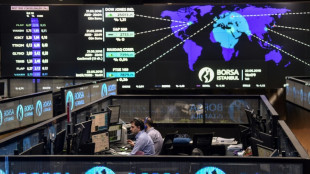 Turkey warns opposition, press over investment fund crisis
-
Lombardia promises gripping end to season in Pogacar absence

-
 Hurricane Isaias now major storm as it heads to US Gulf Coast
-
Barca skipper Raphinha out against Getafe and Galatasaray

EU lawmakers greenlight new rules to rein in national spending
European Union lawmakers on Tuesday backed new budgetary rules aimed at boosting investment while keeping spending under control despite fierce criticism from leftwing groups.
Brussels spent two years negotiating an overhaul of its budget rules that pitted fiscally hawkish states against the bloc's most indebted nations.
A majority of lawmakers backed the new rules during a session of the European Parliament in Strasbourg, France. It will become official once the EU's 27 member states endorse the text.
Leftwing MEPs claim the reform will bring in further austerity in Europe, but the bill had the backing of the three biggest political groups in parliament including socialists and conservatives.
Once in place, the EU believes the looser rules will keep the bloc on a sound financial footing, while giving greater leeway for investment in critical areas like the green and digital transitions, as well as defence.
The new rules are "more flexible, more growth oriented, more credible in their implementation", the EU's economy commissioner, Paolo Gentiloni, said during a parliamentary debate.
He said that, while "not perfect", the reform was "a good compromise".
Climate activists argue the rules will limit states' ability to pour money into important green projects.
"It will force many EU governments to take austerity measures and limit their ability to borrow to finance essential climate, environmental and social policies," Greenpeace EU said in a statement.
Margarida Marques, a socialist lawmaker who spearheaded the reform through the parliament, defended the text, insisting "significant improvements" had been made.
"There is no doubt that this deal is much better than no deal and going back to the old rules or having no rules at all," she said.
- 'Unfit for future' -
The old rules had been suspended between 2020 and 2023 to help the European economy weather the Covid pandemic and then Russia's assault on Ukraine, which sent energy prices soaring.
There was widespread agreement that there could be no return to the old rules without changes to make them practicable, despite public debt ballooning across the bloc.
Known as the Stability and Growth Pact, the rules stipulate a country's debt must not go higher than 60 percent of gross domestic product, with a public deficit of no more than three percent.
These goals remain in place, though there was fierce debate over how much the limits should be relaxed to give more room for investment.
The new text provides looser fiscal rules adapted to each state, allowing big spenders a slower route back to frugality.
The tailormade approach means each country presents its own adjustment trajectory to ensure debt sustainability. That gives them more time if they undertake reforms and investments and allows a less painful return to fiscal health.
The new rules will apply to member states' 2025 budgets.
Germany and its "frugal" allies pushed to impose a quantifiable minimum effort to reduce debt and deficits, but critics have slammed its complexity.
Left-wing groups say the new rules are a tool for imposing austerity on Europe.
In an open letter on Monday, Belgian, French, Italian and Spanish trade unions hit out at rules they said were "unfit for (the) future".
"This agreement, forced by the austerity approach of some European capitals, will require member states to reduce their debts rapidly and in ways that are economically and socially unsustainable: this will mark a return to austerity," they warned.
L.Torres--PC