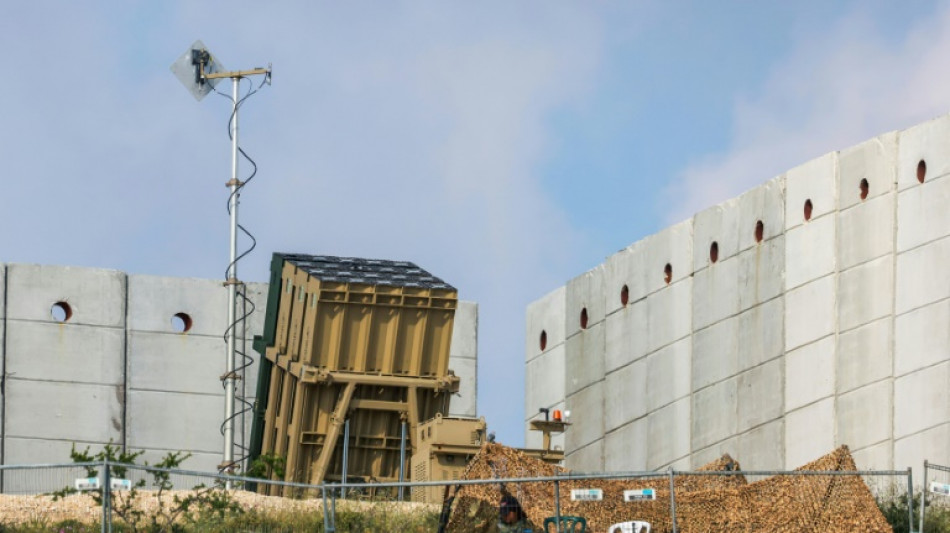
Israel builds 'cyber dome' against Iran's hackers / Photo: Menahem KAHANA - AFP/File

 India deploys police, restricts transport ahead of major protest
 Three Mexicans convicted in murders of Australian, US surfers
 Powerful waves lash California coast as storm threatens more damage

 Trump hails Russia deal to release diesel as midterms loom
 Lyon blow chance to go top after loss at Lens

 Stocks rise as Trump says Russia to release diesel to world markets

 Wildfire smoke shuts schools in Amazon's biggest city

 Turkey jails 2 journalists pending trial for fund crisis 'misinformation'

 Major earthquake rocks Panama, triggers tsunami warning

 Indian jailed in France for leading sadist Nazi cult that tortured girls

 'Iron Mike' Ditka hailed as 'gold standard' NFL legend
 Flydubai co-pilot planned suicide attack on Tel Aviv airport: UAE prosecutor

 Mike Ditka: Chicago Bears icon as player and coach

 Outrage over plan to livestream US military firing squad execution

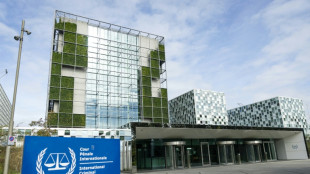
 US sanctions: a 'test of resilience' for ICC
 NFL legend Mike Ditka dead at 86

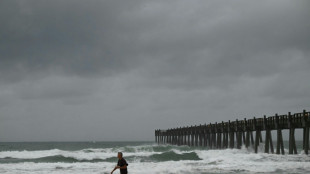 Hurricane Isaias set to strike Gulf Coast late Friday

 Trump forms panel to probe US Fed governor Lisa Cook
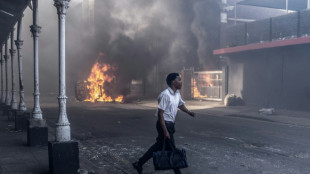 Clashes in Durban as fresh anti-migrant riots erupt in South Africa

 France students plan more protests, UN 'concerned' over violence
 De Zerbi calls on struggling Spurs to react in Man Utd clash
 US sanctions on ICC: a 'test of resilience'
 Outrage over US military plan to livestream firing squad execution

 Argentina snap up defence guru Edwards ahead of World Cup

 BMW pulls car lease offer from German far-right politician

Israel's Iron Dome defence system has long shielded it from incoming rockets. Now it is building a "cyber dome" to defend against online attacks, especially from arch foe Iran.
"It is a silent war, one which is not visible," said Aviram Atzaba, the Israeli National Cyber Directorate's head of international cooperation.
While Israel has fought Hamas in Gaza since the October 7 attack, it has also faced a significant increase in cyberattacks from Iran and its allies, Atzaba said.
"They are trying to hack everything they can," he told AFP, pointing to Hamas and Lebanon's Hezbollah movement but adding that so far "they have not succeeded in causing any real damage".
He said around 800 significant attacks had been thwarted since the war erupted. Among the targets were government organisations, the military and civil infrastructure.
Some attacks could not be foiled, including against hospitals in the cities of Haifa and Safed in which patient data was stolen.
While Israel already has cyber defences, they long consisted of "local efforts that were not connected", Atzaba said.
So, for the past two years, the directorate has been working to build a centralised, real-time system that works proactively to protect all of Israeli cyberspace.
Based in Tel Aviv, the directorate works under the authority of the prime minister. It does not reveal figures on its staff, budget or computing resources.
Israel collaborates closely with multiple allies, including the United States, said Atzaba, because "all states face cyber terrorism".
"It takes a network to fight a network," he said.
- 'An impressive enemy' -
Israel's arch foe Iran is "an impressive enemy" in the online wars, said Chuck Freilich, a researcher at the Institute for National Security Studies, which is affiliated with Tel Aviv University.
"Its attacks aim to sabotage and destroy infrastructure, but also to collect data for intelligence and spread false information for propaganda purposes", he said.
Iran has welcomed Hamas's October 7 attack on Israel, which resulted in the deaths of 1,170 people, mostly civilians, according to an AFP tally based on Israeli official figures.
Israel's retaliatory offensive against Hamas has killed at least 34,596 people in Gaza, mostly women and children, according to the Hamas-run territory's health ministry.
Regional tensions have soared, particularly after Iran for the first time fired hundreds of missiles directly at Israel last month in retaliation for a deadly Israeli air strike on the Iranian consulate in Damascus.
It was the most dramatic escalation yet after a years-long shadow war of killings and sabotage attacks between Israel and Iran.
Freilich argued in a study published in February that Iran was relatively slow to invest in cyberwarfare, until two key events triggered a change.
First, its leaders took note of how anti-government protesters used the internet as a tool to mobilise support for a 2009 post-election uprising.
In the bloody crackdown that crushed the movement, Iran's authorities cut access to social media and websites covering the protests.
Then, in September 2010, a sophisticated cyberattack using the Stuxnet virus, blamed by Iran on Israel and the United States, caused physical damage to Tehran's nuclear programme.
Freilich said the attack "demonstrated Iran's extreme vulnerability and led to a severe national shock".
Since then, Iran has gained substantial expertise to become "one of the most active countries in cyberspace", he said.
- 'Concern for future' -
While Israel is considered a major cyber power, Iran was only likely to improve, said Freilich.
He pointed to assistance from Russia and China, as well as its much larger population and an emphasis on cyber training for students and soldiers alike, adding that the trend was "concerning for the future".
Atzaba insisted that the quantity of hackers is secondary to the quality of technology and the use it is put to.
"For the past two years, we have been developing a cyber dome against cyberattacks, which functions like the Iron Dome against rockets," he said.
"With cyber dome, all sources are fed into a large data pool that enables a view of the big picture and to invoke a national response in a comprehensive and coordinated manner."
The Israeli system has various scanners that continuously "monitor Israeli cyberspace for vulnerabilities and informs the stakeholders of the means to mitigate them", he said.
Israel's cyber strength relied on close cooperation between the public, private and academic sectors, as well as Israel's "white hat" hackers who help identify weaknesses.
"We work hand in hand", he said.
E.Ramalho--PC