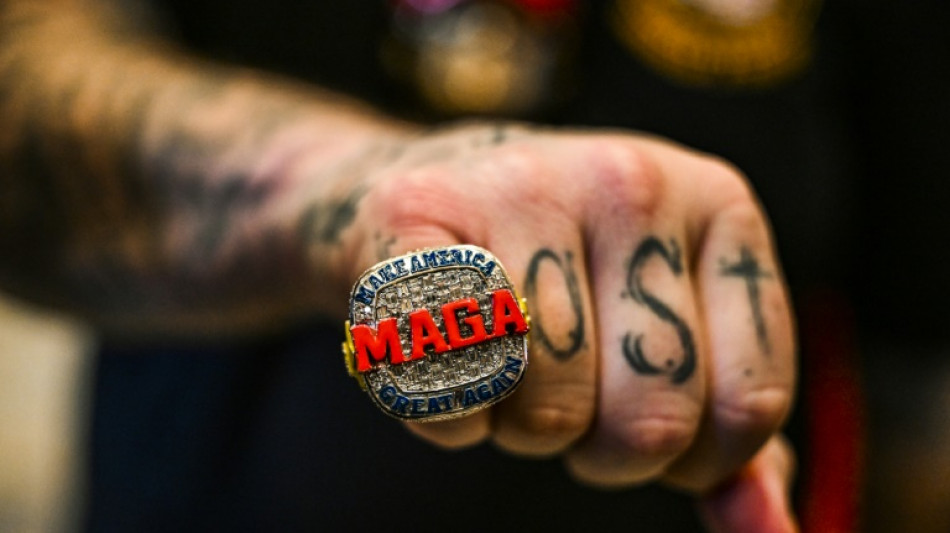
Measuring the Trump vote: a years-long headache for US pollsters / Photo: CHANDAN KHANNA - AFP

 Trump sows doubt on plan to livestream US military execution
 Hunger and malnutrition stalk Gazans, a year on from ceasefire
 Fernandez trumps MotoGP championship duo to grab Indonesia pole

 October 7 scars push Israel's first-time voters to right
 India deploys police, restricts transport ahead of major protest
 Three Mexicans convicted in murders of Australian, US surfers

 Powerful waves lash California coast as storm threatens more damage

 Trump hails Russia deal to release diesel as midterms loom

 Lyon blow chance to go top after loss at Lens
 Stocks rise as Trump says Russia to release diesel to world markets
 Wildfire smoke shuts schools in Amazon's biggest city
 Turkey jails 2 journalists pending trial for fund crisis 'misinformation'
 Major earthquake rocks Panama, triggers tsunami warning
 Indian jailed in France for leading sadist Nazi cult that tortured girls
 'Iron Mike' Ditka hailed as 'gold standard' NFL legend
 Flydubai co-pilot planned suicide attack on Tel Aviv airport: UAE prosecutor

 Mike Ditka: Chicago Bears icon as player and coach

 Outrage over plan to livestream US military firing squad execution
 US sanctions: a 'test of resilience' for ICC

 NFL legend Mike Ditka dead at 86
 Hurricane Isaias set to strike Gulf Coast late Friday
 Trump forms panel to probe US Fed governor Lisa Cook
 Clashes in Durban as fresh anti-migrant riots erupt in South Africa
 France students plan more protests, UN 'concerned' over violence
 De Zerbi calls on struggling Spurs to react in Man Utd clash
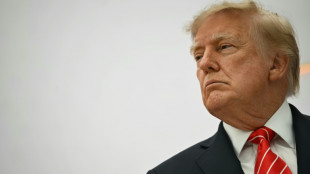
Can we believe the polls? Six months before the US presidential election, pollsters are scrambling to get an accurate read on the people voting for Donald Trump, a group that has systematically eluded them for eight years and counting.
The Republican's victory over Democrat Hillary Clinton in 2016 took the United States and the world by surprise. But it was above all the 2020 election, won by Joe Biden, that forced a reckoning for pollsters.
That vote produced polling errors of "unusual magnitude" -- the highest in 40 years for the popular vote, and 20 years for state-level estimates, according to a report by the American Association for Public Opinion Research (AAPOR).
Right up until the eve of the election, and despite corrective measures taken in the wake of 2016, polls overestimated the Biden vote and underestimated support for Trump.
The so-called "shy Trump voter" -- too timid to express their preference to pollsters -- does not explain the discrepancy, as was suggested in 2016 and again in 2020, says Don Levy, director of the Siena College Research Institute, which publishes surveys with The New York Times.
Levy believes that Trump supporters are simply more reluctant to answer pollsters' questions -- likely because for years, the Republican has been telling them that the media are conspiring against him.
"And like it or not ... we fall under that same umbrella of fake news, fake media," he told AFP.
Celinda Lake, whose influential polling company works for the Democratic Party, agrees.
"Donald Trump told his followers not to answer polls, and frankly, we've never had to face that before," she said.
Doug Schwartz, head of the reputable Quinnipiac University Poll, explained that in 2020, "respondents became more guarded in answering" the question of voter preference.
He said Quinnipiac's efforts had "helped reduce the refusals" in more recent surveys, but did not elaborate.
- 'The horse race question' -
Such efforts -- the methodology behind the polls, and how they seek to correct what is seen as an underrepresentation of Republican voters -- are at the heart of their accuracy.
The pollsters surveyed by AFP agree that reaching voters in the age of smartphones with built-in call screening is increasingly difficult and costly.
Levy, of Siena College, now asks "the horse race question" -- Biden or Trump? -- up front.
Trump supporters are less likely to complete the survey, but they may at least answer that first question, even if they then hang up, he explained.
His preferred method is the telephone interview, based on voter lists weighted towards potential Trump supporters in the samples -- such as rural white voters without a university degree.
Democrat pollster Lake, for her part, said she establishes reservoirs of potential Republican voters using statistical modeling techniques.
She refuses to confine herself to the telephone.
"You're going to get a sample that's older, for example, it's much harder to reach young people," she explains.
Phone interviews also skew "more upscale," she added. "You're going to get people that are working on regular shifts rather than irregular shifts and gig economy."
Instead, "we call, we go online, and we text, and we call both cell phones and hard lines... We try to reach people multiple times, multiple ways," she said.
Once they do reach voters, her staff are increasingly careful with how they open their questions, she said.
That means "making sure that our questionnaire does not sound biased or liberal in the beginning."
- Spotlight on swing states -
So far in 2024, the polls have largely had Trump and Biden neck and neck.
From now until November, pollsters will focus most intensely on the battleground states.
The United States uses the electoral college voting system: rather than relying on the national popular vote, each state holds its own ballot for the next commander-in-chief, and winning candidates are awarded "electors" from all 50 states, a number equal to each state's congressional delegation.
With candidates needing 270 electors to win the White House, elections tend to be decided in the hotly-contested "swing states."
This year, those crucial battlegrounds look set to be Arizona, Georgia, Michigan, Nevada, Pennsylvania and Wisconsin.
But casting the spotlight on voters there could do more harm than good, Levy fears.
"Some of those people are going to feel over-polled. And that could have an influence as well," he said.
P.Cavaco--PC