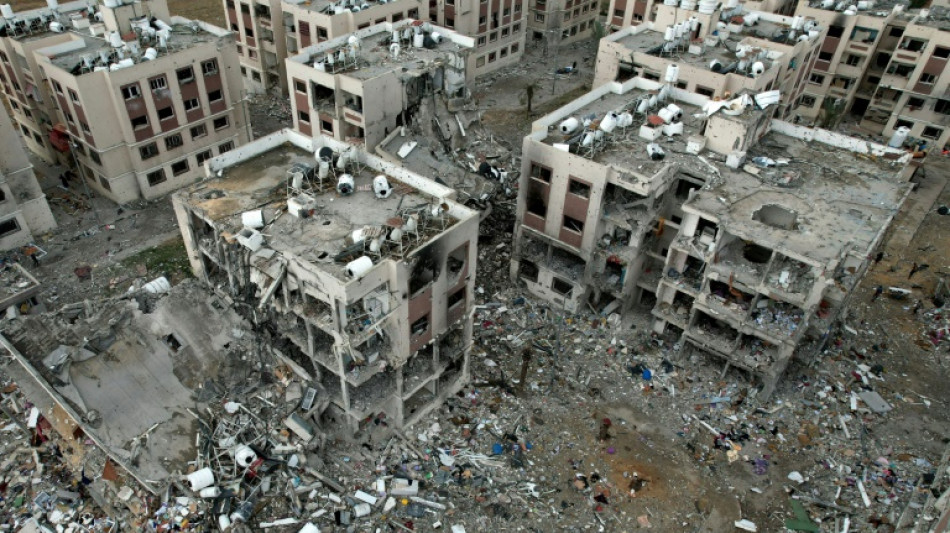
Palestinian statehood key to Arab plans for post-war Gaza / Photo: Mahmud Hams - AFP

 Proposed next EU budget cut back in search for deal

 All Blacks learn from 'failed' Springboks series to punish Wallabies
 Marquez grabs MotoGP championship lead after Indonesia sprint chaos

 All Blacks extend Eden Park streak with big win over Wallabies

 Marquez grabs MotoGP championship lead with Indonesia sprint win

 Schauffele closes in on leaders after 'weird' round in Japan

 Medvedev through at Shanghai Masters in first match since disqualification

 Trump sows doubt on plan to livestream US military execution
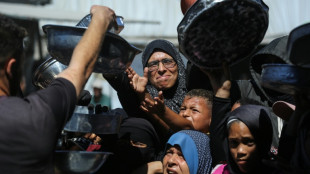 Hunger and malnutrition stalk Gazans, a year on from ceasefire

 Fernandez trumps MotoGP championship duo to grab Indonesia pole

 October 7 scars push Israel's first-time voters to right

 India deploys police, restricts transport ahead of major protest

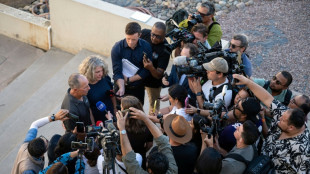 Three Mexicans convicted in murders of Australian, US surfers

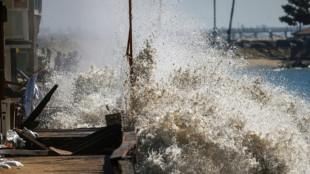 Powerful waves lash California coast as storm threatens more damage

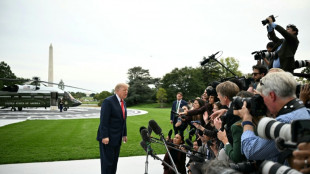 Trump hails Russia deal to release diesel as midterms loom

 Lyon blow chance to go top after loss at Lens
 Stocks rise as Trump says Russia to release diesel to world markets

 Wildfire smoke shuts schools in Amazon's biggest city

 Turkey jails 2 journalists pending trial for fund crisis 'misinformation'

 Major earthquake rocks Panama, triggers tsunami warning

 Indian jailed in France for leading sadist Nazi cult that tortured girls

 'Iron Mike' Ditka hailed as 'gold standard' NFL legend

 Flydubai co-pilot planned suicide attack on Tel Aviv airport: UAE prosecutor

 Mike Ditka: Chicago Bears icon as player and coach

 Outrage over plan to livestream US military firing squad execution

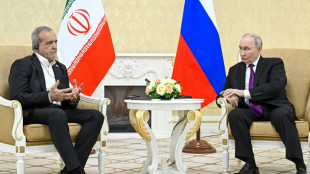
As Israel keeps up its campaign against Hamas, Arab leaders are mapping out ways to support post-war Gaza, placing one major condition on their involvement: a pathway to Palestinian statehood.
Major obstacles lie ahead in gaining the support of both US President Joe Biden and the Israeli government, which is currently led by hawkish Prime Minister Benjamin Netanyahu, a staunch opponent of the two-state solution.
But the Arab quintet of the United Arab Emirates, Saudi Arabia, Qatar, Jordan and Egypt have made clear that their financial and political support, which would be crucial to the future of the shattered Gaza Strip, comes at a cost.
"We have coordinated on this closely with the Palestinians. It needs to be truly a pathway to a Palestinian state," Saudi Foreign Minister Prince Faisal bin Farhan told a World Economic Forum meeting in Riyadh last month.
"Without a real political pathway... it would be very difficult for Arab countries to discuss how we are going to govern."
It is not the first time Arab leaders have come together to chart a path towards a two-state solution, the cherished goal that they believe could defuse Middle East tensions and help usher in a period of prosperity.
But with the Israel-Hamas war hobbling regional economies and spilling over into neighbouring countries, there is both urgency and opportunity.
Last month, on the sidelines of the World Economic Forum, European and Arab foreign ministers met to discuss how to advance the two-state solution.
Gaza will also be top of the agenda when leaders from the 22-strong Arab League meet in Bahrain on Thursday.
- 'Process of reform' -
Arab countries are "pressuring the United States to achieve two things: establish a Palestinian state and recognising it in the United Nations", said an Arab diplomat who is familiar with the talks.
"What is currently hindering these intensive efforts is the continuation of the war and Netanyahu's intransigent rejection," said the diplomat, speaking on condition of anonymity.
Arab leaders "have been trying to work with the Biden administration to mutually support the so-called day after" plan, said Sanam Vakil, director of the Middle East and North Africa programme at Britain's Chatham House think tank.
Central to their plan is the reform of the Palestinian Authority to clear the way for a reunified administration in the occupied West Bank and the Gaza Strip.
The PA has had almost no influence over Gaza since Hamas militants wrestled control of the territory from the Fatah movement of president Mahmud Abbas in 2007.
"We believe in one Palestinian government that should be in charge of the West Bank and Gaza," Qatari Prime Minister Sheikh Mohammed bin Abdulrahman Al-Thani said on Tuesday.
The transition should "not affect the Palestinian cause" or "undermine the Palestinian Authority", he told the Qatar Economic Forum in Doha.
In March, the Palestinian president approved a government led by newly appointed prime minister Mohammed Mustafa, who wants it to play a role in post-war Gaza.
- 'We have a plan' -
However, the biggest roadblock, according to Abdulkhaleq Abdulla, a prominent Emirati analyst, is the Israeli government. He noted that Arab outreach efforts have also included the Israeli opposition.
Earlier this month, the UAE's foreign minister met Israeli opposition leader Yair Lapid in Abu Dhabi. They discussed the need for negotiations on a two-state solution, according to a statement from the UAE foreign ministry.
"There are promises that if the Israeli opposition prevails in (early) elections it may be more amenable and more cooperative," Abdulla said.
Arab leaders have largely ruled out taking part in the governance of Gaza or sending security forces under current conditions.
On Saturday, UAE Foreign Minister Sheikh Abdullah bin Zayed Al-Nahyan said the country "refuses to be drawn into any plan aimed at providing cover for the Israeli presence in the Gaza Strip".
Last month, Jordanian Foreign Minister Ayman al-Safadi said Arab states would not send troops to Gaza to avoid being associated with the "misery that this war has created".
"As Arab countries, we have a plan. We know what we want. We want peace on the basis of the two-state solution," he said in Riyadh.
Oil-rich Gulf states Saudi Arabia and the UAE are also hesitant to cover the reconstruction costs without guarantees.
"They certainly don't want to just be a piggy bank. They're not willing to just clean up Israel's mess and just pour money into it," said Bernard Haykel, an expert on Saudi Arabia at Princeton University.
The UAE's ambassador to the United Nations, Lana Nusseibeh, said in February: "We cannot keep refunding and then seeing everything that we have built destroyed."
G.Teles--PC