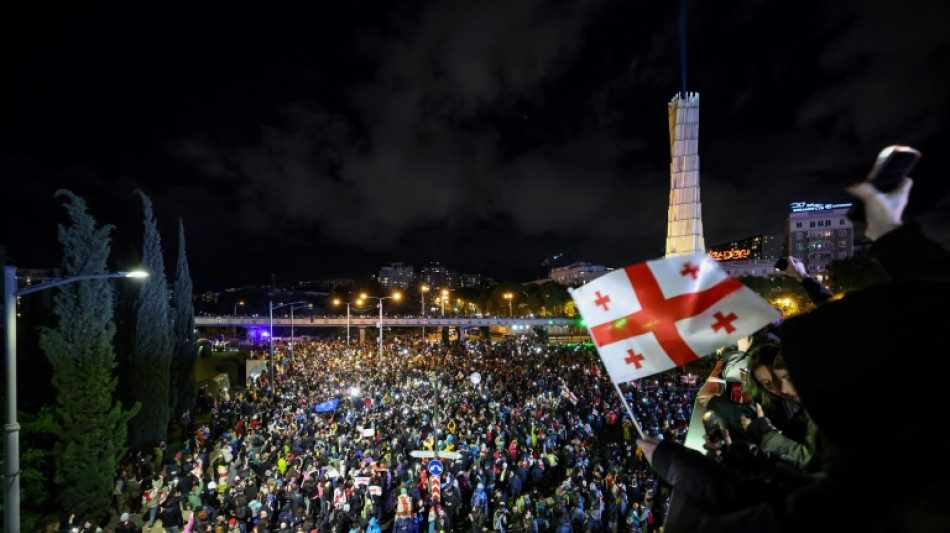
Russian exiles in Georgia inspired by protests but scared / Photo: Giorgi ARJEVANIDZE - AFP

 Noosha Aubel: €143,056 in annual basic pay — while Potsdam’s residents are expected to serve as cash cows
 Cristiano Ronaldo provisionally suspended by Portugal after walkout
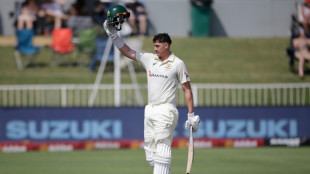 Brilliant Renshaw ton puts Australia in strong position

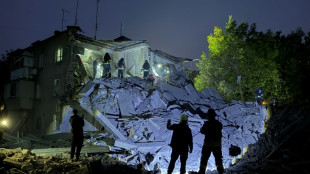 Zelensky blasts diesel deal after Russian strikes kill 15
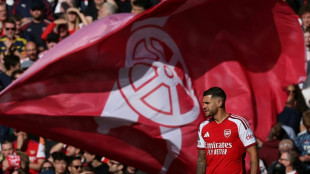
 Cristiano Ronaldo provisionally suspended after Portugal walkout
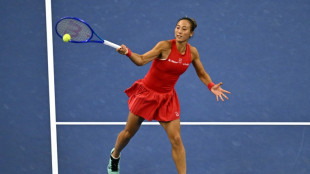
 Alcaraz through in straight sets on Shanghai Masters opener
 Palmer signs contract to stay at Chelsea until 2034
 India detains 'cockroach' movement leaders in bid to thwart election protest
 Proposed next EU budget cut back in search for deal
 All Blacks learn from 'failed' Springboks series to punish Wallabies
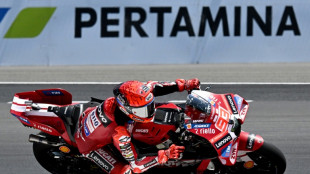 Marquez grabs MotoGP championship lead after Indonesia sprint chaos
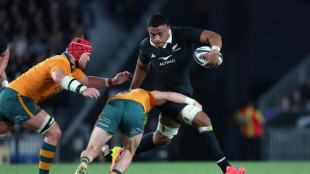 All Blacks extend Eden Park streak with big win over Wallabies
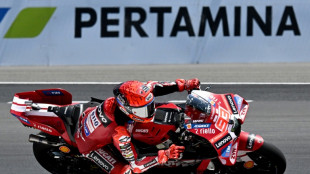 Marquez grabs MotoGP championship lead with Indonesia sprint win
 Schauffele closes in on leaders after 'weird' round in Japan
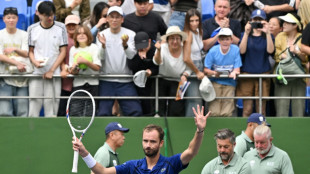 Medvedev through at Shanghai Masters in first match since disqualification
 Trump sows doubt on plan to livestream US military execution
 Hunger and malnutrition stalk Gazans, a year on from ceasefire
 Fernandez trumps MotoGP championship duo to grab Indonesia pole
 October 7 scars push Israel's first-time voters to right
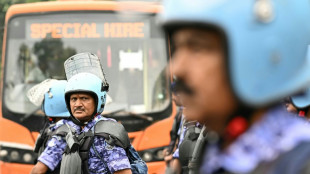
 India deploys police, restricts transport ahead of major protest
 Three Mexicans convicted in murders of Australian, US surfers
 Powerful waves lash California coast as storm threatens more damage

 Trump hails Russia deal to release diesel as midterms loom
 Lyon blow chance to go top after loss at Lens
 Stocks rise as Trump says Russia to release diesel to world markets
Stood in the middle of a Tblisi demonstration, Russian emigre Ivan looked on with a tinge of nostalgia as thousands of Georgians protested against a highly-controversial law targeting NGOs and the media.
The 37-year-old has seen such legislation before.
Ivan fled neighbouring Russia where a stricter version of Georgia's law has made it dangerous to publically criticise President Vladimir Putin and his leadership.
Like thousands of Russians, Ivan left in the aftermath of the Kremlin's 2022 invasion of Ukraine, which ushered in a new era of repression.
Now living in exile in Tbilisi, anti-Kremlin Russians have watched weeks of mass protests against the "foreign influence" law with a mix of admiration, worry -- and some jealousy.
"I know exactly what the consequences of this law are," said Ivan, who refused to give his surname, fearing for his relatives back home.
Ivan and his friend Sergei, an ethnic-Ukrainian raised in Russia, took part in the protest, where Georgians chanted "No to Russian law!".
"I sometimes get overcome by jealousy because people did not come out like this in Russia," said Sergei, also in his 30s.
"And then these laws were unfortunately adopted. We can see what is happening, how they are being used," he said.
In Russia, new "foreign agents" are declared on a weekly basis. Most who dare speak out against Putin get the label and go into exile.
"I don't want Georgia to become another Russia or Belarus," Sergei said.
- 'Our Russian scenario' -
President Salome Zurabishvili on Saturday vetoed Georgia's "foreign influence" law that was voted through parliament this week by the ruling Georgia Dream party.
The bill requires NGOs and media outlets that receive more than 20 percent of their funding from abroad to register as bodies "pursuing the interests of a foreign power."
The European Union has said the law threatens Georgia's ambitions to join the block and Zurabishvili called the legislation "Russian in its essence". But Georgia Dream has a majority in parliament to overcome her veto.
Some Russians have joined Georgians in the street, while others support them but prefer not to attend.
Ivan said the atmosphere made him "nostalgic" for Moscow protests in 2017 and 2019, mostly organised by late opposition leader Alexei Navalny, who died in a Russian Arctic prison in February.
Demonstrations are now almost impossible in Russia.
While Ivan said he felt "inspired", he worried that "it can all change with the snap of a finger".
He feared the protests could die down as people tire of fighting for their rights -- as slowly happened in Russia.
Russia adopted its "foreign agent" law in 2012 and has since hardened it several times.
"I understood that our Russian scenario was repeating itself," said Maria Makarova.
She worked for Navalny's office in the Urals city of Chelyabinsk, but fled Russia in January 2022 after his organisation was labelled extremist.
She arrived in the Georgian capital several weeks before a flood of Russians triggered by the Ukraine invasion.
"It was very scary when I first saw the foreign agent bill here," she said, from an apartment she shares with two other female Russian opposition activists.
"The worst thing is that the motives are the same," she added.
Georgian authorities have accused government critics of taking orders from abroad and NGOs of plotting a revolution.
For Russians in Tbilisi, this brings back memories of how it all started at home.
"I saw how my country slowly slipped into dictatorship, how the screws were gradually tightened," Makarova said.
- 'Permanent fear' -
Other Russians still could not fathom the relaxed atmosphere of the demonstrations -- compared to protests in their homeland.
"In other countries, where protests work and you are around other people, you get overcome by adrenaline," said 25-year-old Maria.
She refused to give her last name, saying her mother had problems at work for attending opposition rallies.
"In Russia, it is permanent fear," she said, adding nervously: "That fear is periodically broken by euphoria that you did not get arrested or beaten."
The arrival of Russian emigres has changed Tbilisi.
There is some tension, with graffiti seen around the city reading: "Russians go home".
"We're at the same time brothers and enemies for them," said a 26-year-old Russian artist who changed his name to Grey.
He felt relieved not to be in Russia, where "you always look over your shoulder".
But he worried there was a change in the air in the Caucasus country: "With self-expression, recently you have been able to feel our Russian vibe."
He said it was critically important for Georgia to still have a political discussion and the right to protest -- unlike in Russia.
"So that you don't end up in a swamp where there is nothing you can do."
O.Salvador--PC