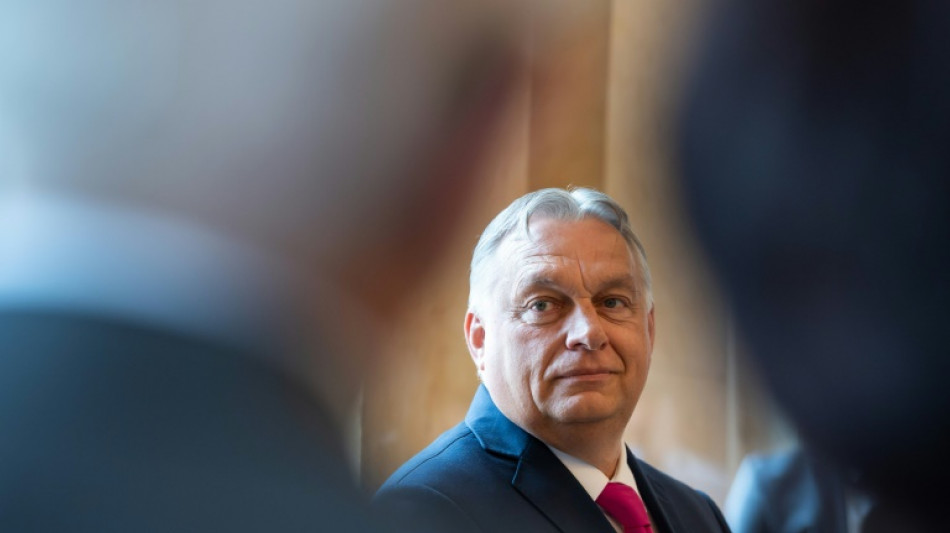
Will Hungary hijack the EU during its presidency? / Photo: SILAS STEIN - AFP

 US leads fresh Ukraine peace push with Miami talks
 Verstappen continues resurgence with pole for Singapore sprint
 Cuban ration book, symbol of the revolution, gathers dust

 Stocks advance, oil retreats as Trump rules out pre-vote Iran attack
 Man City case causing 'uncertainty' for whole Premier League, says Iraola
 Talks with Iran can only succeed without threats, president says

 Home hope Zheng sets up Mertens clash in China Open semis
 Lombardia promises gripping end to season in Pogacar absence
 Barca skipper Raphinha out against Getafe and Galatasaray
 MEXC and Payward Highlight Collaboration as Crypto and TradFi Converge at TOKEN2049
 EU states agree beefed-up European financial markets watchdog
 Eritrea, Ethiopia trade barbs as Tigray rebels retreat
 Kompany 'proud' of Man City success despite guilty verdict
 Man City will win appeal over financial charges, says Maresca
 Fernandez logs record lap at Indonesia MotoGP practice
 Navi Pillay: S.Africa's global rights activist and Nobel winner
 Ufunded Launches “Spotlight” Series, Documenting the Minds Shaping Modern Trading
 Russell goes fastest in practice for smoggy Singapore GP
 For exiled Russian director Zvyagintsev, triumph without belonging
 Home hope Zheng storms into China Open semi-finals
 Zverev churns out win in Shanghai Masters opener
 Hurricane Isaias strengthens en route to US Gulf Coast

 US activists deploy poll volunteers over Trump intimidation fears
 Saint Laurent designer Vaccarello leaves after glittering decade
 'Tough to stay here': Nepal flood survivors wait for homes
Hungary takes over the European Union's six-month rotating presidency on July 1, in the face of fears perennial spoiler Prime Minister Viktor Orban could use it to take the bloc hostage at a critical time.
EU leaders and diplomats have years of bitter experience dealing with Budapest's hard-right government on issues ranging from Ukraine aid to migration and the rule of law.
In 14 years as premier, nationalist Orban has become expert in playing hardball -- critics call it blackmail -- with Brussels and has repeatedly wielded his veto to get more EU funds.
While each EU country fights tooth-and-nail for its own interests, when they take over the presidency they are meant to put their politics aside to take on a more neutral role.
The EU likens heading the European Council, the body comprising the 27 member states, to "someone hosting a dinner", and the powers it carries are limited.
But it does see the country at the helm get to chair meetings, steer the agenda and steward negotiations.
"It will be a presidency as usual, we'll act as an honest broker," Hungary's EU ambassador Balint Odor insisted, as he unveiled priorities focused on bolstering EU economic competitiveness, strengthening the defence industry and curbing illegal migration.
But the early signals from Hungary -- the self-styled champion of "illiberal democracy" in the EU -- did not appear positive.
Budapest riled diplomats by unveiling "Make Europe Great Again" as the presidency slogan -- echoing the rallying cry of Orban ally former US president Donald Trump -- in a move seen as clear trolling of Brussels ahead of US elections in November.
"It's trying to annoy people," said one European diplomat. "But it's not clever or funny."
- 'Don't be fooled' -
Orban's key gripe with Brussels at the moment is the fate of some 19 billion euros in EU funds for Budapest frozen over issues including LGBTQ rights, the treatment of asylum seekers and public procurement.
"We must not be fooled by Orban's ambitious and soft-spoken programme for the next six months, because at EU level, the government is primarily pursuing one goal: to free up frozen EU funds," said German MEP Daniel Freund, an Orban critic.
"It is to be feared that he will also abuse the powers of the council presidency to achieve this."
Hungary meanwhile is also facing the threat of proceedings under the EU's Article 7 -- a so-called "nuclear option" to strip countries judged to be contravening the bloc's values of voting rights.
Budapest has faced that threat since 2018, and has said it does not intend to hold any hearings on the issue during its presidency.
But officials and diplomats fret that one major victim of Hungary's six months in charge will be EU support for Ukraine as it battles Russia's invading forces.
Budapest -- Russia's closest ally in the bloc -- has repeatedly held up sanctions on Moscow over the war. For the past year it has blocked the disbursement of EU funds to help arm Ukraine.
Aware of this, other EU countries have pushed through a flurry of initiatives in the dying days before Belgium, which currently holds the presidency, passes on the baton to Hungary.
That includes launching EU membership negotiations with Ukraine this week, and fresh sanctions on Moscow.
"We talk among ourselves as well that, okay, under the Hungarian presidency there will not be any sanctions package," said a senior European diplomat.
"So let's adopt the sanctions package now, and we'll come back to the issue in six months' time."
- Who's afraid of Orban? -
But insiders -- long used to blockages from Budapest -- remain sanguine about the threat of Hungary gumming up the EU system.
The country takes the reins just after EU elections, meaning that much of the next six months will be taken up with installing a new European Parliament and executive arm.
And EU counterparts say they've been war-gaming ways around an obstinate Budapest if needed.
Diplomats say the presidency only affords limited power, and if other countries want an issue discussed they can override the presidency and vote it onto the table.
"Even if the presidency doesn't like it, you can put an item on the agenda," the senior diplomat said.
"So I'm not afraid of Hungary."
Another diplomat argued that it was "in Hungary's interest to make the presidency a success" to avoid political headaches and bad blood that could follow.
"I would say they want a smooth running of the trains," the diplomat said.
"And they know if they don't take that path then of course the other member states, especially the big ones, are not going to sit idly by and let it happen."
P.Cavaco--PC