Costly odyssey for cancer care in war-torn Sudan / Photo: - - AFP/File

 Djokovic crashes out of Shanghai Masters in his first match

 EU says Turkey's crackdown on rights hampers membership bid

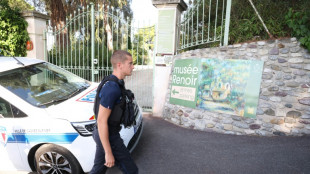 Two Renoir paintings stolen in France recovered: mayor
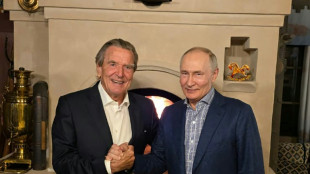 German leader outraged at Schroeder birthday visit to Putin

 Stocks up, oil retreats as Trump rules out pre-vote Iran attack
 South African judge Navi Pillay wins Nobel Peace Prize
 'I completely trust the club,' says Man City boss Maresca
 '10 out of 10' Quintana reminisces over dream Vuelta win
 Maddinson given shock recall but fails to score
 Navi Pillay, South African rights champion, wins Nobel Peace Prize
 Saudi Arabia says three killed at airport as Yemen war expands
 Everton's US owners mull sale of club two years after takeover

 Ukraine takes Russia fight to 'scorching sands' of Sahel
 Chinese AI tool pulled to prevent 'misuse' after South Korea hacks

 Asian stocks mostly up as traders weigh AI, oil dips after surge
 Walking through flames: orangutans rescued in Indonesia fires
 LeBron shines in pre-season debut for re-tooled 76ers
 Okinawa resolution calls for revision of US forces pact after murder
 Verdict expected Friday in Mexico trial over murders of Australia, US surfers
 New York mayor says asking Trump to withdraw ICE after shooting

 Walking through flames: orangutan rescued in Indonesia fires
 James shines in pre-season debut for re-tooled 76ers
 Fuel, fertilizer costs strain US farmers' support for Republicans in midterms
 Trump's 'super intelligence' rebrand to sell AI faces uphill battle
 Fiji demands US provide evidence Chinese official paid bribes for Beijing
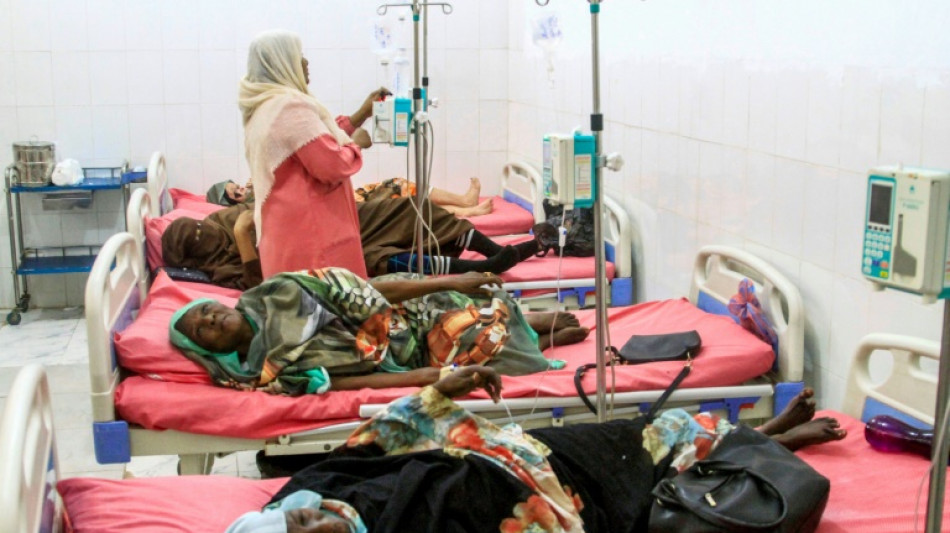
Doctors in eastern Sudan say Mohammed al-Juneid's wife, displaced and diagnosed with cancer, needs treatment elsewhere in the war-torn country. But the road is long and dangerous, and the journey expensive.
"Even if we make it to Meroe in the north, who knows how long we'll have to wait until it's her turn," the 65-year-old told AFP in Gedaref, where he and his wife have sought safety from the country's raging war.
Since April 2023, fighting between the army and the paramilitary Rapid Support Forces has shattered Sudan's already fragile healthcare system.
Fewer than 30 percent of hospitals remain functional, "and even so at a minimal level", according to the World Health Organization (WHO).
For tens of thousands of patients with chronic illnesses, that has meant embarking on long, dangerous odysseys across front lines, often just to reach an overwhelmed and under-equipped healthcare facility.
Many have flocked to Gedaref in the east, where more than half a million people fled to escape the fighting.
In its single oncology facility -- one of the country's last -- women draped in colourful traditional veils lie on beds, chemotherapy needles in their arms.
Among them is Juneid's wife, who used to undergo radiation therapy at Wad Madani hospital in central Sudan before "it closed because of the war", her husband said.
"Now the doctors say she needs radiation again, which is only available at Meroe hospital" -- a 900-kilometre (560-mile) drive that is actually far longer if you want to avoid the fighters on the way.
The couple found a driver who agreed to take them on the bumpy, checkpoint-marked road. He would do it for $4,000 -- a small fortune that Juneid cannot afford.
- 40,000 lives at risk -
Lying on a nearby bed, schoolteacher Fatheya Mohammed said her cancer had become more aggressive "since the war began".
"They give me chemo injections here," she told AFP. But at bare minimum, she needs CT scans that are "only available in Kassala", 200 kilometres (125 miles) to the northeast.
That might as well be half a world away. Over the past year, Mohammed has received only three months of her government salary, and can't afford to go anywhere.
Sudan, one of the world's poorest countries even before the war, already had an under-funded and overwhelmed healthcare system before the war dealt the final blow.
Its two main oncology centres -- in the capital Khartoum and just south in Wad Madani -- have closed.
Smaller facilities, like the 27-bed East Oncology Hospital in Gedaref, have been overwhelmed by the influx.
In 2023 "we took in around 900 new patients", the centre's director Motassem Morsi told AFP -- up from their annual patient load of "around 300 to 400".
In the first three months of 2024 alone "we've taken in 366 patients", he said.
Of Sudan's 15 oncology centres, only the one in Meroe still offers radiation therapy, an October article published in the online medical journal ecancermedicalscience confirmed.
The costs associated with treatment, transportation and accommodation are out of reach for many, "forcing them to confront their impending death without proper care", wrote the authors, four doctors in Sudanese and Canadian hospitals.
"The limited access to oncology services during the current war endangers the lives of more than 40,000 Sudanese cancer patients," they concluded.
- 'Excruciating pain' -
Even if terminal patients were to accept their fate -- at the hands of both disease and the war's devastation -- there is no respite from their daily physical agony.
Dire shortages of medicines, including painkillers, mean patients must "endure excruciating pain without recourse", the authors wrote.
According to the WHO, "about 65 percent of the Sudanese population lack access to health care" entirely, in a country where upwards of 10 million people have been forced to flee their homes.
Shuttered hospitals and dire shortages place a "significant strain on and risks overwhelming the remaining facilities due to the influx of people seeking care", the WHO has warned.
In Meroe, the last hope for patients in need of radiation treatment, the nightmare has come true.
"We have two radiation machines that work 24 hours a day," a doctor at the Eldaman Oncology Centre told AFP over the phone, requesting anonymity because he was not authorised to speak to the media.
"If one of them goes down, even just for maintenance, it causes an even bigger backlog of patients," he said, exhaustion clear in his voice.
A.S.Diogo--PC