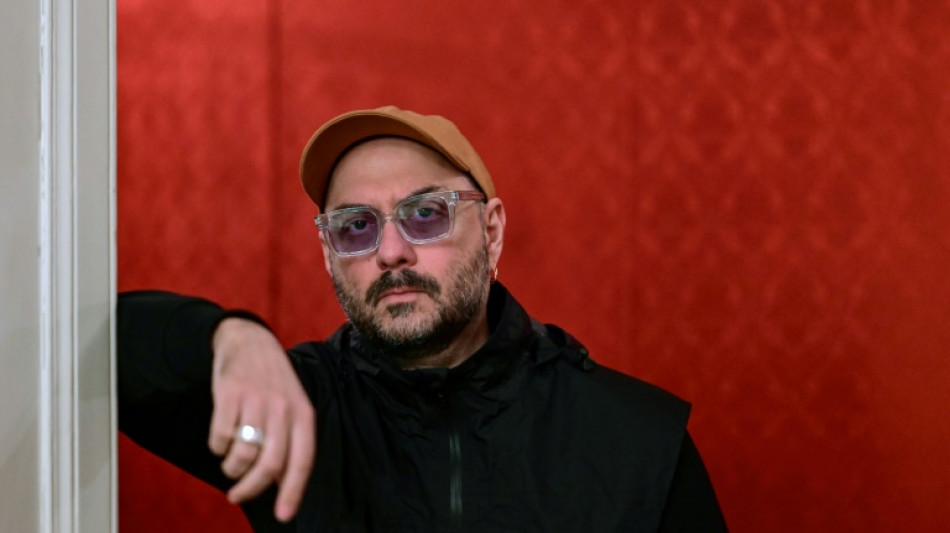
Film maker Serebrennikov says Russia 'self-killing' in Ukraine / Photo: Tobias SCHWARZ - AFP

 Swedish police identify 17-year-old girl as victim in school sword attack
 Carrick keeps calm despite Man Utd misery, Sage beaten in first game as Palace boss

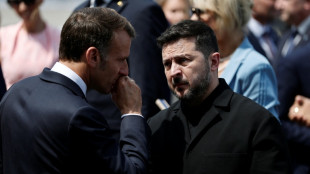 France to deliver interceptor missiles to Ukraine after new Russian strikes

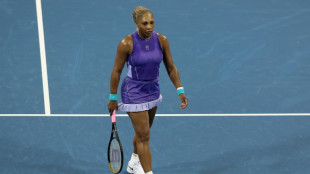 Serena Williams and Alcaraz unite in US Open mixed doubles
 Macron pledges air defence as 13 killed in Russia, Ukraine strikes
 DR Congo capital wary of Ebola nightmare
 Swedish police name 17-year-old girl as victim in school sword attack

 South Korea sends first container ship through Arctic route

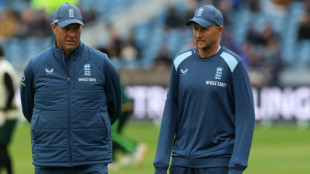 Trescothick eager to keep England job despite Hussey approach
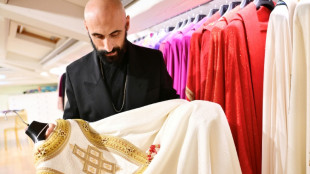
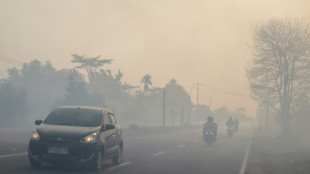 Indonesia deploys hundreds of soldiers to tackle Borneo fires

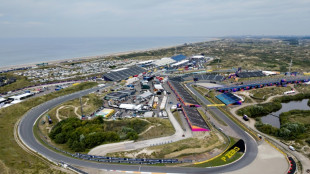 The last lap: Fans, drivers bid fond farewell to Dutch GP
 Silesia Diamond League: four events to watch

 Russell wins Dutch GP sprint race, Antonelli fourth
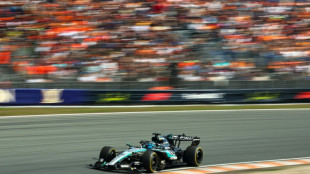 Mercedes driver George Russell wins Dutch GP sprint race
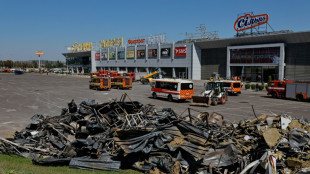 Ukraine strikes kill two children after Russia's deadly mall attack
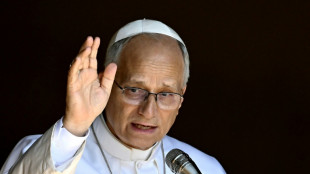 Pope visits San Marino, before addressing Italian political gathering

 Trump tariffs heap up as Canada tries to curb US reliance

 Australia lose three wickets after skittling Bangladesh for 64
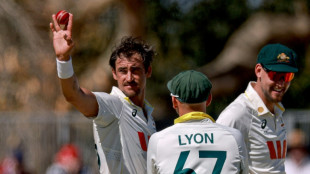 Bangladesh all out for 64 in 2nd Test after Starc masterclass

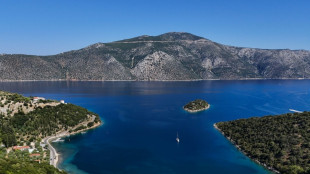 Odyssey effect: stars sell Greece to a new wave of US tourists
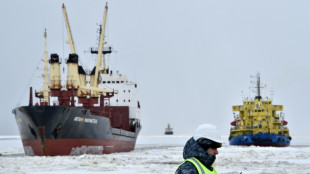
 South Korea to send first container ship through Arctic route

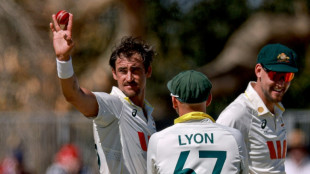 Starc takes 5-11 to leave Bangladesh reeling in 2nd Test
 Injured Rune withdraws from US Open
 Nakashima knocks out Fritz to reach Cincinnati semi-finals
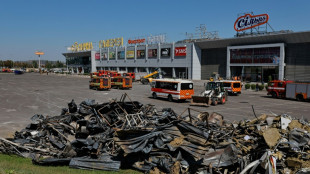
 Ukraine says 'cynical' Russian strike on shopping centre killed 16
Russia is self-destructing with its war in Ukraine, according to film and theatre director Kirill Serebrennikov, who said domestic support for the invasion was the result of "many years of terrible propaganda."
Speaking to AFP in Berlin, his new home, Serebrennikov, the Russian son of a Jewish father and a Ukrainian mother, said he felt "just horror, sadness, shame, pain" about the invasion.
"I love Russia, I love the Russian people and I know that they're really peaceful," he said. "At the same time a lot of them, from what I read and what I see, are supporting this terrible division, and this terrible killing, which sometimes looks like self-killing," he said.
"Culture and war are opposites and the people of culture can't be part of the war, they can't be dogs of war," he said, but anti-war artists often find themselves in a dilemma about whether to speak up.
- 'Don't want to judge' -
"Imagine if you say something tomorrow or the day after tomorrow, immediately the police will come and arrest you, and what to do?" he asked. "The people have their families, the people have their business, work, need to earn money for a living."
There were "very brave people, very brave artists who, in spite of fear, in spite of all these cases and restrictions and criminal pressure, try to write something," he said.
Examples were "a few good theatre makers" who refused their National Theatre "Golden Mask" awards, and an artist who went to prison for exchanging price labels in a shop for information about the war so people "might have the chance to read the truth."
Others have kept quiet, or actively worked with the regime, Serebrennikov said, though he insisted it was not his role to judge.
"If you want to be Leni Riefenstahl, welcome, if you want to be Marlene Dietrich, welcome," he said.
Riefenstahl was a German photographer and film director who made a key contribution to Nazi propaganda, while star actress Marlene Dietrich helped Jews escape from Germany, gave up her citizenship, and toured the US to shore up morale during World War II.
"It's the choice of a person and let's respect this choice," he said.
"If people decide to live forever in Moscow and work for the power, it is their choice, they can do it freely, for me I don't want to judge them at all," he said.
- 'Made my choice' -
Serebrennikov, 52, was allowed a month ago to leave Russia, where he had been found guilty in 2020 of embezzling funds at Moscow's Gogol Centre theatre.
His supporters say the conviction was revenge for his critiques of authoritarianism and homophobia. He was informed that, having served half his sentence, he was free to go.
"I have made my choice," he said. "But I can speak only for myself."
Serebrennikov said "of course it's not easy" for most artists to leave Russia "because they have no money and they have no visa."
He said he felt "privileged" with his new home in Berlin, and the possibility to work across Europe.
In May, Serebrennikov is expected at the Cannes Film Festival, which he missed last year because of a travel ban although his film, "Petrov's Flu," was selected for the main competition.
With his new film, "Tchaikovsky's Wife," about the stormy relationship between the 19th-century composer and his spouse, he will again vie for the coveted Palme d'Or.
He is also working on an opera production in Amsterdam and will present a play at the prestigious Avignon theatre festival in southern France.
Serebrennikov said he was unsure when he would see his home country again, or his nearly 90-year-old father who lives in Rostov-on-Don near the border with Ukraine, though he added: "Never say never."
He said he didn't feel exiled, but had started "a new page" in his life.
- 'Tchaikovsky doesn't bomb' -
Serebrennikov said he hated violence, but found it problematic to put pressure on Russian artists to denounce the war or face exclusion from international venues.
"It's really tricky and it's not really good when somebody pushes you to pronounce something, to say 'I am in favour' or 'I am against'," he said.
"That reminds us of something, something we already had," he said, an apparent reference to Stalinist show trials featuring public confessions.
Serebrennikov said he understood Ukrainian film makers' calls to get Russian movies banned from international festivals, but that a "boycott of culture" was no solution.
"Tchaikovsky doesn't bomb the Ukrainians," he said.
A.Silveira--PC