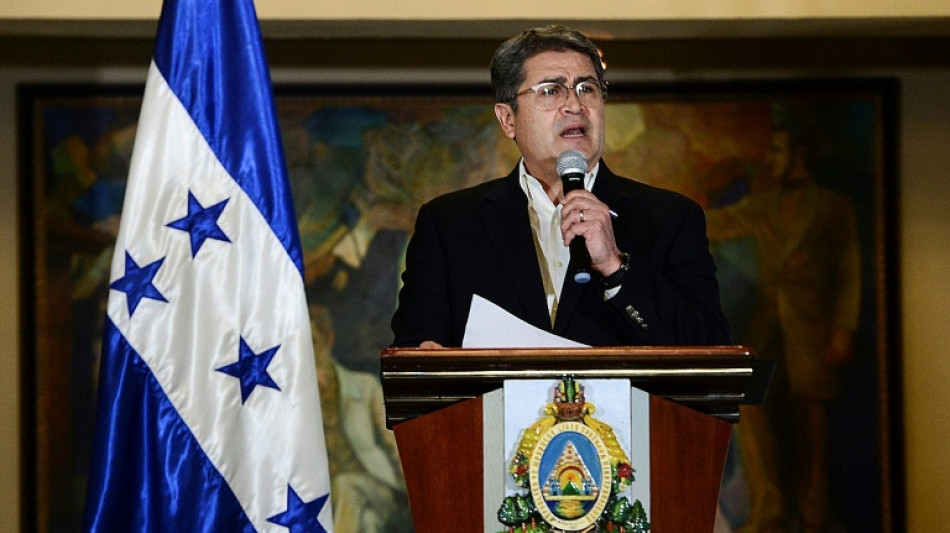
Honduras far from dismantling ex-president's 'narco-state': experts / Photo: Orlando SIERRA - AFP/File

 Djokovic crashes out of Shanghai Masters in his first match

 EU says Turkey's crackdown on rights hampers membership bid

 Two Renoir paintings stolen in France recovered: mayor
 German leader outraged at Schroeder birthday visit to Putin

 Stocks up, oil retreats as Trump rules out pre-vote Iran attack

 South African judge Navi Pillay wins Nobel Peace Prize
 'I completely trust the club,' says Man City boss Maresca
 '10 out of 10' Quintana reminisces over dream Vuelta win

 Maddinson given shock recall but fails to score
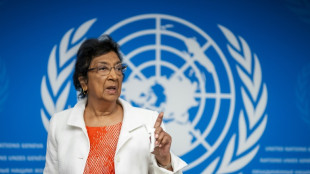 Navi Pillay, South African rights champion, wins Nobel Peace Prize

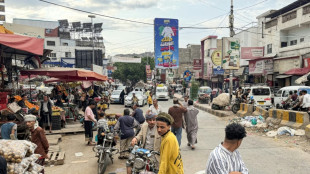 Saudi Arabia says three killed at airport as Yemen war expands
 Everton's US owners mull sale of club two years after takeover

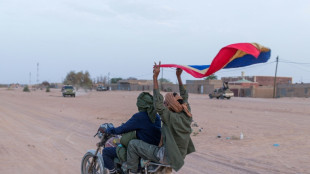 Ukraine takes Russia fight to 'scorching sands' of Sahel
 Chinese AI tool pulled to prevent 'misuse' after South Korea hacks
 Asian stocks mostly up as traders weigh AI, oil dips after surge
 Walking through flames: orangutans rescued in Indonesia fires
 LeBron shines in pre-season debut for re-tooled 76ers
 Okinawa resolution calls for revision of US forces pact after murder

 Verdict expected Friday in Mexico trial over murders of Australia, US surfers
 New York mayor says asking Trump to withdraw ICE after shooting
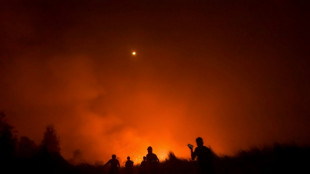 Walking through flames: orangutan rescued in Indonesia fires
 James shines in pre-season debut for re-tooled 76ers
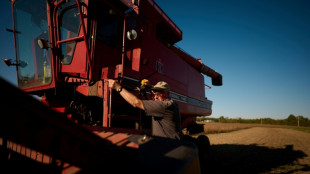 Fuel, fertilizer costs strain US farmers' support for Republicans in midterms

 Trump's 'super intelligence' rebrand to sell AI faces uphill battle

 Fiji demands US provide evidence Chinese official paid bribes for Beijing
Honduras still has a long way to go to dismantle the "narco-state" that grew under ex-president Juan Orlando Hernandez, jailed this week for smuggling a deluge of cocaine into the United States, experts told AFP.
Hernandez, 55, spent years in positions of power cozying up to kingpins from some of Latin America's most notorious cartels, which placed proxies in state institutions while he pocketed millions of dollars in drug money.
Extradited to the United States upon leaving office in 2022, Hernandez was sentenced this week to 45 years in jail for his crimes after prosecutors said he had turned his country into a "narco-state".
Honduras is still picking up the pieces.
"It is impossible to eliminate the narco-state that Juan Orlando built in two years," former Drug Enforcement Administration (DEA) agent Mike Vigil told AFP.
Honduras' first woman president, Xiomara Castro, came to power vowing to tackle drug trafficking, corruption and poverty in a country that is losing droves of citizens seeking a better life in the United States.
She inherited a nation where police chiefs, soldiers, judges, businessmen, mayors and lawmakers had links to drug trafficking networks.
"The drug world placed its pawns within the state machinery," human rights lawyer Reina Rivera told AFP.
Security Minister Gustavo Sanchez recently acknowledged that Hernandez's arrest meant "the criminal structure was decapitated," but "the body continues to operate."
- Infiltrated institutions -
Hernandez was convicted in March of having facilitated the smuggling of hundreds of tons of cocaine through Honduras to the United States since 2004, a decade before he became president.
He used the drug money to finance his political campaign and commit electoral fraud, prosecutors said, all while presenting himself as a champion of the war on drugs.
His successor Castro "has to govern with the structures with which Hernandez governed," with institutions that were infiltrated by cartels, said sociologist Pablo Carias.
He said that while no one can accuse Castro of involvement, rumors continued to swirl about top officials having their fingers in illicit activity.
The former DEA agent Vigil said that cocaine trafficking from Colombia through Honduras was still thriving. But the country is no longer merely a transit point.
He said coca crops began emerging in the Honduran mountains in 2017 and laboratories are now producing drugs on site.
These are being run by Honduran drug trafficking groups collaborating with Mexico's Sinaloa and Jalisco Nueva Generacion cartels, said Vigil.
- Rebuilding the state -
Among Castro's first measures in office was to repeal the so-called Secrets Law classifying public security and defense documents, which critics said had been used to conceal corruption.
She has unveiled a raft of anti-narco measures and ordered the capture of those sought for extradition to the United States, offering rewards for information on the whereabouts of most-wanted drug lords.
The move worked, with a $40,000 reward leading to the capture in June of a key ally of Hernandez, Mario Jose Calix, a former deputy mayor.
The security minister, Sanchez, said 17 suspected narcos had been extradited since Castro came to power.
"She has tried to rebuild the state apparatus," with allies who cannot be accused of links to cartels, said the human rights lawyer, Rivera.
But "many police chiefs are still there," at the service of the cartels, he added.
Vigil said that extraditing the worst drug traffickers to the United States was key to stopping them from operating with impunity in Honduras.
Despite Castro's efforts Human Rights Watch (HRW) said in its 2024 global report that she had "largely failed to deliver on her promise to strengthen human rights and democratic institutions in Honduras."
The country's narco woes unfold against a backdrop of poverty levels at almost 80 percent of the population, and one of the highest murder rates in Latin America.
"Honduras continues to face ... systemic corruption, political interference in the justice system" and deadly attacks on rights and environmental defenders, said HRW.
M.Gameiro--PC