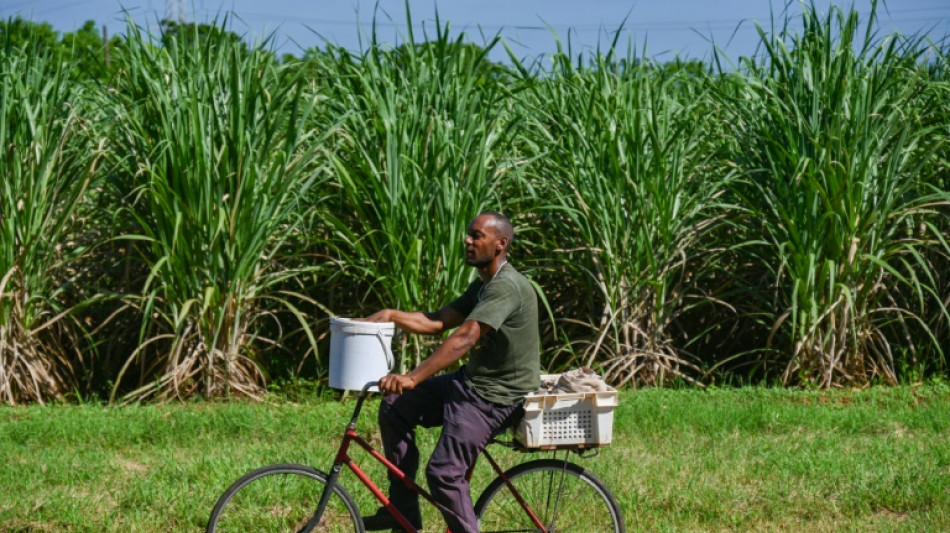
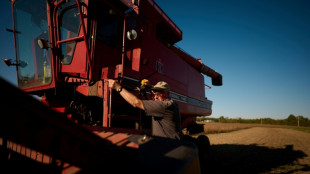
Fuel shortages a bitter pill for Cuba's sugar cane producers / Photo: YAMIL LAGE - AFP

 'Tough to stay here': Nepal flood survivors wait for homes

 Malaysia closes schools in capital, parts of country due to haze

 Buccaneers stun Cowboys for first win of NFL season
 Activists hope trial will stop 'forever chemicals' at Italy plant

 Guardians rally for 9-5 victory over White Sox to stay alive in MLB playoffs
 Asian stocks mixed amid AI concerns, oil dips after surge

 Wallabies expect fast-paced All Blacks in Bledisloe opener
 Tech scammer Elizabeth Holmes focus of documentary by absurdist Nathan Fielder

 Climate hopes shift from politics to the courts
 Will Nobel Peace Prize pick make waves at the White House?

 Trump rules out new Iran attack before US midterm elections

 Far-right influencer shows Israel's coarse political turn

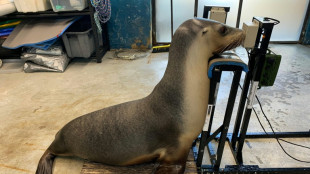 Seals and sea lions get hearing tested at Australia zoo

 Mourinho's Real Madrid playing catch-up in Clasico countdown

 Joy as USS Lincoln back home after troubled Gulf deployment
 OpenAI says Iran, Russia influence ops busted
 Anthropic bans 'cruel' behavior against its Claude AI

 Anne Carson's Nobel literature prize 'a proud moment for Canada': PM

 Montagliani to seek CONCACAF re-election in boost for Infantino: reports

 Oil surges, stocks sink on jitters over US plans in Iran war

 John Cena and Jessica Biel hit the gas in 'Matchbox: The Movie'

 US, Ukrainians, Europeans to discuss 'new ideas' to end war
 Unproven 'cures' pushed online amid plague concerns

 Nigeria looks to ease fuel prices as election looms

 Prosecutors in Maradona death trial seek sentences up to 12 years

Cuba's sugar cane industry, once the world leader, first lost the United States as its main client 60 years ago, then the Soviet Union three decades later.
Today, the industry is teetering on the brink with Cuba in the grips of a crushing economic crisis marked by frequent power blackouts and severe shortages of basic supplies such as fuel, fertilizer and pesticides.
"It is the worst time in the history" of the industry, said Reinaldo Espinosa, the 54-year-old boss of a sugar cane-producing cooperative in the province of Artemisa, southwest of the capital Havana.
"Recovering our national sugar production will take years," Espinosa told AFP as he described preparing for the planting season "with zero resources."
He said his cooperative's output has fallen from 84 to 28 tons of cane per hectare in the past five years as he rattled off a long list of obstacles: "Zero fertilizer, zero herbicide," a dire shortage of fuel and power blackouts "quite often in the productive hours."
"It's really hard" to keep going, Espinosa said.
- Plummeting production -
Agricultural cooperatives were set up by the communist state 30 years ago in a bid to revitalize the industry after the fall of the Soviet Union, which was Cuba's main ally, investor and client.
It had replaced the United States as Cuba's main sugar importer until the 1960s, when sanctions kicked in as the island shifted towards communism.
When the USSR collapsed 30 years later, Cuba abruptly lost 75 percent of its exports and its main source of credit.
Most state-owned farms were converted into cooperatives that remained in government hands.
But sugar prices plummeted at about the same time and US sanctions left the industry -- and others -- in dire straits.
The number of sugar mills in Cuba has since dropped from 156 to 56, and the 2022-2023 harvest barely reached 350,000 tons -- 4.4 percent of what the country produced until the early 1990s.
- 'We are paralyzed' -
Since the coronavirus pandemic, which hit its tourism sector hard, Cuba has experienced its worst economic crisis since the 1990s.
Structural weaknesses in the centralized economy have meant it has been unable to adapt, and limited economic opening in recent years has not done enough to create stability or raise foreign reserves.
Since March, Cuba has faced a fresh wave of power blackouts as the government is unable to import sufficient fuel or the equipment needed to repair the country's aging thermoelectric plants.
For producers, it has meant hardship and uncertainty.
"We must work with hoes... and with machetes because we have nothing else," said Leonardo Hernandez, 64, a co-manager at the Artemisa cooperative, whose irrigation and weeding machines sit unused without fuel.
"We are idle... we have nothing to work with," added Jose Clavijo, a 59-year-old machinist. "We are paralyzed and we want to work because we need to."
F.Carias--PC