
-
 'Tough to stay here': Nepal flood survivors wait for homes
-
LeBron shines in pre-season debut for re-tooled 76ers
-
 Malaysia closes schools in capital, parts of country due to haze
-
Okinawa resolution calls for revision of US forces pact after murder
-
 Buccaneers stun Cowboys for first win of NFL season
-
Verdict expected Friday in Mexico trial over murders of Australia, US surfers
-
 Activists hope trial will stop 'forever chemicals' at Italy plant
-
New York mayor says asking Trump to withdraw ICE after shooting
-
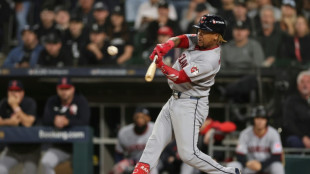 Guardians rally for 9-5 victory over White Sox to stay alive in MLB playoffs
-
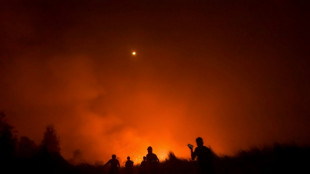
Walking through flames: orangutan rescued in Indonesia fires
-
 Asian stocks mixed amid AI concerns, oil dips after surge
-
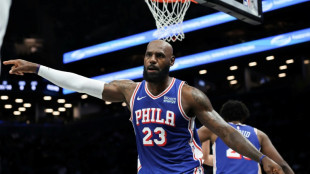
James shines in pre-season debut for re-tooled 76ers
-
 Wallabies expect fast-paced All Blacks in Bledisloe opener
-
Fuel, fertilizer costs strain US farmers' support for Republicans in midterms
-
 Tech scammer Elizabeth Holmes focus of documentary by absurdist Nathan Fielder
-
Trump's 'super intelligence' rebrand to sell AI faces uphill battle
-
 Climate hopes shift from politics to the courts
-
Fiji demands US provide evidence Chinese official paid bribes for Beijing
-
 Will Nobel Peace Prize pick make waves at the White House?
-
More than just football: How scandal-tainted City led Manchester's rebirth
-
 Trump rules out new Iran attack before US midterm elections
-
Record Eden Park streak creates tension for All Blacks
-
 Far-right influencer shows Israel's coarse political turn
-
EU trade chief seeks 'tangible outcomes' in China talks
-
 Seals and sea lions get hearing tested at Australia zoo
-
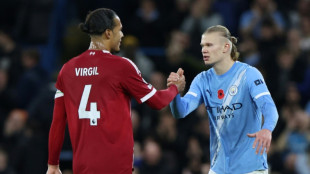
Man City face Anfield cauldron after guilty Premier League verdicts
-
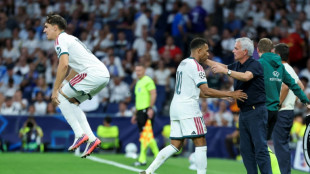 Mourinho's Real Madrid playing catch-up in Clasico countdown
-
CNN, MS Now, Politico urge judge to extend White House access
-
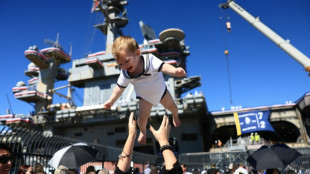 Joy as USS Lincoln back home after troubled Gulf deployment
-
Trump administration to launch new vaccine research center
-
 OpenAI says Iran, Russia influence ops busted
-
Russian strikes kill 30 in Ukraine frontline city, talks set in US
-
 Anthropic bans 'cruel' behavior against its Claude AI
-
US military to livestream firing squad execution of Fort Hood shooter
-
 Anne Carson's Nobel literature prize 'a proud moment for Canada': PM
-
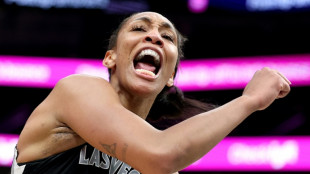
Aces star Wilson wins record-extending fifth WNBA MVP
-
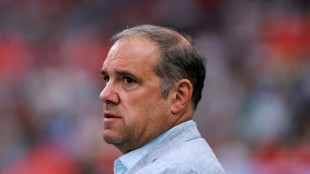 Montagliani to seek CONCACAF re-election in boost for Infantino: reports
-
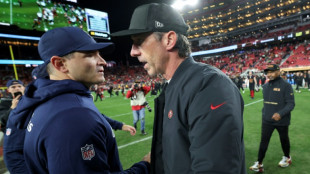
Undefeated 49ers seek Seahawks revenge
-
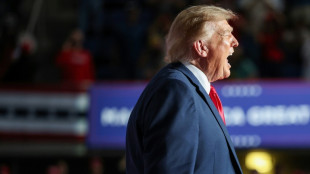 Oil surges, stocks sink on jitters over US plans in Iran war
-
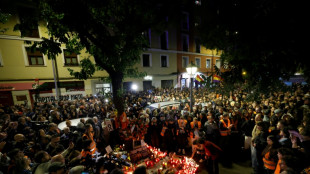
Madrid mourns evicted retiree, 'icon' of Spain housing protests
-
 John Cena and Jessica Biel hit the gas in 'Matchbox: The Movie'
-
OpenAI revenue gap report rattles AI stocks
-
 US, Ukrainians, Europeans to discuss 'new ideas' to end war
-
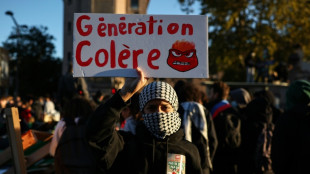
France pledges more teachers after school students vow no let-up
-
 Unproven 'cures' pushed online amid plague concerns
-
Bordeaux confirmed in sixth tier of French football
-
 Nigeria looks to ease fuel prices as election looms
-
Trump gives 'national treasure' Musk top US medal after rift
-
 Prosecutors in Maradona death trial seek sentences up to 12 years
-
MLB proposes shortening season, reforming playoffs
Iran vote winner could ease, but won't end, nuclear tensions: analysts
Masoud Pezeshkian's victory in Iran's presidential elections has given a rare boost to efforts for scaling down years of tensions over Tehran's nuclear programme, even with no indication of any upcoming breakthrough in the crisis.
Pezeshkian's defeat of ultra-conservative Saeed Jalili, a former chief nuclear negotiator whose intransigence and style made him notorious among Western diplomats, is a relief for European governments as they seek to maintain dialogue on the issue.
The incoming president was backed by former president Hassan Rouhani, who while in office led efforts to defuse the crisis.
Pezeshkian also boasted on his campaign team former foreign minister Mohammad Javad Zarif, who in the past had worked intensely with European officials over the nuclear dossier.
But even after taking office, Pezeshkian will in no way be Iran's number one figure on foreign policy or nuclear issues, with top authority resting with supreme leader Ayatollah Ali Khamenei who has led the Islamic republic since 1989.
During campaigning for the election, called after hardline president Ebrahim Raisi died in a helicopter crash, Pezeshkian, 69, had advocated for an Iran more open to the West.
He had also called for "constructive relations" with Washington and the Europeans, in order to "bring Iran out of its isolation".
He showed "that his project was very different from that of the ultra-conservative Saeed Jalili", who rejected the impact of international sanctions on the economy, said Thierry Coville, Iran specialist at the Institute of International and Strategic Relations (IRIS).
- 'No longer realistic option' -
The 2015 Iranian nuclear deal, known as the JCPOA, and concluded with the United States, China, Russia, France, Germany and the United Kingdom, was supposed to regulate Iran's atomic activities in exchange for the lifting of international sanctions.
But since the unilateral 2018 US departure from the agreement at the behest of Republican former president Donald Trump, the Islamic republic has gradually freed itself from its commitments.
Tehran vehemently denies that it wants to acquire nuclear weapons, but its programme continues to grow.
According to the International Atomic Energy Agency (IAEA), Iran is the only non-nuclear armed country to enrich uranium to 60 percent, close to the 90 percent needed to build a bomb, and to accumulate such large stocks.
Western diplomats who spoke to AFP said that a victory for Saeed Jalili would have further paralysed the issue, describing him as a "hardliner" "who served up ideological speeches" during negotiations and was the embodiment of an inflexible line.
"Restoring the 2015 nuclear deal is no longer a realistic option as the facts on the ground have fundamentally changed," said Ali Vaez, Iran project director at the International Crisis Group.
"Iran's nuclear programme is now too advanced, sanctions have proven too sticky, trust is at an all-time low, and the world powers are no longer on the same page."
But he added that Jalili's "inflexible and ideological approach" would have been bound "to put Iran and the West on a collision course".
With an experienced diplomatic team beneath Pezeshkian, "a series of transactional agreements that would help avert a crisis" could be possible, even if a "sustainable solution might still prove beyond reach", he said.
- 'Out of the game' -
Pezeshkian's election has come at a sensitive moment for Iran.
Tensions are at the highest they have been in years between Israel and Iran in the wake of the October 7 attack by Hamas on Israel and the ensuing war in Gaza. Several Western governments fear a new war could now start between Iran-backed Hezbollah and Israel in Lebanon.
Meanwhile Israel, which some observers believe has stepped up sabotage operations inside Iran in recent years, has never ruled out military action against Iranian nuclear facilities. It could feel further encouraged if Trump wins American presidential elections against the Democrats this year.
The Islamic republic is keenly aware that any easing of sanctions will first have to be negotiated with Washington. Whether or not the Democrats remain in power is therefore a key piece of the puzzle.
As for the Europeans, who are also all emerging from elections that have changed their political landscape, they retain limited room for manoeuvre.
"They have put themselves somewhat out of the game by accepting American sanctions" against Tehran, said Thierry Coville.
A.S.Diogo--PC