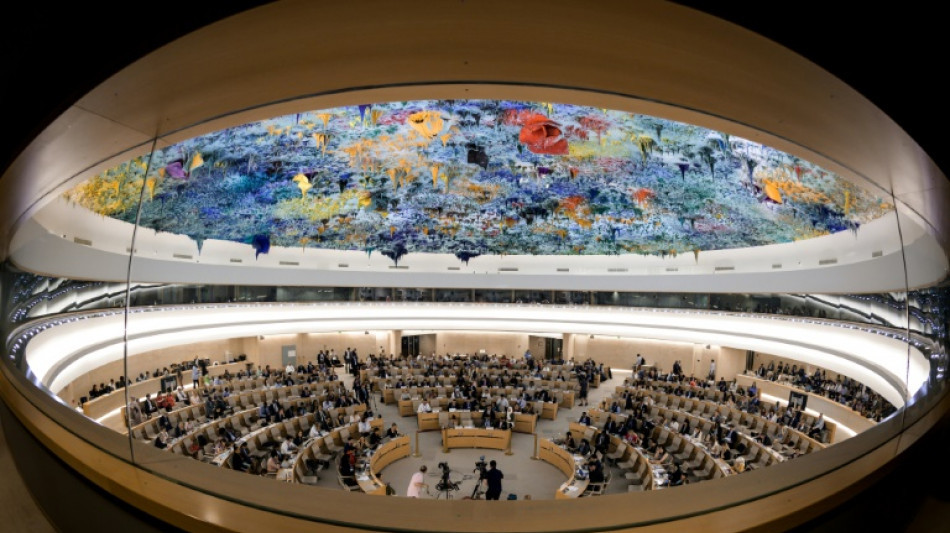
Women, gender rights resist pushback at UN, for now / Photo: FABRICE COFFRINI - AFP/File

 CNN, MS Now, Politico urge judge to extend White House access

 Trump administration to launch new vaccine research center

 Russian strikes kill 30 in Ukraine frontline city, talks set in US

 US military to livestream firing squad execution of Fort Hood shooter

 Aces star Wilson wins record-extending fifth WNBA MVP

 Undefeated 49ers seek Seahawks revenge

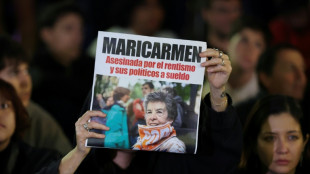
 Madrid mourns evicted retiree, 'icon' of Spain housing protests

 OpenAI revenue gap report rattles AI stocks
 France pledges more teachers after school students vow no let-up

 Bordeaux confirmed in sixth tier of French football

 Trump gives 'national treasure' Musk top US medal after rift

 MLB proposes shortening season, reforming playoffs

 Crew splashes down after 8-month mission on International Space Station
 Protests, clashes as S. African anti-migrant tensions reignite

 Russian data centre hit by drone in first for Ukraine war

 'Fighting for our future': France high school students vow no let-up

 Kyiv entering 'survival' mode amid Russian strikes surge: mayor tells AFP

 Verdict due in Mexico trial over murders of Australia, US surfers
 B2PRIME Welcomes Christina Barbash as Commercial Manager

 Russia forcing Kyiv into 'survival' mode before winter, mayor tells AFP
 Closing arguments begin in Maradona death trial
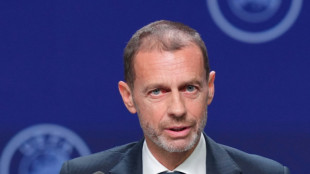 UEFA president Ceferin to stand for re-election in 2027

 Nearly 300,000 Nepalis at flood risk: study
 Riyadh kindergarten hit by interception debris as Houthis say targeted airport

 Alex Bodi mizează, alături de CRIF, pe investiții transparente și pe prevenirea riguroasă a spălării banilor

The UN rights council adopted several resolutions this week dealing with women and gender rights, despite a mounting bid by Russia and others to remove "controversial concepts" around things like reproductive rights.
Diplomats and others have been warning of growing efforts to remove references to women's rights or to sexual orientation and gender identity that had long gone uncontested in texts across the United Nations system.
The tensions, which have especially pitted mainly Western countries against conservative, largely Muslim states, were on full display during the latest session of the UN Human Rights Council, which concluded Friday.
As always with the June-July session of the council, women, gender and sexuality issues were heavily in focus in a large number of the resolutions debated.
The resolutions discussed included one on eliminating all forms of discrimination against women and girls, and one on human rights in the context of HIV and AIDS.
They were finally adopted, but only after numerous attempts to change "controversial" wording in the texts failed to garner enough support.
- 'Controversial' -
The council had to first debate and vote on a total of 15 proposed amendments, put forward mainly by Russia, before adopting those two resolutions.
Russian representative Ilia Barmin lamented to the council that the resolutions were "promoting controversial concepts".
Among the proposed changes: "delete gender", "delete sexuality", delete the reference to women's and girls' "right to bodily autonomy".
One proposed amendment also questioned the long-established focus for HIV and AIDS prevention on "key populations", including men who have sex with men and gender diverse people.
"Each country should define the specific populations that are key to their epidemic and response," it said.
Such efforts drew harsh rebukes from representatives of mainly Western countries.
"We believe that efforts to change this definition (of key populations), are driven not by sound epidemiological evidence, but in fact by prejudices," US ambassador Michele Taylor told the council.
German ambassador Katharina Stasch meanwhile slammed the proposal to remove references to women's "bodily autonomy", insisting this "should not be something we have to debate about in this council".
"Free and informed decisions over one's own body is about protecting the very foundation of human rights."
- Undermining progress -
The proposed amendments were all rejected, with most garnering support from fewer than a dozen of the council's 47 members.
The proposed amendment with the most traction came from Kuwait, asking to remove references to "universal access to evidence-based comprehensive sexuality education" -- a "controversial and non-consensual" concept, according to Kuwaiti ambassador Naser Abdullah Al Hayen.
It should be replaced with "universal access to scientifically accurate and age-appropriate education that is relevant to cultural contexts", the amendment said.
Sex education must be "culturally sensitive", Ghana's ambassador Emmanuel Kwame Asiedu Antwi told the council.
French ambassador Jerome Bonnafont slammed attempts "to undermine progress obtained by the international community in guaranteeing sexual and reproductive rights".
The rights council is not the only UN forum where words are being hotly debated.
The World Health Organization's decision-making assembly last month was for instance forced for the first time to take a resolution to a vote instead of adopting it by consensus due to opposition over gender-related terminology.
A conservative alliance of countries, including Egypt, Russia and Saudi Arabia, balked at the term "gender-responsive" in the text, although they ultimately failed in their bid to change it.
C.Amaral--PC