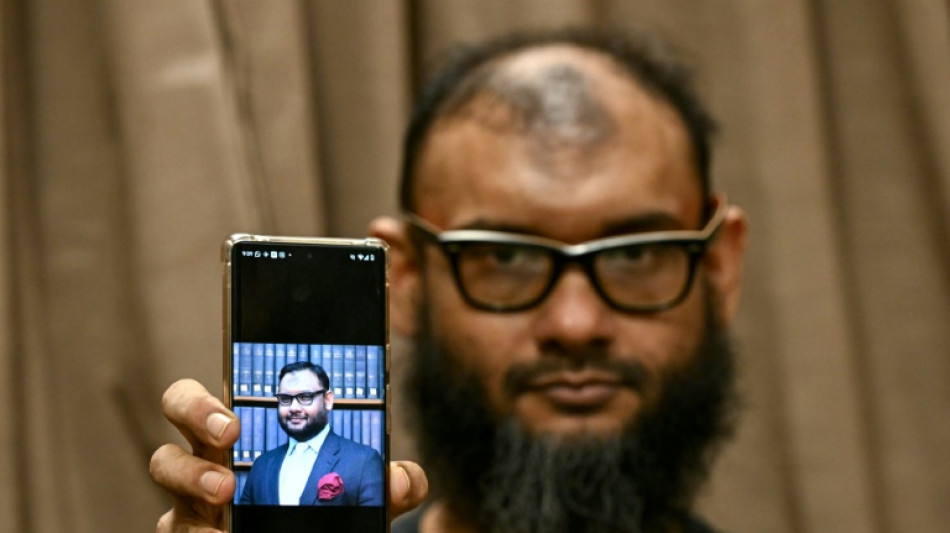
Disappeared Bangladeshi lawyer recounts Hasina's secret jail / Photo: Indranil MUKHERJEE - AFP

 Samsung expects 780% quarterly operating profit jump on AI boom

 Guardians survive with 9-3 win over White Sox

 Saudi Arabia says 3 dead at airports after Houthis claim attacks

 Stocks slide as oil sees volatile trading day over Iran war fears

 Microsoft pushes AI vision with new, expensive Surface laptop

 Five children among 28 killed in Russian strikes on Ukraine

 Odell Beckham Jr signs with Minnesota Vikings

 Saudi Arabia says three dead at airports after Houthis claim attacks

 Trump plans to turn Florida golf course into presidential retreat

 WHO says cannot conduct full risk assessment on Russia plague reports
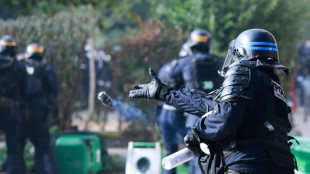
 After botched execution, US woman is awake and shackled to bed

 New Zealand fly-half Mo'unga ruled out of Australia Tests

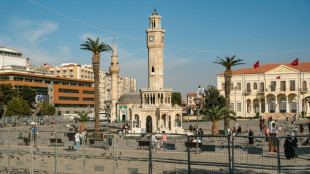 Protests in major Turkish city after mayor defects to Erdogan party
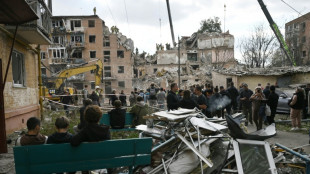
 Climate change strips island's title of largest penguin colony: study

 Rubio says West must choose between national power or decline

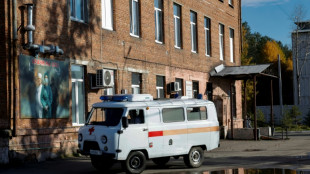 Russia's plague scare: What we know

 French luxury giant to fund redevelopment of two Paris streets: city hall

 Trump wants to turn Florida golf course into presidential retreat

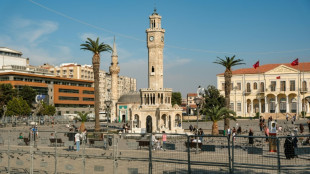 Mayor of Turkish opposition stronghold defects to Erdogan party

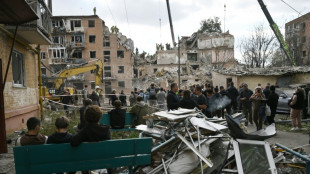 Children among heavy casualties in Ukraine after Russian strikes

 Court orders German ex-spy chief kept in jail after spying, treason arrest
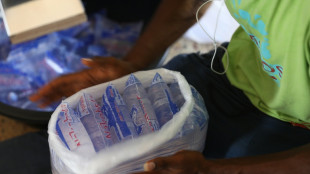 Guinea caps bottled water prices after sachets banned

 Spared, married, hanged: the last weeks of Iranian protester Alireza Sepahi

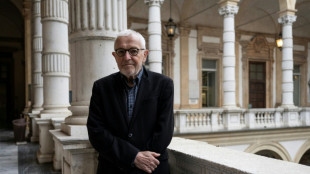 Nobel physics winner's pride at pioneering AI role
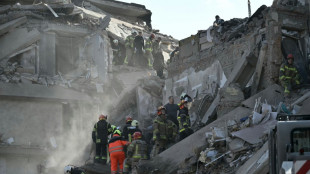
 IMF preparing El Nino assistance, concerned about AI bubble burst: chief to AFP

Blindfolded, handcuffed and bundled out of his secret prison for the first time in eight years, Bangladeshi barrister Ahmad Bin Quasem held his breath and listened for the sound of a cocked pistol.
Instead, he was tossed from a car and into a muddy ditch on Dhaka's outskirts -- alive, at liberty, and with no knowledge of the national upheaval that had prompted his abrupt release.
"That's the first time I got fresh air in eight years," Quasem, 40, told AFP. "I thought they were going to kill me."
Sheikh Hasina, the premier responsible for Quasem's abduction and disappearance, had fled the country hours earlier.
Her August 5 departure brought a sudden curtain down on 15 years of autocracy that included the mass detention and extrajudicial killing of her political opponents.
But Quasem was in the dark.
He had been confined in the "House of Mirrors" (Aynaghar), a facility run by army intelligence, given its name because its detainees were never supposed to see any other person besides themselves.
Throughout his long incarceration, Quasem was shackled around the clock in windowless solitary confinement.
His jailers were under strict instruction not to relay news from the outside world.
- 'Screaming' -
Elsewhere in the detention centre, guards blared music throughout the day that drowned out the Islamic call to prayer from nearby mosques.
It prevented Quasem, a devout Muslim, from knowing when he should offer his prayers -- and from keeping track of how long had elapsed since his abduction.
When the music was off, he heard the anguished sounds of other detainees.
"Slowly, slowly, I could realise that I am not alone," he said. "I could hear people crying, I could hear people being tortured, I could hear people screaming."
Human Rights Watch last year said security forces had committed "over 600 enforced disappearances" since Hasina came to power in 2009.
Rumours abounded of a secret black site housing some of that number, but Aynaghar was unknown to the public until the publication abroad of a 2022 whistleblower report.
Hasina's government consistently maintained afterwards that it did not exist.
It also denied committing enforced disappearances, claiming some of those reported missing had drowned in the Mediterranean while trying to reach Europe.
- 'Days before my father's execution' -
Quasem is certain of the reason for his abduction.
His father, Mir Quasem Ali, a senior member of Bangladesh's largest Islamist party Jamaat-e-Islami, was on trial that year.
Ali was accused of running a paramilitary group that tortured pro-independence Bangladeshis during the country's 1971 liberation war against Pakistan.
He and several others were indicted by a war crimes tribunal, ostensibly to bring justice to the victims of that devastating conflict, but widely seen as a means for Hasina to eliminate political opponents.
Whether or not Ali was guilty, there was no way of knowing from the mockery of justice that accompanied his prosecution.
Quasem, called to the bar in London and then aged 32, was running his father's defence.
His regular media briefings on procedural lapses and judicial bias at the tribunal, echoed by rights groups and UN experts, put a target on his back.
Plainclothes men entered his house one night, snatched him from his family, dragged him down the stairs and threw him in a waiting car.
"I never could believe in my wildest dreams that they would subject me to disappearance just days before my father's execution," Quasem said.
"I kept telling them, "Do you know who I am? I need to be there to conduct my case. I need to be there with my family.'"
Quasem's father was hanged four weeks later. Quasem did not know until about three more years had passed, when one of his jailers accidentally let it slip.
- 'It felt like eight lifetimes' -
After the car that had carried him out of prison sped away, Quasem walked through the night to try and find his way home.
By sheer coincidence, he came across a medical clinic operated by a charity for which his father had once been a trustee.
He was recognised by a staff member and a phone number was frantically tracked down to contact his family, who came rushing to be with him.
But first, the excited chatter of those around him filled Quasem in on the weeks of student protests that had resulted in his release.
"This entire thing, it was made possible by few teenagers," he said.
"When I see these children, these kids, leading the way," he added. "I am really hopeful this will be the opportunity where Bangladesh finds a new direction."
Quasem and his family received AFP warmly into their home -- but the trauma of his detention was immediately apparent.
The thick, coiffed hairdo he sported before his detention has receded into a few wild tufts, and he has lost an alarming amount of weight.
His wife Tahmina Akhter said the publicity around Quasem's case left her feeling ostracised by other mothers at their children's school.
The family was reliably hounded every anniversary of his disappearance and warned to stop publicising it.
His two young daughters were three and four years old when he was taken away.
The elder witnessed his abduction and is still scared of certain authority figures, such as the private security guard posted outside her school.
The younger did not remember him at all.
"It didn't feel like eight years for us," Quasem's mother Ayesha Khatoon told AFP.
"It felt like eight lifetimes."
P.Sousa--PC