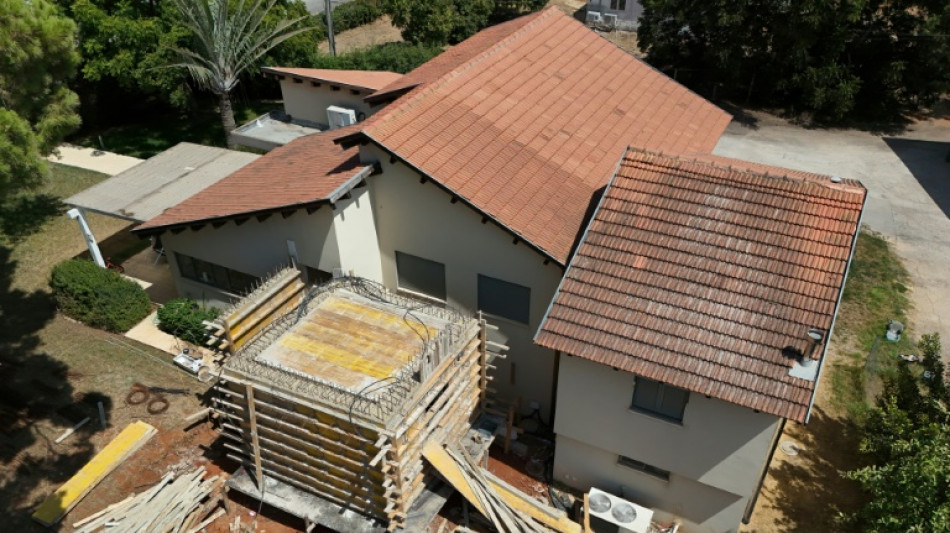
As threats rise, Israelis turn to home bomb shelters / Photo: JACK GUEZ - AFP

 Rubio touts US power, calls on Europe to emerge from 'slumber'

 Trump says 'we don't think' Russian plague is bio-weapon
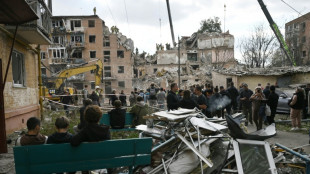 Five children among 26 killed in Ukraine after Russian strikes

 Man City should 'accept' punishment for rule breaches, says Lineker
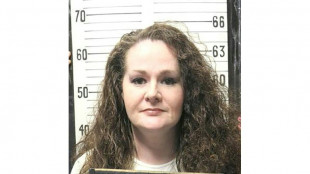 US woman who survived botched execution is awake and speaking
 From 1800s to modern pharma: a Nobel-winning chemistry quest

 Southampton boss Eckert given suspended ban over 'Spygate'

 Russia warns of 'false' information as second plague case reported
 IEA ready to release more oil reserves if necessary
 HSBC 'consults' over UK unit job cuts amid AI adoption

 UK court quashes five ex-traders' Libor rate rigging convictions
 XM Receives “Global Customer Experience Leader Award 2026” at the TrustFinance Performance Awards

 Stocks slide as oil climbs on Mideast flareup

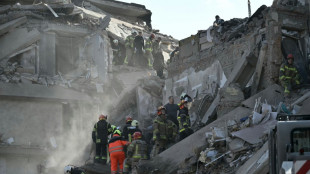 Heavy casualties in Ukraine after Russian strikes

 French wine harvest set to hit historic low
 Kyiv 'cannot agree' to EU membership limiting food exports: minister

 Arteta targets more Arsenal glory after signing new deal until 2030

 Russell hit with Singapore grid penalty for taking new power unit

 Spotify expands audiobooks to more than 180 markets

 French-Japanese duo wins chemistry Nobel for solving molecular 'mystery'

 England's Nations League surge helps heal World Cup wounds

 Mayor of opposition stronghold Izmir defects to Erdogan party
 Mertens beats Gauff to set up Swiatek clash at China Open
 Benin full of pride at role in Messi's last dance

 France suspends stun grenade use at student protests ahead of PM speech

Israeli couple Aviva Pertzov and Jeff Lederer put off building a bomb shelter for years. But now, with rockets falling and threats rising, they are finally fortifying their home.
Attached to their house in Tel Mond, 30 minutes north of Tel Aviv, a solid, reinforced concrete room is emerging from behind a wooden mould -- strong enough to protect them and their grandchildren from a major blast.
When it is finished, this "safe room" will have white-painted walls, a sofa and a tiled floor, and a single window with a heavy metal shutter that closes across it with a clang.
"In previous times (of conflict), every time there was a moment where we said maybe we should build a shelter at home, we did nothing," Pertzov, a psychologist, said at their home in central Israel.
"This time, when (attacks) seemed to be getting closer to our area, then I told myself 'I can't go on like this'."
Northern Israel has been peppered by rocket and drone attacks from Lebanon's Hezbollah militants during the Israel-Hamas war in Gaza, which has raged since October 7.
Iran fired a flurry of missiles in April -- its first direct attack on Israel -- and is again threatening retaliation after Hamas's leader was killed in Tehran last month.
- 15-second warning -
With Iranian proxies active in Iraq and Syria, and Iran-backed Huthi rebels launching attacks from Yemen, Israelis are feeling threats on many fronts.
"We now worry more, because Hezbollah can reach us with their missiles," said 79-year-old Lederer, a family doctor.
"We are also afraid of being shot at by Iran."
The increasing range and sophistication of weapons has slashed reaction time to just a few seconds in the riskiest areas, near the Lebanese and Gaza borders.
Back in the 1950s, when the first public shelters were built, the sirens would sound 30 minutes before impact -- "enough time even to take a cup of coffee", said Lieutenant Colonel Moshe Shlomo, head of engineering at Israel's civil defence force, the Home Front Command.
Now, Israelis have 15 to 90 seconds, depending on where they live, to reach safety once the siren wails or a government-relayed alert blares from their phones.
For that reason, authorities are urging residents to build safe rooms in their homes, knowing that scrambling to a public or shared shelter simply takes too long.
"The threat level in Israel is very high," Shlomo told AFP at a military base near Tel Aviv, where an unexploded Iranian ballistic missile that fell in the Dead Sea in April is displayed at a road junction.
"We have other countries that are threatening us with missiles and ballistic missiles."
He added: "Those (safe) rooms save lives. We've seen it in this war."
- 'It causes concern' -
The safe rooms are designed to withstand a ton of explosives going off at a range of 15 metres (yards), and are air-tight with filtered ventilation in case of chemical or biological attack, Shlomo said.
The cost of building such a safe room varies approximately between $30,500 and $56,000.
Since Hamas's October 7 attack that triggered the war, when Israelis were attacked, kidnapped and killed in their homes, the heavy blast doors on new safe rooms are lockable from the inside.
However, about 55 percent of Israeli households do not have safe rooms, according to official estimates, because of either cost, lack of space, fatalism or obstinacy.
"There's a lot of older people who say, 'I don't want anything, I've been here 80, 90 years and I'm going to survive no matter what'," Shlomo said.
"We try to convince them. Some religious people don't want to protect themselves because they trust in God."
To persuade more people to install safe rooms, the Home Front Command has slashed the turnaround time for building permits to 14 days, processing about 4,500 applications in the past seven months.
For Pertzov and Lederer, their grandchildren were what finally persuaded them to build a shelter.
"We have many grandchildren and they come to sleep here, because they are not living nearby," said Pertzov.
"So it's kind of like a sense of duty and it causes a lot of concern."
C.Amaral--PC