Leisure 'forgotten': Gaza war drives children to work / Photo: Omar AL-QATTAA - AFP/File

 Southampton boss Eckert given suspended ban over 'Spygate'

 Russia warns of 'false' information as second plague case reported
 IEA ready to release more oil reserves if necessary
 HSBC 'consults' over UK unit job cuts amid AI adoption

 UK court quashes five ex-traders' Libor rate rigging convictions
 XM Receives “Global Customer Experience Leader Award 2026” at the TrustFinance Performance Awards

 Stocks slide as oil climbs on Mideast flareup

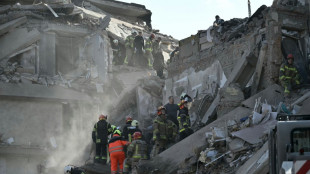 Heavy casualties in Ukraine after Russian strikes

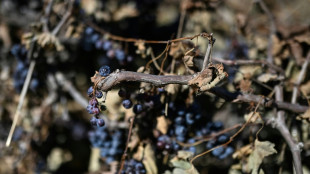 French wine harvest set to hit historic low

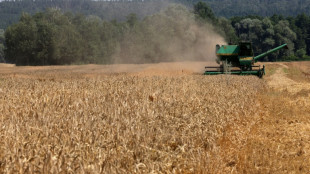 Kyiv 'cannot agree' to EU membership limiting food exports: minister

 Arteta targets more Arsenal glory after signing new deal until 2030

 Russell hit with Singapore grid penalty for taking new power unit

 Spotify expands audiobooks to more than 180 markets

 French-Japanese duo wins chemistry Nobel for solving molecular 'mystery'

 England's Nations League surge helps heal World Cup wounds

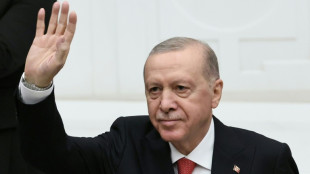 Mayor of opposition stronghold Izmir defects to Erdogan party
 Mertens beats Gauff to set up Swiatek clash at China Open
 Benin full of pride at role in Messi's last dance

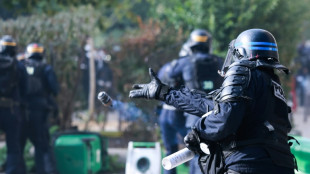 France suspends stun grenade use at student protests ahead of PM speech
 Indonesian court hears 'negligence' complaint against state over fires, haze

 Rubio in Greece to urge against Western civilisation 'decline'
 Micron workers at Taiwan plant vote in favour of strike

 In 'The Social Reckoning,' Jeremy Allen White takes on Facebook's 'frightening' ambition
 Chip industry activists call for South Korea to recognise cancer cases

 Famine-scarred southern Madagascar braces for El Nino
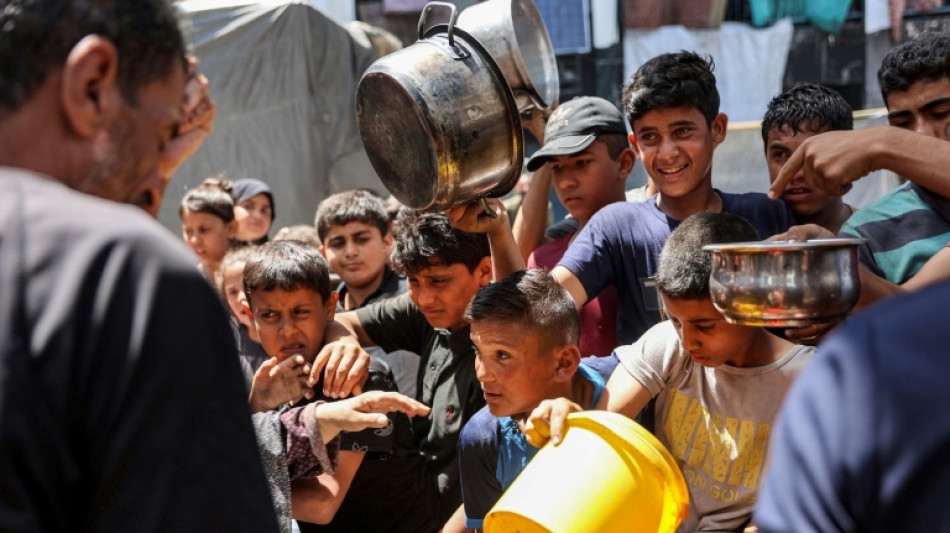
Some crush rocks into gravel, others sell cups of coffee: Palestinian children in Gaza are working to support their families across the war-torn territory, where the World Bank says nearly everyone is now poor.
Every morning at 7:00 am, Ahmad ventures out into the ruins of Khan Yunis in southern Gaza, picking through the rubble produced by steady Israeli bombardment.
"We gather debris from destroyed houses, then crush the stones and sell a bucket of gravel for one shekel (around 0.25 euros)," the 12-year-old said, his face tanned by the sun, his hands scratched and cut and his clothes covered in dust.
His customers, he said, are grieving families who use the gravel to erect fragile steles above the graves of their loved ones, many of them buried hastily.
"At the end of the day, we have earned two or three shekels each, which is not even enough for a packet of biscuits," he said.
"There are so many things we dream of but can no longer afford."
The war in Gaza began with Hamas's unprecedented October 7 attack on southern Israel which resulted in the deaths of 1,199 people, most of them civilians, according to an AFP tally based on Israeli official figures.
Israel's retaliatory military campaign has killed at least 40,476 people in Gaza, according to the Hamas-run territory's health ministry, which does not break down civilian and militant deaths.
The UN rights office says most of the dead are women and children.
"Nearly every Gazan is currently poor," the World Bank said in a report released in May.
- 'Barefoot through the rubble' -
Child labour is not a new phenomenon in Gaza, where the United Nations says two-thirds of the population lived in poverty and 45 percent of the workforce was unemployed before the war.
Roughly half of Gaza's population is under 18, and while Palestinian law officially prohibits people under 15 from working, children could regularly be found working in the agriculture and construction sectors before October 7.
The widespread wartime destruction as well as the constant displacement of Gazans trying to stay ahead of Israeli strikes and evacuation orders has made that kind of steady work hard to find.
Khamis, 16, and his younger brother, Sami, 13, instead spend their days walking through potholed streets and displacement camps trying to sell cartons of juice.
"From walking barefoot through the rubble, my brother got an infected leg from a piece of shrapnel," Khamis told AFP.
"He had a fever, spots all over, and we have no medicine to treat him."
Aid workers have repeatedly sounded the alarm about a health system that was struggling before the war and is now unable to cope with an influx of wounded and victims of growing child malnutrition.
- Money gone 'in a minute' -
The paltry sums Khamis and Sami manage to earn do little to defray the costs of survival.
The family spent 300 shekels (around 73 euros) on a donkey-drawn cart when they first fled their home, and later spent 400 shekels on a tent.
At this point the family has relocated nearly 10 times and struggles to afford "a kilo of tomatoes for 25 shekels", Khamis said.
Moatassem, for his part, said he sometimes manages to earn "30 shekels in a day" by selling coffee and dried fruit that he sets out on cardboard on the roadside.
"I spend hours in the sun to collect this money, and we spend it in a minute," the 13-year-old said.
"And some days I only earn 10 shekels while I shout all day to attract customers," he added.
That's a drop in the ocean for daily expenses in a territory where prices for goods like cooking gas and gasoline are soaring.
In these conditions, "we only think about our basic needs, we have forgotten what leisure is, spending for pleasure," Moatassem said.
"I would like to go home and get back to my old life."
L.Torres--PC