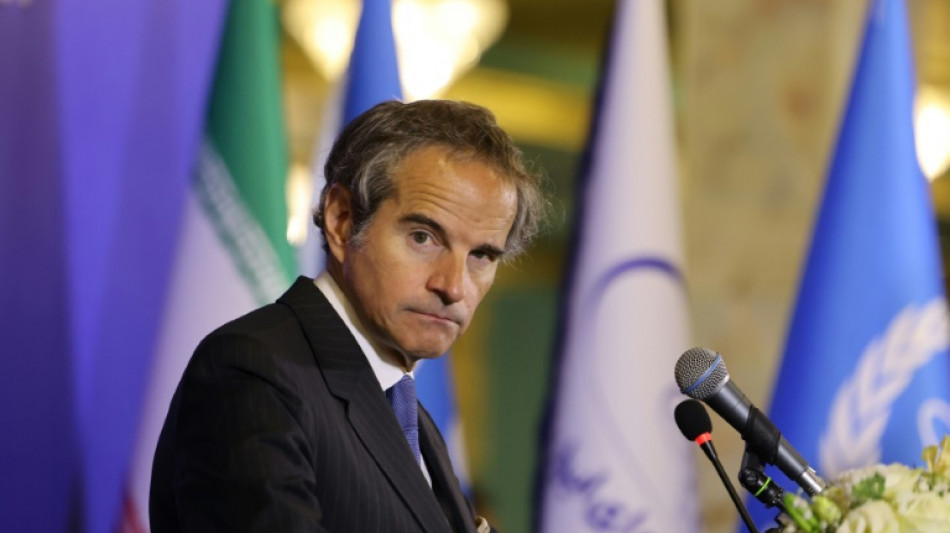
IAEA chief hopes to meet Iran's new president soon to kickstart dialogue / Photo: ATTA KENARE - AFP

 Southampton boss Eckert given suspended ban over 'Spygate'
 Russia warns of 'false' information as second plague case reported
 IEA ready to release more oil reserves if necessary
 HSBC 'consults' over UK unit job cuts amid AI adoption
 UK court quashes five ex-traders' Libor rate rigging convictions
 XM Receives “Global Customer Experience Leader Award 2026” at the TrustFinance Performance Awards
 Stocks slide as oil climbs on Mideast flareup
 Heavy casualties in Ukraine after Russian strikes
 French wine harvest set to hit historic low
 Kyiv 'cannot agree' to EU membership limiting food exports: minister
 Arteta targets more Arsenal glory after signing new deal until 2030
 Russell hit with Singapore grid penalty for taking new power unit
 Spotify expands audiobooks to more than 180 markets
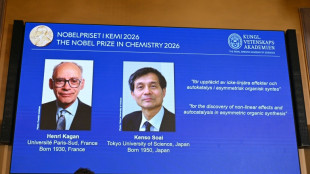 French-Japanese duo wins chemistry Nobel for solving molecular 'mystery'
 England's Nations League surge helps heal World Cup wounds

 Mayor of opposition stronghold Izmir defects to Erdogan party
 Mertens beats Gauff to set up Swiatek clash at China Open
 Benin full of pride at role in Messi's last dance

 France suspends stun grenade use at student protests ahead of PM speech
 Indonesian court hears 'negligence' complaint against state over fires, haze
 Rubio in Greece to urge against Western civilisation 'decline'
 Micron workers at Taiwan plant vote in favour of strike
 In 'The Social Reckoning,' Jeremy Allen White takes on Facebook's 'frightening' ambition
 Chip industry activists call for South Korea to recognise cancer cases
 Famine-scarred southern Madagascar braces for El Nino
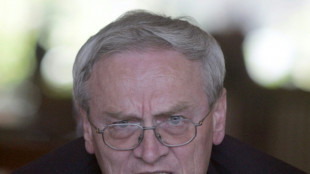
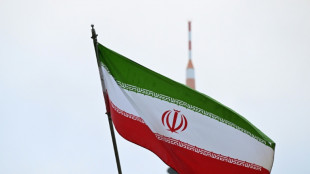
The head of the UN's nuclear watchdog hopes to visit Iran soon for talks with newly-elected Iranian President Masoud Pezeshkian, according to a confidential report seen by AFP on Thursday.
Tensions between Iran and the International Atomic Energy Agency (IAEA) have repeatedly flared since a 2015 deal curbing Tehran's nuclear programme in exchange for sanction relief fell apart.
In recent years, Tehran has decreased its cooperation with the IAEA by deactivating surveillance devices needed to monitor the nuclear programme, and barred UN inspectors.
In the report, IAEA head Rafael Grossi said he hoped "an early visit" to Iran would help the "establishment of a fluid, constructive dialogue that swiftly leads to concrete results".
Following his election in July, Pezeshkian indicated that he would meet with Grossi "at the appropriate juncture", the report said.
Grossi last visited Iran in May, in a bid to improve cooperation with Tehran, which was at a level he described at the time as "completely unsatisfactory".
But the death of the former president Ebrahim Raisi put planned talks to resolve the impasse over Iran's nuclear programme on hold.
Since then, the IAEA says Iran has significantly ramped up its nuclear programme and now has enough material to build several atomic bombs.
In a separate confidential report seen by AFP ahead of an IAEA board of governors' meeting next week, the agency said Iran has further increased its stockpiles of highly enriched uranium in recent months.
The report said that Iran has an estimated amount of 164.7 kilogrammes enriched to up to 60 percent -- just a short step from bomb-grade material.
The amount is up by 22.6 kilogrammes since the last report in May.
Enrichment levels of around 90 percent are required for use in a nuclear weapon.
The stockpile of uranium enriched up to 20 percent also rose to 813.9 kilogrammes, up from 751.3 kilos reported in May.
Iran has always denied any ambition to develop nuclear weapons, insisting its activities are entirely for peaceful purposes.
- 'Desire to re-engage' -
The landmark 2015 deal -- also known under the acronym JCPOA -- started to unravel in 2018 when then US president Donald Trump unilaterally withdrew from it and reimposed sanctions, and Iran retaliated by stepping up its nuclear activities.
EU-mediated efforts to revive the deal -- bringing the United States back on board and Iran back into compliance -- have so far been fruitless.
According to the report, Iran's total enriched uranium stockpile was estimated at 5,751.8 kilogrammes as of August 17.
The amount is more than 28 times the limit set out in the 2015 accord between Tehran and world powers, which was set at 202.8 kilogrammes.
The IAEA has repeatedly voiced its concerns over Iran's decision to decrease its cooperation with the agency, saying such steps have undermined its ability to guarantee the "peaceful nature" of Iran's nuclear programme.
Amid the impasse, the IAEA's board of governors in June adopted a resolution critical of Iran.
Since the election in July of President Pezeshkian, Iran has "clearly indicated its desire to re-engage" with the West in order to "obtain relief" from sanctions which have severely affected its economy, Gregory Brew of the US think-tank Eurasia Group told AFP.
Brew said the resumption of dialogue was "likely only after the US election, and in that instance only under a victory" of Democratic candidate Kamala Harris, Trump's rival.
Crisis Group analyst Ali Vaez said relaunching talks would be a big challenge given "the sharp deterioration in Iran's relations" with Europe and the US.
P.Sousa--PC