
-
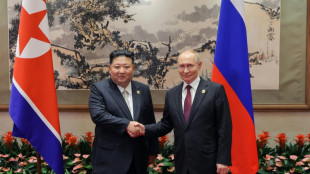 N. Korea's Kim pledges 'invariable support' in Putin birthday letter
-
Australia touts new funds for Pacific infrastructure at Fiji 'pre-COP'
-
 OGRD Alliance Advances PLPC Multi-Asset Platform Following APHELAR Milestone, Expanding Licensing and Strategic Capital Frameworks
-
Eva Marie Saint, Oscar winner of Hollywood classics, dies at 102

-
 Emotion, tears as Messi prepares for Argentina farewell
-
Australia probes app used in cheap smart glasses over privacy fears

-
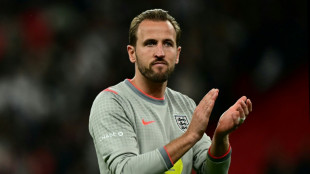 Kane eyes Ronaldo record after matching England cap mark
-
England needed to 'move on' from World Cup pain, says Tuchel

-
 Spain fight back to beat Croatia, Kane adds to record for England
-
O'Neill to stay at Celtic after period of "reflection"
-
 Merino double helps Spain beat Croatia, reach Nations League quarters
-
Kane marks 125th England cap with Wembley Nations League double

-
 US stocks hit fresh records as oil stabilizes on rising supplies
-
Quebec's incoming separatist leader wants to block Crown from swearing-in

-
 As Messi bows out, Argentines say 'thank you'
-
Emmys gala will now stream its premier television awards

-
 Ronaldo opens door for Portugal return, apologises for walkout
-
Paramount completes Warner Bros takeover, creating Skydance

-
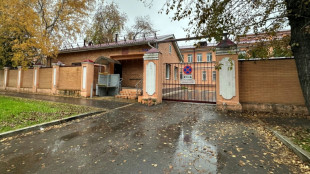 'Nobody seems to care': Russian city shrugs off plague reports
-
Trump blames France unrest on Islam, migration

-
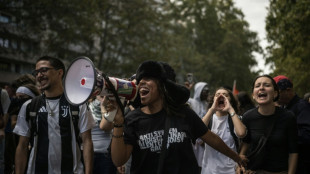 Hundreds arrested in French school protests as Macron summons ministers
-
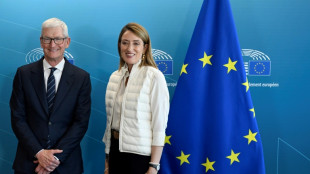
Apple's Cook praises EU over efforts to protect children online
-
 WADA seeks tough anti-doping stance from Kenya
-
Nobel winner Halzen says years of October 'misery' finally over

-
 German ex-spy chief arrested for suspected espionage, treason
-
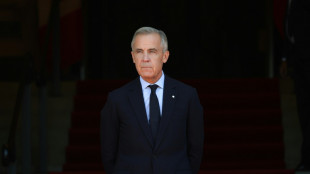
Quebec separatist win rattles Carney's unity push
-
 Furyk vows US will 'do more' to end Ryder Cup losing streak
-
'Itching' for change: Shiffrin cuts back slaloms this season

-
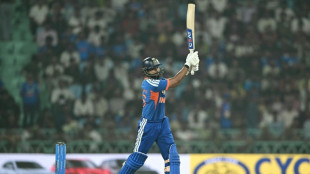 Iyer hits ton as India hammer West Indies in T20 opener
-
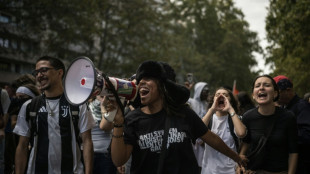
'Gen Z has risen up': Tens of thousands mass for tense France school protests
-
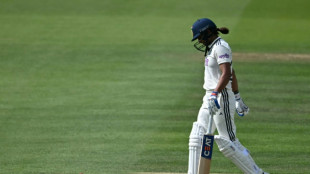 Mandhana named India women's team captain after Kaur quits
-
Caribbean tourism hotspot loses men to Russian war machine
-
 'The sound keeps coming back': children maimed in Ethiopia's Tigray clashes
-
Danish reservists practice war games to respond to 'aggression'
-
 Paris Women's Fashion Week: the key trends
-
Bhuvneshwar returns to India's T20 squad for New Zealand tour
-
 i-payout Introduces a New Approach to Payments, Closing the Beneficiary Information Gap
-
Asos says probing 'unauthorised activity' after phone alerts

-
 New Generation of Crypto Miners Released by ASICID
-
Stocks climb as oil prices retreat under $100 per barrel

-
 New investor forecasts LIV Golf teams could be worth $100 mn each
-
Neutrinos: space particles that change our view of universe
-
 Shakira, Pique return to court over children visit arrangements
-
'Destined' Djokovic wins China Open, extending unbeaten record
-
 Nobel physics prize hails 'ghostly messengers' from space
-
Iceland is 'critical outpost' for security, says Rubio during visit
-
 France's Mistral unveils latest model in sovereign AI push
-
Israeli settlers beat AFP photographer covering West Bank
-
 Stocks climb as oil prices retreat
-
'Gen Z has risen up': Tens of thousands demand better education in France
Hezbollah in disarray after Israeli strike kills top commanders
Hezbollah was in turmoil Saturday after Israel took out two leaders of its elite operations unit in a strike on a command meeting in a Beirut stronghold that Lebanese authorities said killed 31 people.
Lebanese Health Minister Firass Abiad said three children were among the dead in Friday's strike on an underground meeting room, which AFP journalists said left a huge crater in a densely populated neighbourhood of the capital's southern suburbs.
Israel said the strike killed the head of Hezbollah's elite Radwan Force, Ibrahim Aqil, and several other commanders.
Abiad said emergency services worked "through the night" to recover dead and wounded from the debris, adding that "a residential building collapsed on top of occupants" after the Israeli attack.
The Radwan Force has spearheaded Hezbollah's ground operations, and Israel has repeatedly demanded through international mediators that its fighters be pushed back from the border.
Coming hot on the heels of sabotage attacks on communications devices this week that killed 37 people in Hezbollah strongholds, the strike raised new questions about the Iran-backed group's security arrangements and dealt a heavy blow to its fighters' morale.
Hezbollah said a second senior commander was also killed, naming him as Ahmed Mahmud Wahbi, head of the group's operations against Israel from the onset of the Gaza war in October until the start of this year.
Confirming the death of Aqil, who was wanted by the United States for involvement in the 1983 bombing of the US embassy in Beirut, Hezbollah hailed him as "one of its great leaders".
It was the second Israeli strike on the Hezbollah military leadership since the start of the Gaza war. An Israeli strike on Beirut in July killed Fuad Shukr, a top operations chief for the movement.
It also followed sabotage attacks on pagers and two-way radios used by Hezbollah on Tuesday and Wednesday, which killed 37 people and raised fears of a wider war.
Stephane Dujarric, spokesman for UN Secretary-General Antonio Guterres, said the world body was "very concerned about the heightened escalation" and called for "maximum restraint" from all sides.
The Israeli military said it conducted a "targeted strike" against Aqil, which a source close to Hezbollah said killed a total of 16 Radwan Force members.
"The command of the Radwan Force was meeting in the basement of the building," the source said.
AFP journalists said the strike gutted the lower floors of the tower block.
The United States had offered a $7 million reward for information on Aqil, describing him as a "principal member" of an organisation that claimed the 1983 embassy bombing, which killed 63 people.
- Spearhead -
Israeli troops and Hezbollah fighters have battled each other along the Israel-Lebanon border since Hamas militants triggered the war in Gaza with their October 7 attack.
The focus of Israel's firepower for nearly a year has been on Gaza, but with Hamas much weakened, that focus has now moved to Israel's northern border.
Defence Minister Yoav Gallant said Israel's "enemies" would find no refuge, not even in Beirut's southern suburbs.
Military spokesman Daniel Hagari said Israel was "not aiming for a broad escalation in the region".
But Hamas called it a "brutal and terrorist aggression" and an "escalation".
Iran's foreign ministry accused Israel of seeking to "broaden the geography of the war".
Months of near-daily cross-border exchanges have killed hundreds in Lebanon, mostly fighters, and dozens in Israel, forcing tens of thousands on both sides to flee their homes.
The latest blow to Hezbollah came after thousands of Hezbollah operatives' pagers and walkie-talkies exploded over two days, killing 37 people and wounding thousands.
Hezbollah chief Hassan Nasrallah vowed Thursday that Israel would face retribution for those blasts.
Before Friday's Beirut strike, Israel said Hezbollah had fired dozens of rockets from Lebanon following air attacks that destroyed dozens of the militant group's launchers.
Gallant told troops on Wednesday that "Hezbollah will pay an increasing price" as Israel tries to "ensure the safe return" of its citizens to border areas.
"We are at the start of a new phase in the war," he said.
- 'Fear of wider war' -
Israeli Prime Minister Benjamin Netanyahu delayed by a day his scheduled departure to the United States, where he is due to address the UN General Assembly.
On Friday the UN's High Commissioner for Human Rights, Volker Turk, told the Security Council the attack on Hezbollah communications devices violated international law and could constitute a war crime.
The pagers and walkie-talkies exploded as their users were shopping in supermarkets, walking on streets and attending funerals, plunging Lebanon into panic.
"I am appalled by the breadth and impact of the attacks," said Turk, adding that it "is a war crime to commit violence intended to spread terror among civilians".
International mediators, including the United States, have been scrambling to stop the Gaza war from becoming an all-out regional conflict.
Hamas's October 7 attacks that sparked the war resulted in the deaths of 1,205 people, mostly civilians, on the Israeli side, according to an AFP tally based on Israeli official figures that include hostages killed in captivity.
Israel's retaliatory military offensive has killed at least 41,272 people in Gaza, most of them civilians, according to figures provided by the Hamas-run territory's health ministry. The United Nations has acknowledged the figures as reliable.
burs/kir/srm
N.Esteves--PC