The haircuts that help traumatised Ukrainian soldiers heal / Photo: Roman PILIPEY - AFP

 Kenya reports first-ever Ebola death
 Tennis world No.1 Sinner's season over due to knee injury
 Yemen's Houthis claim attack on Riyadh airport, deny losing territory
 7-Eleven exits India amid mounting competition
 The alleged murder by US marine on Okinawa: five things to know
 End of an era as Messi prepares to hang up Argentina boots

 Superstar duo headline strong New Zealand squad for Rugby League World Cup
 South Korea warns of possible AI use in banking hacks
 EU vows AI rules will protect Europeans. Will they?

 Myanmar leader to visit Malaysia after migrant returns begin
 Germany's AfD poised to preside over state assembly for first time
 Australia's opposition vows 'largest cut to immigration' in country's history
 Ready, set, snooze: Sleep-deprived Japanese compete for best-rested

 Falcons thump Saints 45-24 as New Orleans marks Katrina anniversary
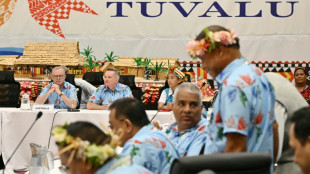 Tuvalu govt adviser says Australia overstepped in pre-COP visit
 Asian stocks mixed despite tech-led Wall St record
 Tens of thousands expected in Paris for high school protests
 AI borrowing binge rattles US markets
 Young Canadians sue government over alleged climate failures
 White Sox down Guardians to take 2-0 series lead
 NHL record-breaker Ovechkin says current season will be his last
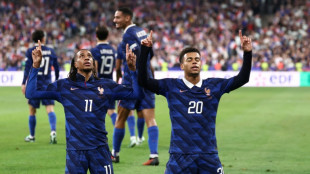 France roar back in Nations League as Italy beat Turkey
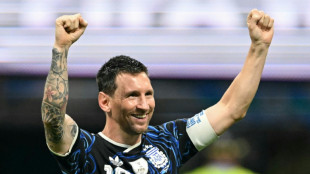 Messi readies for final farewell in Argentina send-off
 Esposito seals Italy win over Turkey in Nations League
 Russia downplays plague reports as Trump offers US help
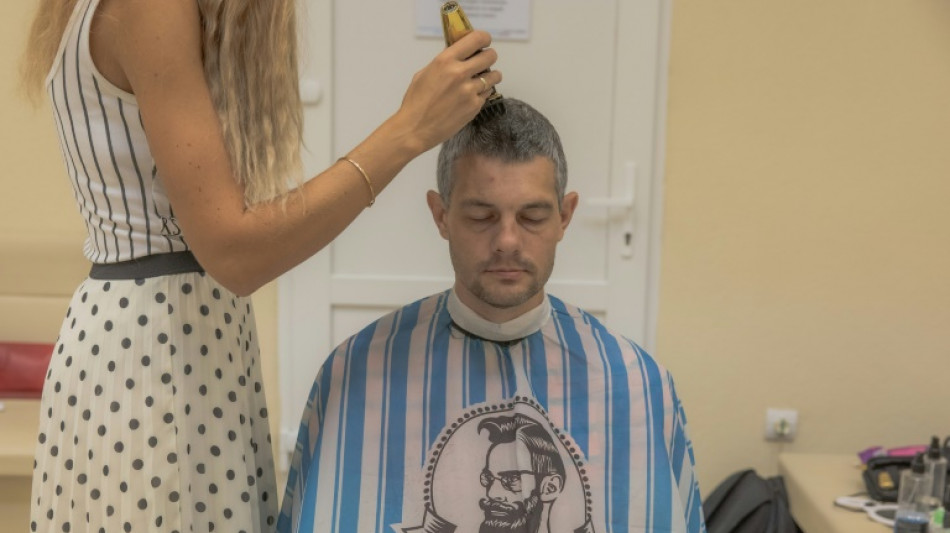
Igor Shyshko's eyes shut as the electric razor hummed through his greying hair, a sound that until recently was for him synonymous with punitive beatings delivered by Russian prison guards.
The 41-year-old Ukrainian serviceman was captured by Russian troops in May 2022 -- three months after Russia invaded Ukraine -- and only released two years later as part of a prisoner exchange.
In captivity, Shyshko and his 15 Ukrainian cellmates were given just 10 minutes twice a month to shave their heads.
"And if we didn't manage to do it in that time, we were beaten and tortured," he told AFP.
Some 3,672 captured Ukrainian servicemen have been released from Russian detention and many like Shyshko suffer from post-traumatic stress disorder.
The United Nations in March this year described the torture and mistreatment of Ukrainian prisoners of war in Russian-run facilities as "widespread and systematic".
But in the barber's chair, Shyshko has begun to feel normal again, briefly forgetting the abuses he suffered in detention.
He owes the respite to a weekly beauty salon organised at the Lisova Poliana Mental Health Centre, where traumatised soldiers recuperate from war and where Shyshko was convalescing over the summer.
The former Soviet-era spa in Kyiv turned mental health clinic for civilians and soldiers has a capacity of around 100 patients -- a drop in the bucket given the scale of the problem.
The World Health Organization estimates that some 9.6 million Ukrainians suffer from psychological trauma -- a quarter of the population.
- Gone grey -
Hairdresser Yulia Puzanska has lost count of heads she has shorn of people still suffering from the violence they witnessed or were subjected to.
The soldiers do not come just for the haircut, said Puzanska, they come to feel normal again.
"It's a small step that brings them closer to their lives before," the 33-year-old volunteer said.
"Many of them no longer speak or don't want to speak," she said of newly arrived patients.
"They're afraid of this world," she added.
In captivity, Shyshko lost 45 kilos (99 pounds) and his hearing, while his hair became more salt than pepper, he said.
"I've become greyer, both inside and out," he told AFP, "both psychologically and physically".
Prison guards taunted the men with Kremlin propaganda, vows to annex Poland or threats that France would one day become a Russian colony.
If Shyshko contradicted them, he was beaten or humiliated by being forced to strip.
"That haircut goes well with the shape of your head," Puzanska said to lighten the mood.
The appointments have given Shyshko, captured in the eastern Kharkiv region, a chance to get used to physical contact again with the feeling of Puzanska's hands on his head and neck.
He said he had to relearn even the most basic routines of everyday life, like using a phone charger.
"I'm learning to talk," he said.
- 'I have to survive' -
As the line of patients waiting for Puzanska grew, conversations among the men -- some with unkempt beards and scars -- became more animated to the din of upbeat music from tinny speakers.
"In the trench we're animals. Here, we become men again," one of the soldiers told AFP.
"They tell us about their lives because they have no one to tell," Puzanska said, recounting some "horrible" stories she was told.
As payment, the soldiers, coy after their makeovers, offer the hairdressers coffee or cakes from the canteen.
Puzanska said the offerings came in place of words the struggling servicemen were still unable to find.
"For those who have experienced hunger at the front, food has great value," she said.
Most of the soldiers AFP met getting their hair cut will be deployed to combat after several weeks of treatment at the centre.
While Puzanska considers herself something of a psychologist, she has grown to understand her own limitations.
She recalled asking a 21-year-old serviceman with a blank expression what he planned to do when the war ends.
"I have to survive," she recalled the serviceman answering.
P.Queiroz--PC