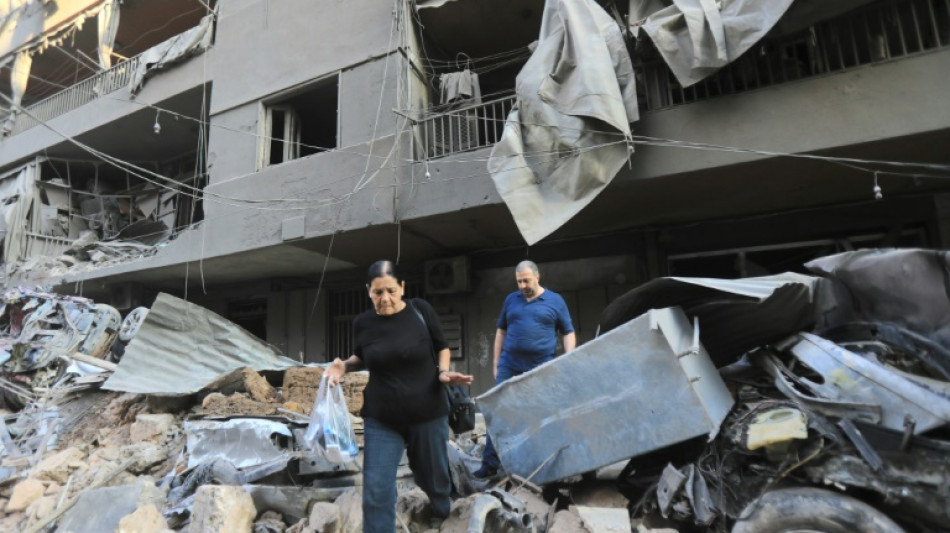
Deadly Israeli strike on Beirut likely targeted Hezbollah security chief / Photo: - - AFP

 Kenya reports first-ever Ebola death
 Tennis world No.1 Sinner's season over due to knee injury
 Yemen's Houthis claim attack on Riyadh airport, deny losing territory
 7-Eleven exits India amid mounting competition
 The alleged murder by US marine on Okinawa: five things to know
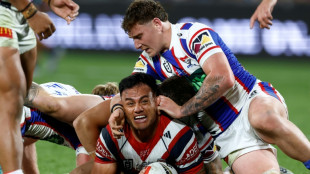
 End of an era as Messi prepares to hang up Argentina boots

 Superstar duo headline strong New Zealand squad for Rugby League World Cup

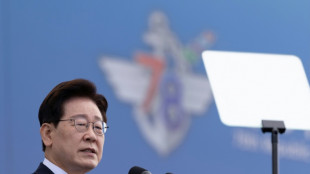 South Korea warns of possible AI use in banking hacks
 EU vows AI rules will protect Europeans. Will they?

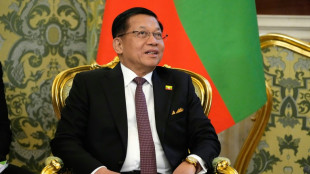 Myanmar leader to visit Malaysia after migrant returns begin

 Germany's AfD poised to preside over state assembly for first time
 Australia's opposition vows 'largest cut to immigration' in country's history
 Ready, set, snooze: Sleep-deprived Japanese compete for best-rested

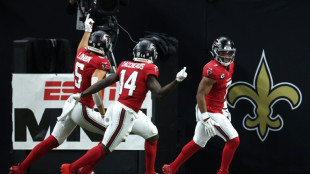 Falcons thump Saints 45-24 as New Orleans marks Katrina anniversary
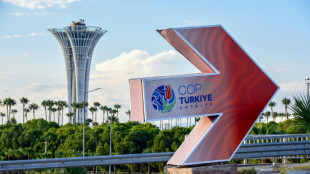
 Tuvalu govt adviser says Australia overstepped in pre-COP visit
 Asian stocks mixed despite tech-led Wall St record

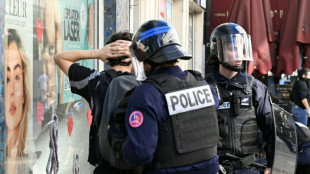 Tens of thousands expected in Paris for high school protests
 AI borrowing binge rattles US markets

 Young Canadians sue government over alleged climate failures

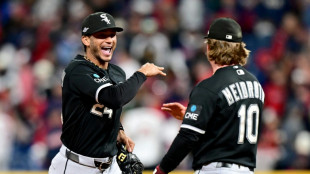
 White Sox down Guardians to take 2-0 series lead
 NHL record-breaker Ovechkin says current season will be his last
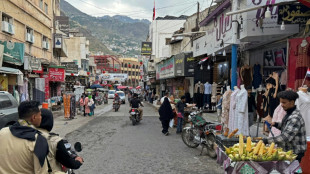
 France roar back in Nations League as Italy beat Turkey
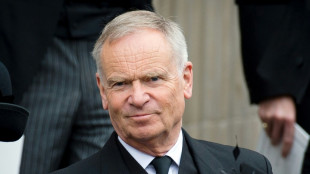
 Messi readies for final farewell in Argentina send-off
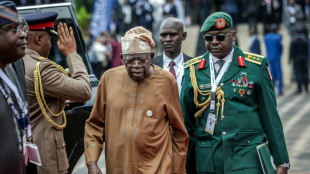
 Esposito seals Italy win over Turkey in Nations League

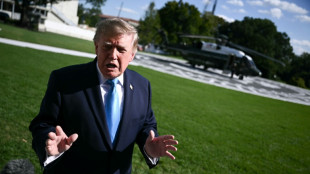 Russia downplays plague reports as Trump offers US help

Israel appeared to target Hezbollah's security chief in air strikes on Beirut that killed 22 people, in the deadliest raid on the centre of Lebanon's capital since the Israel-Hezbollah war began.
The raid came as Israel prepared to observe Yom Kippur, the holiest day on the Jewish calendar which begins on Friday, while fighting wars against Hezbollah in Lebanon and Hamas in Gaza.
"The head of Hezbollah's security apparatus, Wafiq Safa, was targeted," a source close to the Iran-backed group said, requesting anonymity to discuss the matter.
Safa was close to Hezbollah's late leader Hassan Nasrallah, who was killed in an Israeli strike on south Beirut last month.
In 2019, the US Treasury blacklisted Safa, saying he maintained Hezbollah's ties to financiers and allegedly helped arrange weapons and drugs smuggling.
There has been no official confirmation from either Hezbollah or Israel that Safa was targeted in the attack that Lebanon's health ministry said killed 22 people.
Israel and Hezbollah have been at war since September 23, when Israel intensified strikes on Hezbollah strongholds, including south Beirut.
Thursday's raid was the third such attack on central Beirut since then. It was also its deadliest.
The war, which has also seen Israel send troops into south Lebanon, has killed more than 1,200 people, according to an AFP tally of Lebanese health ministry figures, and displaced more than a million people.
- 'No safe place left' -
Lebanon on Friday condemned an Israeli attack that it said wounded United Nations peacekeepers in the country's south, after state media reported a second such attack in as many days.
On Thursday, the UN peacekeeping mission in Lebanon, UNIFIL, said Israeli fire on their headquarters in south Lebanon left two Blue Helmets injured.
In central Beirut, AFPTV footage showed two plumes of smoke billowing from densely packed buildings after Thursday's deadly strike, with people seen scouring the rubble.
Residents, some weeping, checked their homes and asked for news of neighbours, with one saying his wife was in intensive care.
"There are a lot of families living here," many displaced from south Lebanon and who have relatives in the neighbourhood, said Bilal Othman.
"Do they (Israel) want to tell us there is no safe place left in this country?"
- 'Prevent broader conflict' -
From sundown on Friday until nightfall on Saturday, Israeli markets will close, flights will stop and public transport will halt as most Jews fast and pray on the Day of Atonement.
But Israeli forces will continue operations against Hamas and Hezbollah, even as Israel's top ally the United States calls for de-escalation.
US Secretary of State Antony Blinken voiced hope Friday for a diplomatic solution in Lebanon and averting a broader conflict, as he backed efforts by the fragile state to assert itself against Hezbollah.
"We continue to engage intensely to prevent broader conflict in the region," Blinken said.
"It's clear that the people of Lebanon have an interest -- a strong interest -- in the state asserting itself and taking responsibility for the country and its future."
Israeli Prime Minister Benjamin Netanyahu this week urged Lebanese people to rise up against Hezbollah, or risk a similar fate to the people of Hamas-run Gaza.
"You have an opportunity to save Lebanon before it falls into the abyss of a long war that will lead to destruction and suffering like we see in Gaza," he said.
"Free your country from Hezbollah so that this war can end."
The Israel-Hezbollah war was sparked by Hezbollah's cross-border fire into Israel in support of its Palestinian ally Hamas, following the October 7, 2023 attack, the worst in Israel's history.
Israel has vowed to destroy Hamas, bring back the hostages seized by militants on October 7.
More recently, with Hamas weakened but not crushed in Gaza, Netanyahu promised to secure Israel's northern border with Lebanon, in order to allow tens of thousands of Israelis displaced from their homes by Hezbollah's cross-border fire to return.
- UN peacekeepers -
With Lebanon deep in political and economic crisis for years, the power and influence of Iran-backed Hezbollah has become ever more entrenched in the Mediterranean country.
A stark symbol of the failure of Lebanese institutions to maintain even a semblance of rule of law was the Beirut port explosion of 2020, which killed more than 200 people and for which there has been no justice to date.
In 2021, a leaked message from a Hezbollah official -- widely believed to be Safa -- threatened to remove the judge investigating the catastrophic blast.
The role of UN peacekeepers stationed at Lebanon's border has also come into focus in the latest escalation, particularly following its accusation against Israeli forces of repeatedly targeting its positions and wounding two of its members on Thursday.
The Israeli military said it had been operating against Hezbollah militants near UNIFIL headquarters and had "instructed the UN forces in the area to remain in protected spaces".
Israel has also promised to retaliate against Iran's missile attack last week, which Tehran had said was vengeance for the assassination of two of its closest allies, Hezbollah leader Nasrallah and Hamas leader Ismail Haniyeh, along with an Iranian general.
Biden has cautioned Israel against attempting to target Iran's nuclear facilities and opposes striking oil installations.
"I don't think we are currently in a situation that the two countries are seeking an all-out direct war," Hamid, a 29-year-old university student in Tehran, told AFP.
"It will have severe economic and military consequences" for both countries, he added.
burs/ser/dv
A.S.Diogo--PC