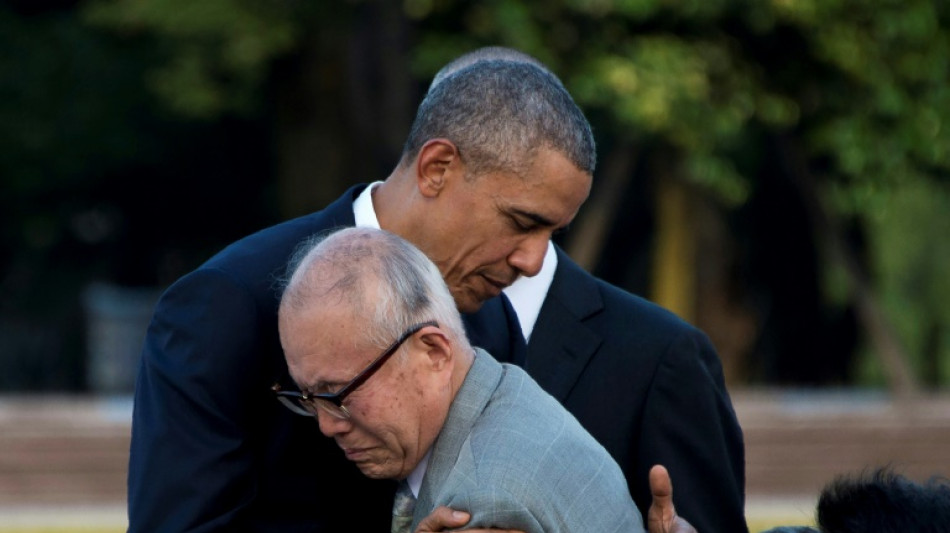
Nihon Hidankyo: Japan's A-bomb survivors awarded Nobel / Photo: JIM WATSON - AFP

 Kenya reports first-ever Ebola death
 Tennis world No.1 Sinner's season over due to knee injury
 Yemen's Houthis claim attack on Riyadh airport, deny losing territory
 7-Eleven exits India amid mounting competition
 The alleged murder by US marine on Okinawa: five things to know
 End of an era as Messi prepares to hang up Argentina boots

 Superstar duo headline strong New Zealand squad for Rugby League World Cup
 South Korea warns of possible AI use in banking hacks
 EU vows AI rules will protect Europeans. Will they?

 Myanmar leader to visit Malaysia after migrant returns begin
 Germany's AfD poised to preside over state assembly for first time
 Australia's opposition vows 'largest cut to immigration' in country's history
 Ready, set, snooze: Sleep-deprived Japanese compete for best-rested

 Falcons thump Saints 45-24 as New Orleans marks Katrina anniversary
 Tuvalu govt adviser says Australia overstepped in pre-COP visit
 Asian stocks mixed despite tech-led Wall St record
 Tens of thousands expected in Paris for high school protests
 AI borrowing binge rattles US markets

 Young Canadians sue government over alleged climate failures

 White Sox down Guardians to take 2-0 series lead
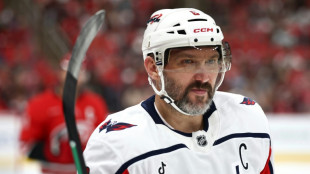 NHL record-breaker Ovechkin says current season will be his last
 France roar back in Nations League as Italy beat Turkey

 Messi readies for final farewell in Argentina send-off
 Esposito seals Italy win over Turkey in Nations League

 Russia downplays plague reports as Trump offers US help
Nobel Peace Prize winner Nihon Hidankyo is a group of survivors of the US nuclear bombings that virtually obliterated the Japanese cities of Hiroshima and Nagasaki at the end of World War II.
The Japanese grassroots anti-nuclear organisation was established in 1956 and is the only nationwide association of A-bomb survivors, who are known as hibakusha.
It has long been tipped for the Nobel for its calls to abolish nuclear weapons, including through powerful testimonies from its dwindling number of aged members, recounting the horror of the attacks.
Japan remains the only country hit by atomic weapons in wartime and next year is the 80th anniversary of the bombings.
Nihon Hidankyo says it stands for the "prevention of nuclear war and the elimination of nuclear weapons, including the signing of an international agreement for a total ban".
It argues that Japan should acknowledge its responsibility of "having launched the war, which led to the damage by the atomic bombing" and therefore provide survivors with compensation.
On August 6, 1945, the first nuclear bomb was dropped on Hiroshima, flattening the city and leaving some 140,000 people dead, either instantly or in the weeks that followed.
Three days later, a second US bomb hit Nagasaki, killing around 74,000.
- Obama visit -
All members and officials of Nihon Hidankyo are hibakusha, which says it represents almost all the organised survivors in Japan.
There are currently around 106,800 hibakusha in the country, according to the government. Their average age is 85.
Nihon Hidankyo works to tell survivors' stories, to convey the damage and after-effects of the attacks.
The group has also sent survivors to the United Nations and countries that hold nuclear weapons, and provides counselling and other assistance to survivors.
After then-US president Barack Obama won the Nobel Peace Prize in 2009, he met and embraced atomic bomb survivors on a historic visit to Hiroshima.
No sitting US president had ever visited the city, or Nagasaki, before -- despite years of invitations -- with the majority of the US public approving the decision to drop the atom bombs, according to polls at the time.
Jiro Hamasumi, one of the youngest survivors of the attacks, told AFP in 2020 that "not a day goes by when I don't think about my father" who was killed along with several other relatives.
His knowledge of the moment comes from the accounts of his siblings, who described the dizzying flash and ear-splitting roar that formed the first indication the bomb known as Little Boy had detonated.
- 'Heat and smell' -
Hamasumi's father was at work when the bomb hit, just a few hundred metres (yards) from the epicentre. His mother and siblings tried to reach his office the day after, but were forced back by the "heat and smell of burned flesh".
When they finally reached his father's office, they found only "something resembling his body" and could only retrieve a few metal items that survived the flames -- a belt buckle, a key and part of his wallet.
In its work for a law providing state compensation for the hibakusha, they have held petitions, marches and sit-ins, and regularly issue statements in reaction to world events.
This year it has protested against the start of tactical nuclear weapons drills by Russia and a subcritical nuclear test by the United States, among other activities.
"It has been said that because of nuclear weapons, the world maintains peace. But nuclear weapons can be used by terrorists," said Toshiyuki Mimaki, one of three co-chairs of Nihon Hidankyo, after the prize was announced.
"For example, if Russia uses them against Ukraine, Israel against Gaza, it won't end there. Politicians should know these things."
L.Henrique--PC