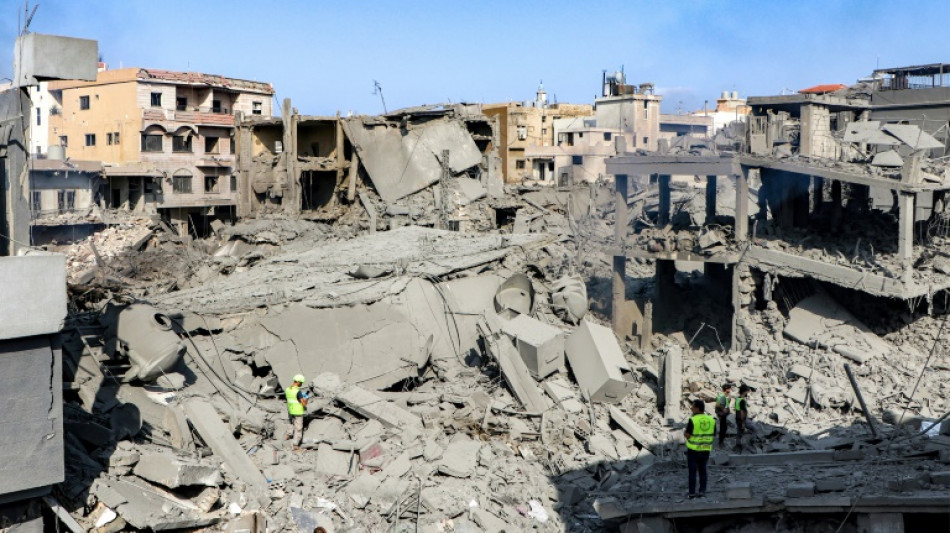
Israel strikes Hezbollah strongholds after rejecting Lebanon ceasefire / Photo: Bilal KASHMAR - AFP

 EU vows AI rules will protect Europeans. Will they?

 Myanmar leader to visit Malaysia after migrant returns begin

 Germany's AfD poised to preside over state assembly for first time
 Australia's opposition vows 'largest cut to immigration' in country's history
 Ready, set, snooze: Sleep-deprived Japanese compete for best-rested

 Falcons thump Saints 45-24 as New Orleans marks Katrina anniversary

 Tuvalu govt adviser says Australia overstepped in pre-COP visit

 Asian stocks mixed despite tech-led Wall St record

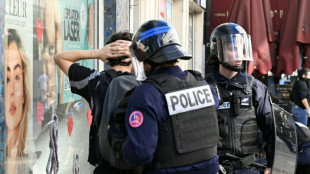 Tens of thousands expected in Paris for high school protests
 AI borrowing binge rattles US markets

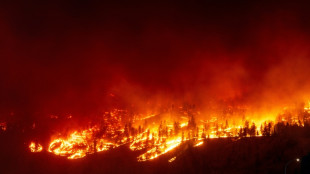 Young Canadians sue government over alleged climate failures

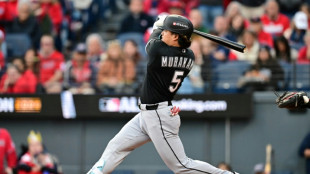 White Sox down Guardians to take 2-0 series lead
 NHL record-breaker Ovechkin says current season will be his last
 France roar back in Nations League as Italy beat Turkey
 Messi readies for final farewell in Argentina send-off
 Esposito seals Italy win over Turkey in Nations League

 Russia downplays plague reports as Trump offers US help

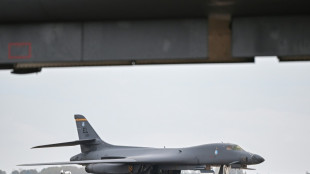 Trump says US moved bombers from UK base after 'threats'
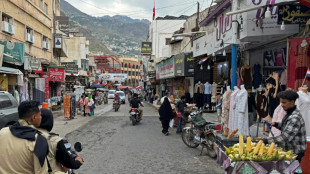
 Brazilian stocks surge to record after Bolsonaro election lead
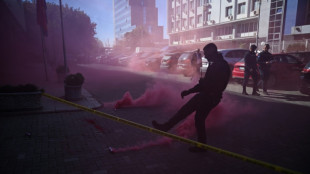
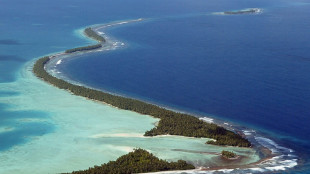
 Leaders to visit Pacific atoll at frontline of climate change

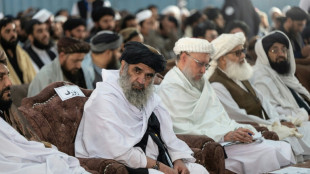 ICC gives more details about arrest warrants for Taliban ministers
 Nigeria's Tinubu confirms 32 dead after military plane crash

 'Reckless' AI firms can't control models, says whistleblower

 Switching on brain cells: the Nobel-winning science of optogenetics
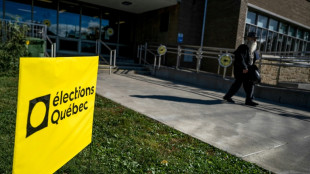 Quebec votes as separatist surge poses test for Canada PM

Israel conducted strikes on Wednesday targeting Hezbollah's main bastion and a city in southern Lebanon where it holds sway, after Prime Minister Benjamin Netanyahu dismissed calls for a ceasefire.
The strike on south Beirut, the militant group's main stronghold, was the first in several days of calm in the area, after an intense period of bombardment earlier in the Israel-Hezbollah war.
On Wednesday, warplanes pounded the city of Nabatiyeh in south Lebanon, where Hezbollah and its ally Amal hold sway, with the strikes sending a thick plume of smoke billowing over houses, palm trees and the blue-tipped minaret of a mosque.
The Lebanese health ministry said five people were killed in the Nabatiyeh strikes on two municipal buildings, while a local official said the mayor was among the dead.
Israel ramped up its bombardment mainly of Hezbollah strongholds in late September, and sent ground troops across the Lebanese border on September 30.
The Israel-Hezbollah war has left at least 1,356 people dead in Lebanon, according to an AFP tally of Lebanese health ministry figures, though the real toll is likely higher.
Hezbollah started low-intensity strikes on Israel in October last year, in support of its ally Hamas following the October 7 attack that triggered the Gaza war.
With Hamas weakened but not crushed, Israel widened the focus of its military operations to include Lebanon, vowing to fight until tens of thousands of Israelis forced by Hezbollah's fire to flee their homes are able to return.
The war in Lebanon, which has suffered years of economic and political crisis, has displaced at least 690,000 people, according to figures from the International Organization for Migration.
- No ceasefire -
The latest strikes came hours after Netanyahu told French President Emmanuel Macron he was "opposed to a unilateral ceasefire, which does not change the security situation in Lebanon, and which will only return it to the way it was", according to a statement from his office.
Netanyahu and the Israeli military have insisted there must be a buffer zone along Israel's border with Lebanon where there are no Hezbollah fighters.
"Prime Minister Netanyahu clarified that Israel would not agree to any arrangement that does not provide this (a buffer zone) and which does not stop Hezbollah from rearming and regrouping," the statement said.
On Tuesday, Hezbollah's deputy leader Naim Qassem said the only solution was a ceasefire, while threatening to expand the scope of its missile strikes across Israel.
"Since the Israeli enemy targeted all of Lebanon, we have the right from a defensive position to target any place" in Israel, he said.
On Tuesday, the Iran-backed group said it launched a barrage of rockets towards the northern Israeli city of Haifa and targeted Israeli bulldozers and a tank near the border.
Israel's military had kept up its bombardment on Tuesday and said it captured three Hezbollah fighters in south Lebanon.
Asked about Israeli air strikes in Lebanon, in which residential buildings in the centre of Beirut were hit on October 10, the US State Department voiced open criticism.
"We have made clear that we are opposed to the campaign the way we've seen it conducted over the past weeks" in Beirut, State Department spokesman Matthew Miller told reporters.
In a letter sent to the Israeli government on Sunday, Secretary of State Antony Blinken and Defense Secretary Lloyd Austin also warned that the United States could withhold weapons deliveries unless more humanitarian aid was delivered to Palestinians in Gaza.
The letter made "clear to the government of Israel that there are changes that they need to make again to see that the level of assistance making it into Gaza comes back up from the very, very low levels that it is at today," Miller said.
- 'Worst restrictions' -
Despite the need for food, medical supplies and shelter in hunger-ravaged Gaza, a spokesman for the UN's children's agency UNICEF said Tuesday that aid was facing the tightest restrictions since the start of Israel's offensive over a year ago.
"We see now what is probably the worst restrictions we've seen on humanitarian aid, ever," spokesman James Elder said, adding that there were "several days in the last week (where) no commercial trucks whatsoever were allowed to come in".
For over a week, Israeli forces have engaged in a sweeping air and ground assault targeting northern Gaza and the area around Jabalia amid claims that Hamas militants were regrouping there.
"The whole area has been reduced to ashes," said Rana Abdel Majid, 38, from the Al-Faluja area of northern Gaza.
Majid said entire blocks had been levelled by "the indiscriminate, merciless bombing."
Nidal al-Arab lost 10 of his family members during Israeli strikes on Jabalia.
"People are trapped. If they don't die of shelling, they will soon die of thirst and hunger because the siege is getting tighter," the 40-year-old told AFP.
Israel launched a military campaign in Gaza after an October 7 attack by Hamas that resulted in the deaths of 1,206 people, mostly civilians, according to an AFP tally of official Israeli figures, including hostages killed in captivity.
The Israeli campaign has killed 42,409 people, the majority civilians, according to figures from the health ministry in the Hamas-run territory which the UN considers reliable.
- Iran retaliation? -
Israel is also weighing how to respond to Iran's launch of around 200 missiles at the country on October 1.
Iran's top diplomat, Abbas Araghchi, warned UN chief Antonio Guterres that Tehran was ready for a "decisive and regretful" response should Israel attack his country.
Araghchi's conversation with Guterres was the latest in a string of diplomatic efforts by Iran, which also says its main goal is protect peace in the region.
US President Joe Biden, whose government is Israel's top arms supplier, has warned Israel against striking Iran's nuclear or oil facilities.
burs/ser/dl
R.Veloso--PC