
-
 Leaders visit Pacific atoll at frontline of climate change
-
NHL record-breaker Ovechkin says current season will be his last

-
 Yemen's Houthis claim striking Riyadh airport, other Saudi sites
-
France roar back in Nations League as Italy beat Turkey

-
 Best-selling British author Jeffrey Archer dies aged 86
-
Messi readies for final farewell in Argentina send-off

-
 Military plane crash kills 32 in Nigeria
-
Esposito seals Italy win over Turkey in Nations League

-
 Olise powers France to win over Belgium in Nations League
-
Russia downplays plague reports as Trump offers US help
-
 High-flying Blazy turns to birdlife at Chanel
-
Trump says US moved bombers from UK base after 'threats'
-
 Riyadh's allies pledge troops as Yemen, Saudi Arabia attack Houthis
-
Brazilian stocks surge to record after Bolsonaro election lead

-
 Clashes erupt outside Kosovo parliament over war crimes court
-
Leaders to visit Pacific atoll at frontline of climate change
-
 Milan's Saelemaekers suffers ankle setback, faces lengthy spell out
-
ICC gives more details about arrest warrants for Taliban ministers

-
 Rubio arrives in Iceland to push for greater US presence in Arctic
-
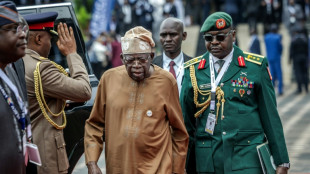
Nigeria's Tinubu confirms 32 dead after military plane crash
-
 Putin allows Italy's UniCredit to sell part of Russian business
-
'Reckless' AI firms can't control models, says whistleblower
-
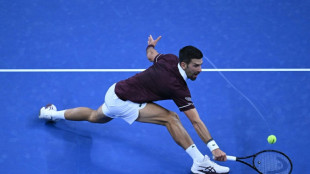 Djokovic into China Open final as Medvedev out for hitting fan with ball
-
Switching on brain cells: the Nobel-winning science of optogenetics

-
 ICC unseals arrest warrants for Taliban education ministers
-
Quebec votes as separatist surge poses test for Canada PM

-
 Modric hopes fans back Croatia against Spain after England shame
-
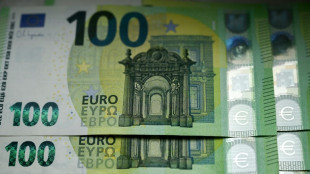
Euro slides as concerns about French debt mount
-
 Bolsonaro rides right-wing surge into Brazil's election runoff
-
Former Trump press secretary Leavitt joins Fox News
-
 Turkey blocks X account of British reporter
-
Djokovic advances to China Open final as Medvedev out for hitting fan with ball
-
 Ukraine says using AI robot guns to shoot down new Russian drones
-
Disgraced former US House speaker dies at 84
-
 At Oct 7 memorial, Netanyahu says will be no Hamas rule in Gaza
-
Euro slides as worries about French debt grow
-
 Ukraine blames Russia for deadly sinking of Turkish ship in Black Sea
-
US withdraws all bomber aircraft from UK airbase
-
 UN rights council slams Taliban's 'oppression' of women
-
Drone hits Ethiopia IDP camp as fears grow of regional war

-
 Norway eyes partial ban of smart glasses
-
US-German trio wins medicine Nobel for illuminating the brain

-
 Two dead after ship catches fire, sinks in Black Sea
-
England captain Kane driven by desire for records says Tuchel

-
 Spain's PM calls snap election after housing bill defeat
-
N.Irish court hears challenge to disputed Orangemen parade

-
 STARCARES Equips Seven Foster Homes for Children and Young People in Tanzania
-
Talking points from the Bahrain Grand Prix in Malaysia

-
 Alleged Indian leader of neo-Nazi child abuse ring goes on trial in Paris
-
Yemen, Saudi Arabia target Houthis in new campaign as war escalates
Russia hikes interest rates to 21%, highest since 2003
Russia's central bank hiked interest rates to 21 percent on Friday, taking borrowing costs to their highest level in more than 20 years amid surging inflation.
The rise takes rates above an emergency level introduced in February 2022 -- just after Moscow ordered troops into Ukraine -- and to their highest since 2003.
"Further tightening of monetary policy is required to ensure the return of inflation to the target and reduce inflation expectations," the bank said in a statement announcing the increase.
The bank directly blamed high government spending for inflation and said it could hike rates yet again if the pace of price rises does not cool.
"Additional fiscal spending and the related expansion of the federal budget deficit in 2024 have pro-inflationary effects," it said.
Inflation has surged amid a massive increase in government spending on the Ukraine offensive that has triggered labour shortages across the economy.
Price rises were running at 8.6 percent on an annual basis in September, more than double the official 4.0-percent target.
Russian lawmakers voted Thursday to increase defence expenditure by almost 30 percent next year, another sign Moscow is not planning to halt its spending on the offensive, grinding through its third year, anytime soon.
Several sectors of the economy are facing intense labour shortages, as hundreds of thousands of men have been called up to fight, fled the country or been recruited by a booming domestic weapons' industry.
That has created strong growth despite an unprecedented package of Western sanctions that Washington hoped would cripple the Russian economy.
The International Monetary Fund this week raised its growth forecast for Russia in 2024 to 3.6 percent.
- Inflation woes -
But it has also led to a cycle of spiralling wages and prices that the Central Bank has long warned undermines economic stability.
Official borrowing costs in Russia have not been above 20 percent since 2003.
They regularly topped 100 percent throughout the 1990s, a decade of economic volatility and hardship following the collapse of the Soviet Union.
For years President Vladimir Putin has boasted of economic stability under his leadership, with his first years in office in the 2000s seeing an oil-led boom and rising wealth.
But his conflict in Ukraine has threatened Moscow's future prosperity, cutting it off from lucrative Western export markets and much of the global financial system.
Putin had hoped to advance plans for alternative international payment systems at the BRICS summit in Kazan this week, the largest diplomatic gathering in Russia since the start of the offensive.
But speaking Thursday, he indicated little progress had been made on talks over launching a possible competitor to the Belgium-based SWIFT financial messaging system.
"As for SWIFT and any alternatives, we have not created and are not creating any alternatives," Putin told reporters at the end of the summit.
"One of the key problems today is the problem of payments, that is why we are moving towards the use of national currencies," he said.
"As for a unified BRICS currency, we are not considering that question at the moment," he added.
L.Torres--PC