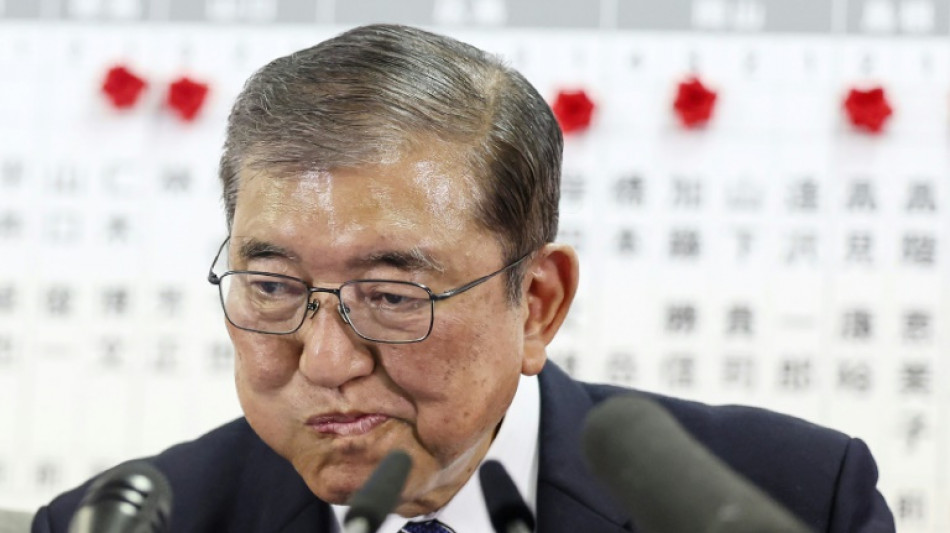
After disastrous election, what happens to Japan's new PM? / Photo: STR - JIJI PRESS/AFP

 Yemen's Houthis claim striking Riyadh airport, other Saudi sites

 Best-selling British author Jeffrey Archer dies aged 86

 Military plane crash kills 32 in Nigeria

 Olise powers France to win over Belgium in Nations League

 High-flying Blazy turns to birdlife at Chanel

 Riyadh's allies pledge troops as Yemen, Saudi Arabia attack Houthis

 Clashes erupt outside Kosovo parliament over war crimes court

 Milan's Saelemaekers suffers ankle setback, faces lengthy spell out

 Rubio arrives in Iceland to push for greater US presence in Arctic
 Putin allows Italy's UniCredit to sell part of Russian business

 Djokovic into China Open final as Medvedev out for hitting fan with ball

 ICC unseals arrest warrants for Taliban education ministers
 Modric hopes fans back Croatia against Spain after England shame

 Bolsonaro rides right-wing surge into Brazil's election runoff

 Turkey blocks X account of British reporter

 Ukraine says using AI robot guns to shoot down new Russian drones
 At Oct 7 memorial, Netanyahu says will be no Hamas rule in Gaza
 Ukraine blames Russia for deadly sinking of Turkish ship in Black Sea

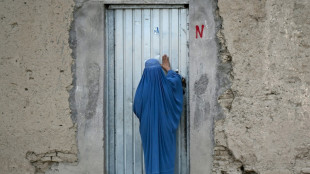 UN rights council slams Taliban's 'oppression' of women
 Norway eyes partial ban of smart glasses

 Two dead after ship catches fire, sinks in Black Sea

 Spain's PM calls snap election after housing bill defeat

 STARCARES Equips Seven Foster Homes for Children and Young People in Tanzania

 Alleged Indian leader of neo-Nazi child abuse ring goes on trial in Paris

 Euro, French stocks slide on France debt concerns

Japanese Prime Minister Shigeru Ishiba's ruling coalition fell short of his declared "victory line" of a majority in snap parliamentary elections, media projections showed Monday.
AFP examines the options now for the Liberal Democratic Party (LDP) after its worst result since 2009, and the prospects for its bruised leader Ishiba, who only took office on October 1.
- Why the big loss? -
Fiercely critical of former prime minister Shinzo Abe and his brand of establishment politics, Ishiba has long played on his relative popularity with voters as the LDP's "intraparty foe".
But while this won him the party leadership, in the election citizens were more interested in punishing the LDP over a scandal that saw party members pocket money from fund-raisers.
That the main opposition Constitutional Democratic Party (CDP) recently elected moderately conservative former prime minister Yoshihiko Noda as leader also didn't help.
Briefly in office between 2011 and 2012, and known for his "realistic" stance, "I think the majority of Japanese people trust Noda", said Masato Kamikubo, a politics professor at Ritsumeikan University.
"He is a very stable politician", Kamikubo said.
While the LDP's seats as projected by public broadcaster NHK tumbled to 191, from 259 seats at the last election, the CDP's tally soared to 148 from 96.
Komeito, the LDP's coalition partner, slipped to 24 from 32, with new party chief Keiichi Ishii losing his seat.
- Could the opposition form a government? -
This is tricky given the fragmented opposition, and memories of its tumultuous rule between 2009 and 2012, analysts say.
"The possibility of a handover of power to the opposition isn't zero, but there are far too many opposition parties for any of them to reach a majority," said Yu Uchiyama, a political science professor at the University of Tokyo.
Policy differences and past fallings-out continue to divide and hobble opposition parties, from communists to the liberal CDP, the centrist Democratic Party for the People (DPP) and the "reformist conservative" Japan Innovation Party.
- Can Ishiba find new partners? -
The prime minister has his work cut out to make it happen.
On the campaign trail, CDP leader Noda said it would be "impossible" to join forces with the LDP, having been part of previous no-confidence votes.
The Japan Innovation Party also remains unconvinced, with its head Nobuyuki Baba dismissing a tie-up with the LDP in its current scandal-tainted state as "impossible".
The centrist DPP, too, denied it would sign up for the coalition.
But its leader, Yuichiro Tamaki, left open the possibility of a "partial coalition" where it can offer some flexibility on individual policies it has an affinity with.
- What about Ishiba's future? -
Ishiba will likely therefore have to resort to heading a minority administration, seeking support from other parties on a case-by-case basis.
But this is likely to destabilise Ishiba's nascent power base, and leave him susceptible to challenges from within his own party.
Speculation is growing that Ishiba may be forced to resign to take responsibility for the debacle -- becoming the shortest-serving prime minister in Japan's post-war history.
In a nuanced denial of this prospect, though, Ishiba on Sunday night answered in the affirmative when asked by a reporter whether the prime minister intends to follow through on his duties.
"If the ruling coalition or even just the LDP loses its majority, Ishiba will face harsh criticism from party members", Yosuke Sunahara of Kobe University told AFP before Sunday.
But at the same time, the ruling coalition's loss of a majority in the Lower House only goes to lay bare public disenchantment with the political funding scandal.
So if "Ishiba is ousted while the party tries to gloss over the issue, public backlash against the LDP will intensify," Sunahara said.
"This makes it difficult for Ishiba's rivals within the party to criticise him."
P.Cavaco--PC