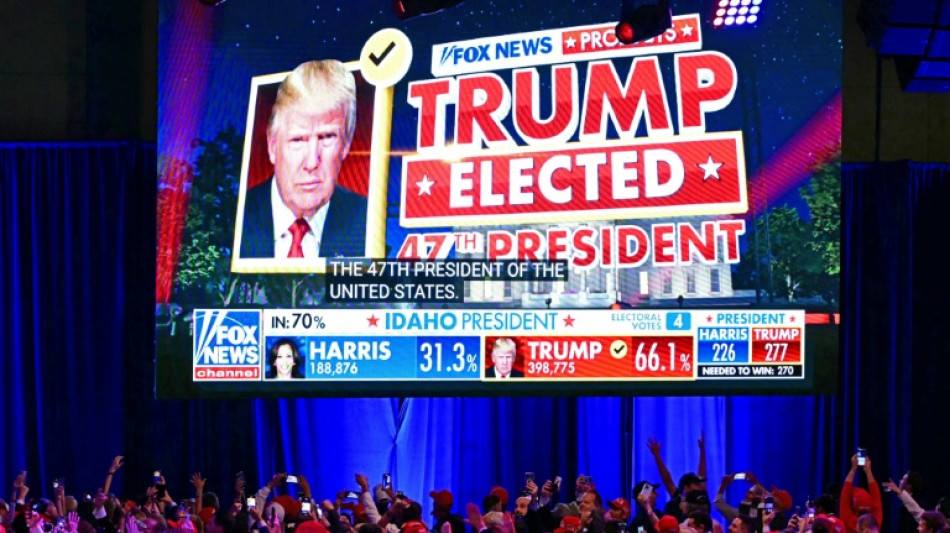
Trump has vowed sweeping tariffs: What comes next? / Photo: Jim WATSON - AFP/File

 Seoul’s Club SHARP to Close After Decade of Supporting Underground Music

 Alavita Founder Anne Harles Outlines Organic Expansion Strategy

 Florida woman charged after deputies report finding cocaine and sales ledger

 Heat end Knicks’ NBA Cup defence with 108-105 victory

 Black Friday laptop promotions cover Apple, Lenovo, HP and gaming models

 Black Friday fashion sales bring discounts of up to 80 percent

 Shark reduces prices on top-rated stick and robot vacuums

 Anthony Lee’s Journey from Fashion to Art Education at HoMA

 Black Friday discounts arrive on tested Yeti coolers and drinkware
 UK survey records sharp rise in young adults reporting no sexual experience
 Audi RS 3 long-term test leads debate over the ideal everyday performance car
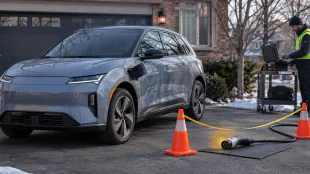 Ontario family seeks return of Chevrolet Bolt after charging cable shock

 Canada launches $6.5 billion strategy to transform forestry sector

 Calgary Catholic schools report strong results and growing classroom complexity

 Bombay HC Orders Bank of Baroda to Pay Rs 1.5 Crore to Octogenarian After Unilateral FD Deduction

 Danny Trejo Claims Legal Threats Prevented Him From Quitting Ben Shapiro ICE Film

 Workday weighs South African public-sector demand while keeping data in EU

 iOCO acquires procurement software specialist Intellection

 RunCzech Advent Running Challenge Offers Prague Half Marathon Entries

 EasyEquities says small group of client accounts targeted in attack

 Regulator examines E9Pay after hacking losses reach 2.5 billion won

 North Korea and Russia agree to expand joint economic projects
 Seoul monitors reports of possible Kim Jong-un visit to China

 Lee joins launch of 2.4-gigawatt AI data centre project in Gangwon

US president-elect Donald Trump says "tariff" is the most beautiful word in the dictionary -- and the Republican's second term promises sweeping measures on all $3 trillion worth of US imported goods.
This will not be the first time Trump has used tariffs to exert pressure on other countries. What should households and businesses expect?
- What did he pledge? -
Trump has promised at least a 10 percent tariff on all imports, and a higher level of 60 percent or more on Chinese goods -- stepping up levies on Beijing and others.
The aim, he said, was to target countries that had been "ripping us off for years" and to lower US trade deficits.
Trump has also suggested tariffs above 200 percent on vehicles from Mexico, saying this was to protect US auto firms.
In Pennsylvania this week, Trump threatened to take further aim at China and Mexico if they did not stop deadly fentanyl from entering the country.
Experts note, however, that when Washington imposes tariffs on imports, it is US businesses who pay the fees to the government.
- Can he do it? -
"The risk is significant," said Scott Lincicome, vice president of general economics at the Cato Institute.
Laws exist that "allow the president to apply tariffs unilaterally for extremely broad and discretionary reasons," he told AFP.
This includes national security justifications, he said, pointing to what the US government did when imposing steel and aluminum tariffs in 2018.
Courts have also been "extremely reluctant to act as a check on that power," Lincicome added.
Experts have pointed to laws like the International Emergency Economic Powers Act, which allows a president to declare a national emergency and restrict trade.
- What are the consequences? -
US consumers could lose $46 billion to $78 billion in spending power annually if new tariffs on imports are implemented, according to the National Retail Federation (NRF).
This applies if proposed tariffs were imposed on six product categories alone -- apparel, toys, furniture, household appliances, footwear and travel goods.
"Retailers rely heavily on imported products and manufacturing components so that they can offer their customers a variety of products at affordable prices," said Jonathan Gold, NRF vice president of supply chain and customs policy.
"This tax ultimately comes out of consumers' pockets through higher prices," he added.
For companies, uncertainty over US tariff regimes for their industries and retaliatory risks "will clearly be a huge problem when forward planning," said Ben May, director of global macro research at Oxford Economics.
- How might countries respond? -
When Washington slapped tariffs on 6.4 billion euros worth of European steel and aluminum exports in 2018, the EU retaliated with "rebalancing tariffs" on US exports -- hitting a value of 2.8 billion euros.
These have since been suspended but both sides have struggled to finalize a longer-term solution.
When the first Trump administration announced tariffs on hundreds of billions of Chinese products between July 2018 and August 2019, Beijing retaliated with tariffs on more than $185 billion of US products, the Brookings Institution noted.
Trump's aggressive trade actions left the US farm industry suffering from China's response, hitting soybeans especially hard with exports plunging.
The Trump administration paid out some $28 billion in aid to farmers hit by the trade war's consequences.
- Is there recourse? -
Across-the-board tariffs could violate US international trade obligations in the World Trade Organization (WTO) and with free trade area partners, said Jeffrey Schott, senior fellow at the Peterson Institute for International Economics (PIIE).
While other countries can challenge US actions, Schott noted that any dispute settlement process involving the United States will hit a wall as it can appeal any adverse panel ruling and there is no appellate body to hear the case.
Countries would likely retaliate instead, said Schott.
This could take the form of tariffs or other levers like regulatory approvals, the Cato Institute's Lincicome said.
Foreign governments would likely try to strike deals with the Trump administration as well, he added.
He noted that the first Trump government started free trade agreement talks with Kenya and renegotiated the North American Free Trade Agreement.
But it is unclear if his new policymakers will be similarly inclined to trade deals.
C.Amaral--PC