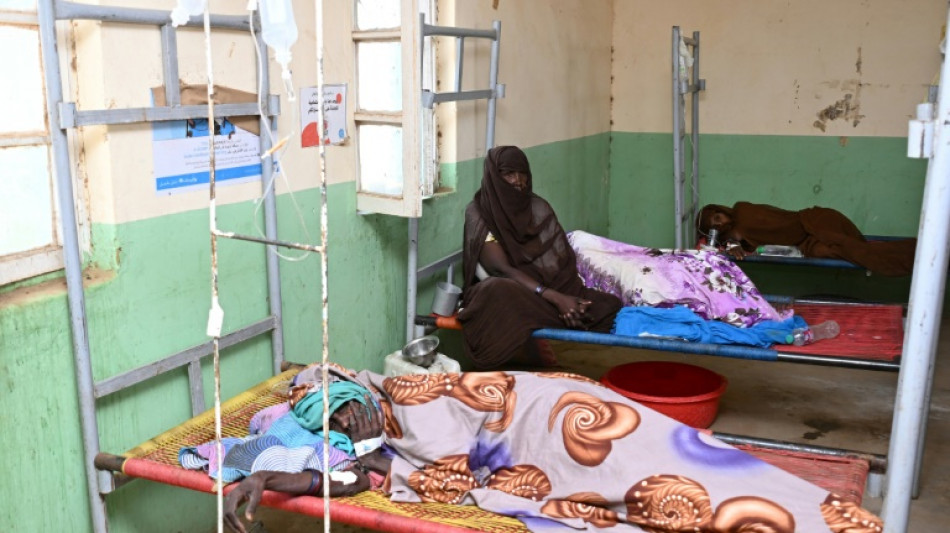
New WHO financing mechanism put to the test / Photo: - - AFP

 South Korea captain 'deeply sorry' for gloating about military exemption
 Alcaraz through to Japan Open semis after Shapovalov injury
 Chanel: unpicking one year of 'Blazymania'
 Latvian pro-Europeans set for election win: partial results
 China swim sensation Yu Zidi, 13, says 'I'm no prodigy'
 Yu Zidi to Ohashi: Asian Games stars who can light up LA Olympics
 'Act before it's too late': Tokyo residents fight for more trees
 'Disappointing' as South Korea flag mishap sees Games end on sour note
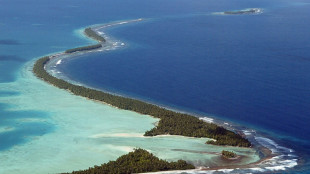 Pre-COP host Tuvalu at frontline of climate change
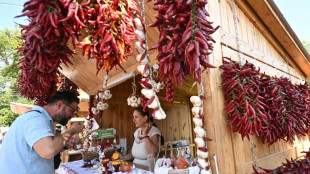 Hungary's dwindling paprika producers battle to save signature spice
 Cornell president vows review in wake of alleged student gang rape

 Latvian partial election results suggest pro-European choice
 In Egypt's Sinai, Gazan builds school for children displaced by war
 Trump tariffs a mixed bag for US auto industry
 Yemen government forces say struck Houthi targets
 Music links past, present for Pedro Pascal's cellist in 'Behemoth!'
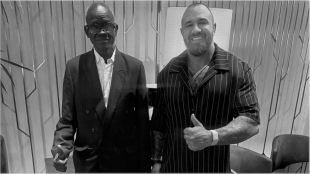
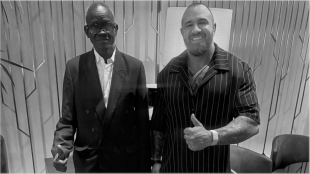
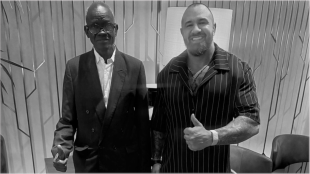
 ALEX BODI ȘI AMBASADORUL REPUBLICII SUDANUL DE SUD, GUM DOMINIC MATIOK, DISCUTĂ LA BERLIN DESPRE POSIBILITATEA ÎNFIINȚĂRII UNUI CONSULAT ONORIFIC LA BUCUREȘTI
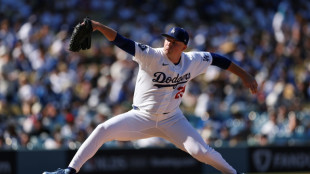 Dodgers step up World Series three-peat bid with 5-3 win over Braves
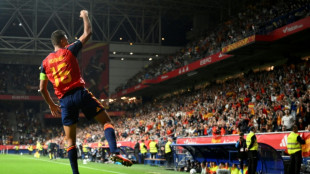 Spain break down Czechs as England outclass Croatia in Nations League
 Yamal on target as Spain hold off Czech Republic
 Latvian exit polls suggest pro-European choice
 Lula, Bolsonaro wrap up campaigns ahead of knife-edge election
 Tuchel hails 'complete' England after Croatia demolition
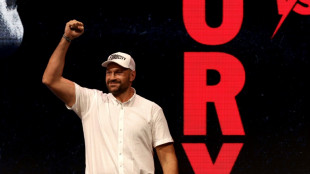 Fury to invite Trump to lead ring walk before Joshua showdown
 Fashion industry in 'precarious moment', says Vivienne Westwood supremo
The WHO announced late Tuesday that it had raised nearly $4 billion through a new financing mechanism, aimed at securing predictable funding, as shifting political winds threaten cuts from Washington.
The announcement, made on the sidelines of the G20 summit in Rio de Janeiro, came as the stakes have risen substantially for the World Health Organization since Donald Trump won the US presidential election earlier this month.
During his first term in office, from 2017 to 2021, the Republican relentlessly attacked the UN health agency, over its handling of the Covid pandemic especially. It began withdrawing his country -- traditionally the WHO's top donor -- from the organisation.
Although President Joe Biden renewed ties with the agency, there are fears that Trump might slam the door shut again.
The Geneva-based organisation said that pledges from Australia, Indonesia and Spain at the G20 summit, combined with earlier donations and pledges, had yielded $3.8 billion in funding for the next four years -- more than half of the funding gap it needs to fill through 2028.
Here is an overview of how WHO funding works and what the new mechanism set up in May aims to achieve:
- Imbalances -
When the WHO was created in 1948, it received all of its funding through so-called assessed contributions, or the membership fees that each member state pays, based on the size of their economies.
"That money was predictable, because you know what you're going to get each year," Daniel Thornton, head of the WHO's Coordinated Resource Mobilisation unit, told AFP. Those funds could also be used flexibly, in line with the organisation's strategy, he added.
However, over the years, the WHO became increasingly reliant on voluntary contributions.
In 2022-2023, membership fees covered just 13 percent of the agency's budget, the remainder covered by voluntary contributions.
Such funds are far less predictable and are typically earmarked for specific projects, giving the Geneva-based organisation little flexibility over how they are used.
This funding imbalance has meant that "generally, communicable diseases are better funded than non-communicable, (even though) the disease burden is much heavier on non-communicable diseases", Thornton said.
- Investment round -
At the height of the Covid-19 pandemic in 2020, the UN health agency created the WHO Foundation to marshal new resources from business and philanthropists.
Two years later, member states agreed to immediately increase the portion of the WHO's biannual budget covered by membership fees to 20 percent, and to gradually raise it further to 50 percent by 2030-31.
The organisation also launched last May a new investment round aimed at securing as much funding as possible up front for its core activities over the next four years (2025-28).
The WHO is not asking for more funds, but "is moving from a process where we get a continuous stream of income to one where we ... want the four years' funding up front", Thornton said.
- $7.1 billion -
The WHO estimates it will need $11.1 billion over the coming four years.
The agency expects to secure more than a third of that, some $4 billion, thanks in part to expected membership fee hikes.
That has left it seeking to raise $7.1 billion to close the gap, as it solicits both public and private donors including foundations.
With the latest pledges, it has now covered 53 percent of that amount.
Since the start of the investment round in May, the agency has attracted dozens of new donors, including over a dozen in African nations.
Regardless of political shifts in Washington, Thornton stressed that the WHO was intent on seeing the "very important" partnership with the United States continue.
"That is our priority," he said, stressing that another major concern was to ensure "we've got a broad donor base".
L.Henrique--PC