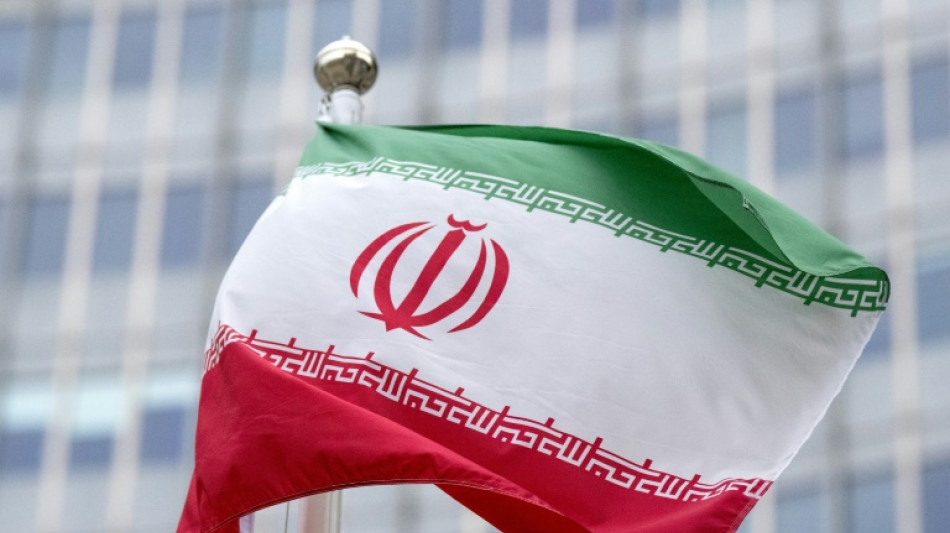
UN nuclear watchdog board passes resolution chiding Iran / Photo: Joe Klamar - AFP

 Asian Games set to close after records, rancour and rain

 Cry for help as French-Swiss lake dries up

 Sabalenka swept out of China Open in third round

 US urges 'restraint' as Ethiopia's Tigray crisis rocks region

 Teens on target again as USA down Mexico 3-0

 World records prove Asian Games were a hit, says top official

 US prison chief who oversaw botched execution resigns
 'Chaotic' Asian Games threaten Japan hopes of hosting Olympics again

 Finnish town braces for change from Google data centres

 What is fuelling French school protests?

 Without lawyers, migrant children face deportation from the US

 Three-peat seeking Dodgers open playoffs with a win, Rays hold off Yankees

 Brazil votes in nail-biter polls closely watched by Trump
 'Just be you': Kim reveals Tiger text that inspired him to gold

 Myanmar migrants returned to war-torn nation from Malaysia

 ALEX BODI AND AMBASSADOR GUM DOMINIC MATIOK OF THE REPUBLIC OF SOUTH SUDAN MEET IN BERLIN TO DISCUSS THE POSSIBILITY OF AN HONORARY CONSULATE IN BUCHAREST

 Lula, Bolsonaro wrap up campaigns ahead of Brazil's knife-edge vote

 Toulouse edge Castres in Top 14 derby

 Murakami homer propels White Sox to MLB playoff win over Guardians

 Israel targets top Hamas leader in deadly Gaza strike on anniversary

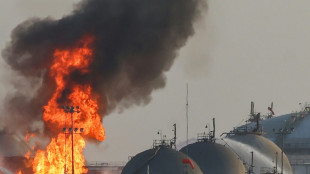 Houthis say struck oil facility near Riyadh, as Saudis hit Sanaa

 AI needs safety layers like nuclear plants: ex-OpenAI engineer

 MVP Judge will miss Yankees' MLB playoff series against Rays

 New lizard species discovered in Peru

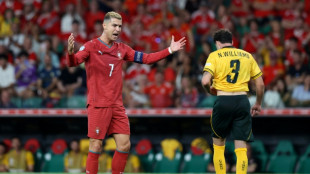 Fernandes hails Portugal's 'greatest symbol' Ronaldo, calls for unity
The UN nuclear watchdog's board of governors passed a resolution chiding Iran's poor cooperation with the agency after hours of heated exchanges, diplomats told AFP late on Thursday, a move Tehran called "politically motivated".
The censure motion brought by Britain, France, Germany and the United States at the International Atomic Energy Agency's 35-nation board follows a similar one in June.
But it comes as tensions run high over Iran's atomic programme, with critics fearing that Tehran is attempting to develop a nuclear weapon -- a claim the Islamic Republic has repeatedly denied.
The resolution -- which China, Russia and Burkina Faso voted against -- was carried by 19 votes in favour, with 12 abstentions and Venezuela not participating, two diplomats told AFP.
Ahead of the vote on Thursday night, the United States and its European allies sought to rally support for their resolution by denouncing Iran.
In its national statement to the board, Washington said that Tehran's nuclear activities are "deeply troubling".
London, Paris and Berlin in a joint statement drew attention to the "threat" Iran's nuclear programme posed "to international security", stressing that it now had enough highly enriched uranium for four nuclear weapons.
In a first reaction after the vote, Iran's ambassador to the IAEA, Mohsen Naziri Asl, told AFP that the resolution was "politically motivated", citing its "low support" compared to previous censures.
- Differences laid bare -
The confidential resolution seen by AFP says it is "essential and urgent" for Iran to "act to fulfil its legal obligations".
The text also calls on Tehran to provide "technically credible explanations" for the presence of uranium particles found at two undeclared locations in Iran.
Moreover, Western powers are asking for a "comprehensive report" to be issued by the IAEA on Iran's nuclear efforts "at the latest" by spring 2025.
Since 2021, Tehran has significantly decreased its cooperation with the agency by deactivating surveillance devices to monitor the nuclear programme and barring UN inspectors.
At the same time, Iran has rapidly ramped up its nuclear activities, including by increasing its stockpiles of enriched uranium.
That has heightened fears that Tehran might be seeking to develop a nuclear weapon, which it denies.
The resolution comes just as IAEA head Rafael Grossi returned from a trip to Tehran last week, where he appeared to have made headway.
During the visit, Iran agreed to an IAEA demand to cap its sensitive stock of near weapons-grade uranium enriched up to 60 percent purity.
"This is a concrete step in the right direction," Grossi told reporters Wednesday, saying it was "the first time" Iran had made such a commitment since it started breaking away from its obligations under the nuclear deal.
The landmark 2015 deal -- which curbed Iran's nuclear programme in exchange for sanctions relief -- fell apart three years later after the unilateral withdrawal by the United States under then-president Donald Trump.
In retaliation, Tehran began gradually rolling back some of its commitments by increasing its uranium stockpiles and enriching beyond the 3.67 percent purity -- enough for nuclear power stations -- permitted under the deal.
- Potential to 'harm efforts' -
Although symbolic in nature at this stage, the censure motion is designed to raise diplomatic pressure on Iran.
Iran's Foreign Minister Abbas Araghchi said Thursday the censure "will disrupt" interactions with the agency, but stressed Tehran would remain keen to cooperate.
Earlier, Araghchi had warned of a "proportionate" response by Iran if the board passes the resolution.
According to Heloise Fayet, a researcher at the French Institute of International Relations, the resolution has the potential to "harm Rafael Grossi's efforts".
"But Western powers are frustrated by the lack of effectiveness of his diplomatic manoeuvres and are looking for firmer solutions," she told AFP.
On Wednesday, Grossi said he could "not exclude" that Iran's commitment to cap enrichment might falter "as a result of further developments".
Foreign policy expert Rahman Ghahremanpour said Tehran might retaliate to the new censure by "increasing the enrichment levels".
But he does not expect any drastic "strategic measures" as Iran does not want to "aggravate tensions" before Trump returns to the White House.
Nogueira--PC