Russians split from family in Ukraine strive to maintain ties

 Trump's beef policies irk Texas ranchers, testing their loyalty

 Nvidia, OpenAI CEOs to attend Xi dinner at White House

 Anthropic picks Accenture for in-house AI safety evaluation

 Balogun returns as Monaco beat Lens to continue strong Ligue 1 start

 'Pause' on overt repression in Venezuela, but reforms still needed: HRW

 Global stocks mixed as yen falls despite Bank of Japan rate hike

 Cuba hit with seventh major blackout of the year

 Murray out with concussion so Wentz will start for Vikings

 UN chief 'deeply regrets' US visa refusal to Abbas for annual meeting

 England quick Carse to face no charges over alleged nightclub assault

 Mancini brings nine newcomers into the first squad of his Italy comeback

 Czechs level Davis Cup tie against USA as South Korea eye Finals

 New France boss Zidane confirms Mbappe as captain after naming first squad

 California governor signs order to explore AI 'kill switch'

 Head leads run spree as Australia win Zimbabwe ODI series

 In-form Raphinha wants to finish career at Barcelona

 Warren Buffett steps down as Berkshire Hathaway chairman

 Carrick confident Man Utd can 'work through' tough time

 Mbappe ends Nike partnership to join Swiss brand On

 Liverpool boss Iraola puts Bournemouth love affair on hold

 'A disaster' if Man City do not win says Maresca after flawless start

 Kerry James Marshall: American 'blackness' painter celebrated in Europe

 Spain coach De la Fuente offers 'full support' to people of Ceuta
 Russia seizes assets of Nestle, French firms over West's Ukraine support
 England can build on World Cup 'spirit', says Tuchel

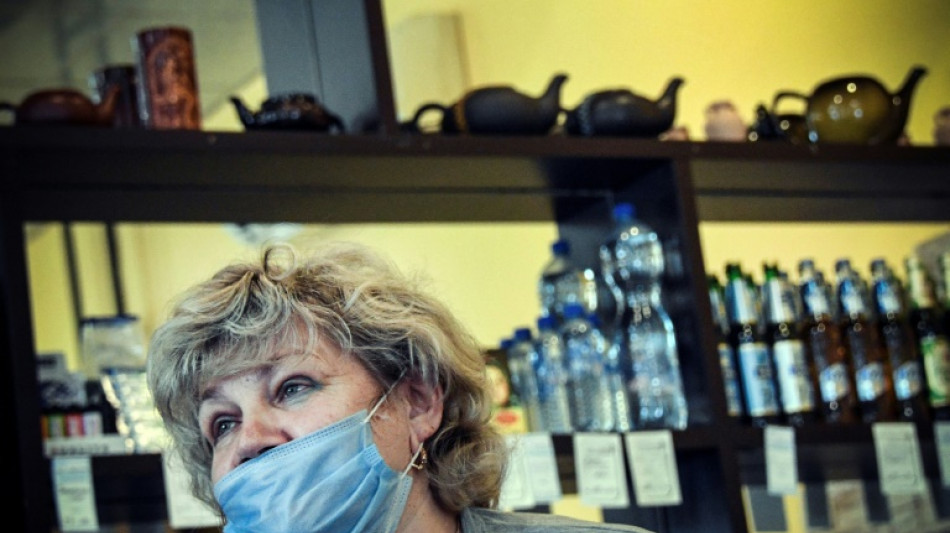
Before conflict broke out, visiting her brother and sister was easy for Alla Lavrova, who could drive from her home in Russia and across the border to Ukraine in just one hour.
But with tensions soaring after Western leaders accused Moscow of amassing tens of thousands of troops on the border with Ukraine, Lavrova, 56, doesn't know when she'll see her siblings again.
"I haven't seen them for two-three years," she says, wiping the counter of her cafe in the town of Oktyabrsky in southwestern Russia.
"It has become more difficult to cross the border because of the political situation," she tells AFP.
Many residents of this small town have had to adapt to keep in touch with loved ones since 2014, after an insurgency of Russia-backed separatists in eastern Ukraine.
Crossing the border to work, shop or visit family used to be easy but now the process has become a headache with further restrictions introduced with the coronavirus pandemic.
And the situation is unlikely to change soon with Washington warning of an imminent Russian invasion into Ukraine.
"I am sorry that Russia and Ukraine have developed such relations," Lavrova says, casting a disapproving glance at the muddy footsteps her customers left.
"We ordinary people have warm, human relationships. But at the highest level -- it's different," she adds.
- Easier to visit Peru -
Like Lavrova, many families in this region have relatives in Kharkiv, Ukraine's second largest city just 30 kilometres (18 miles) from the border with Russia.
Her brother and sister studied and eventually settled there during Soviet times, taking up Ukrainian citizenship after the USSR collapse in 1991.
Until 2014, the siblings would see each other regularly, especially at Easter -- an important holiday in both Orthodox Russia and Ukraine.
Now they only speak by phone.
"They can't even come and say a prayer at our parents' grave," Lavrova says.
Crossing the border is still possible for Russians but it comes with tedious administrative procedures that discourage many to even try.
Sofia Vinakova, a 22-year-old student, says she missed her grandmother's funeral in Ukraine's capital Kyiv last September.
"Only my mother could go," she says, taking a sip of her strawberry vodka.
Dmitry Popov tells AFP he tried to visit his cousins in Kharkiv in 2019, but Ukrainian authorities refused him entry.
Young men are often subject to extensive checks with Kyiv authorities fearing the infiltration of Russian soldiers.
"It's easier to visit Peru," says 22-year-old Popov, who keeps in touch with his relatives in Ukraine by playing online video games together.
- Avoid politics -
Vinakova says she remains in contact with her aunt in Ukraine through video calls, but they don't mention the conflict.
"In Ukraine they say it's Russia's fault. Here, it's the opposite. We came to the conclusion that talking about it would be useless," Vinakova says. "Politics is politics. We are family".
While most of the residents in the border region who spoke to AFP said they do not believe there will be a military confrontation, some are concerned for their relatives in Ukraine.
Vladimir Sidletsky, a 70-year-old retired electrician, says he has an older sister living in Lugansk, one of the two breakaway regions in eastern Ukraine controlled by separatists.
"We are worried about her. We told her to come and join us because of the situation there," Sidletsky tells AFP as he puts down his heavy shopping bag and pulls up the collar of the jacket to shield himself from the cold.
"But she doesn't want to," he says.
"We'll hold on. We survived 1941. We'll get through this too" is what his sister says.
Despite the difficulties, Vinakova remains positive and certain that she will see her Ukrainian aunt again.
If necessary, "we'll meet in a third country," she says.
A.Aguiar--PC