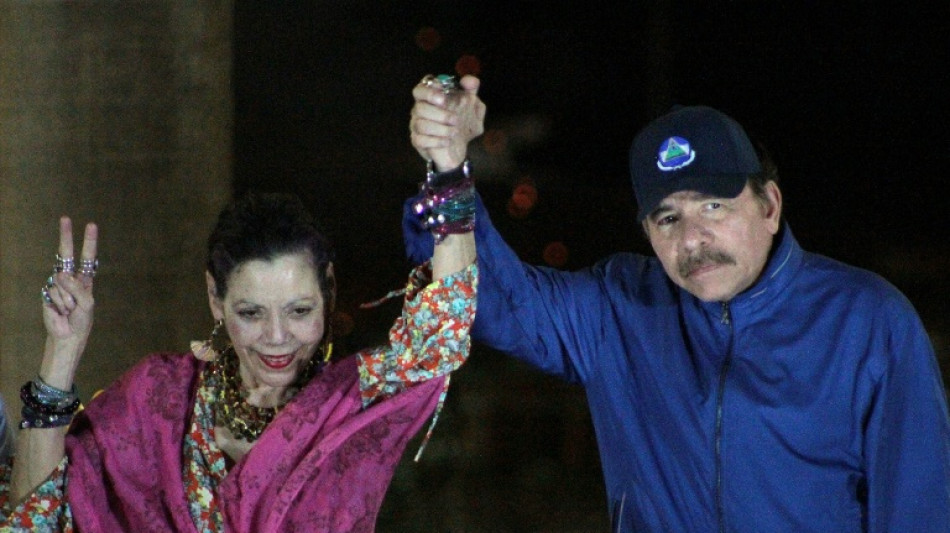
Nicaragua OKs reform to boost powers of president, wife / Photo: Maynor Valenzuela - AFP/File

 Asian Games set to close after records, rancour and rain

 Cry for help as French-Swiss lake dries up

 Sabalenka swept out of China Open in third round

 US urges 'restraint' as Ethiopia's Tigray crisis rocks region

 Teens on target again as USA down Mexico 3-0

 World records prove Asian Games were a hit, says top official
 US prison chief who oversaw botched execution resigns
 'Chaotic' Asian Games threaten Japan hopes of hosting Olympics again
 Finnish town braces for change from Google data centres

 What is fuelling French school protests?

 Without lawyers, migrant children face deportation from the US
 Three-peat seeking Dodgers open playoffs with a win, Rays hold off Yankees

 Brazil votes in nail-biter polls closely watched by Trump

 'Just be you': Kim reveals Tiger text that inspired him to gold

 Myanmar migrants returned to war-torn nation from Malaysia

 ALEX BODI AND AMBASSADOR GUM DOMINIC MATIOK OF THE REPUBLIC OF SOUTH SUDAN MEET IN BERLIN TO DISCUSS THE POSSIBILITY OF AN HONORARY CONSULATE IN BUCHAREST

 Lula, Bolsonaro wrap up campaigns ahead of Brazil's knife-edge vote

 Toulouse edge Castres in Top 14 derby

 Murakami homer propels White Sox to MLB playoff win over Guardians

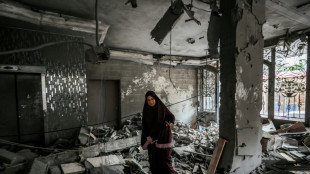 Israel targets top Hamas leader in deadly Gaza strike on anniversary

 Houthis say struck oil facility near Riyadh, as Saudis hit Sanaa

 AI needs safety layers like nuclear plants: ex-OpenAI engineer

 MVP Judge will miss Yankees' MLB playoff series against Rays

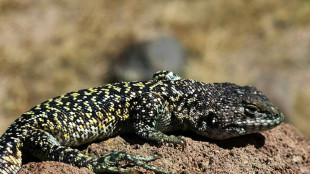 New lizard species discovered in Peru

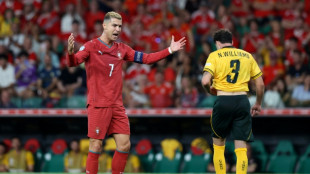 Fernandes hails Portugal's 'greatest symbol' Ronaldo, calls for unity
Nicaragua's President Daniel Ortega and his wife are set to assume absolute power after loyalist lawmakers Friday approved a constitutional amendment elevating her to the position of "co-president" and boosting the pair's joint control over the state.
Under sanctions for human rights abuses, Ortega himself had proposed the change, which also increases the Central American country's presidential term from five to six years.
Nicaragua's National Assembly is under control of Ortega's ruling FSLN party, and parliament chief Gustavo Porras said Friday the measure was approved "unanimously."
It is all but guaranteed to pass a second reading in January.
Ortega, 79, has engaged in increasingly authoritarian practices, tightening control of all sectors of the state with the aid of his powerful wife, 73-year-old Vice President Rosario Murillo in what critics describe as a nepotistic dictatorship.
The ex-guerrilla had first served as president from 1985 to 1990, returning to power in 2007. Nicaragua has jailed hundreds of opponents, real and perceived, since then.
Ortega's government has targeted critics, shutting down more than 5,000 NGOs since 2018 mass protests in which the United Nations estimates more than 300 people died.
Thousands of Nicaraguans have fled into exile, and the regime is under US and EU sanctions. Most independent and opposition media now operate from abroad.
The constitutional amendment stipulates that "traitors to the homeland" can be stripped of their citizenship, as the Ortega government has already done with hundreds of politicians, journalists, intellectuals and activists, among others perceived as critical.
Ortega and Murillo accuse the Church, journalists and NGOs of having supported an attempted coup d'etat, as they describe the 2018 protests.
The change also allows for stricter control over the media and the Church, so they are not subject to "foreign interests."
And it gives the co-presidents the power to coordinate all "legislative, judicial, electoral, control and supervisory bodies, regional and municipal" -- formerly independent under the constitution.
- Guarantees succession -
Manuel Orozco, a Nicaraguan analyst for the Inter-American Dialogue, told AFP the reform "guarantees the presidential succession" of Murillo and the pair's son, Laureano Ortega.
The Geneva-based UN human rights office (OHCHR) in its annual report on Nicaragua warned in September of a "serious" deterioration in human rights under Ortega.
The report cited violations such as arbitrary arrests of opponents, torture, ill-treatment in detention, increased violence against Indigenous people and attacks on religious freedom.
The revised constitution will define Nicaragua as a "revolutionary" and socialist state and include the red-and-black flag of the FSLN -- a guerrilla group-turned political party that overthrew a US-backed dictator in 1979 -- among its national symbols.
Constitutional law expert Azahalea Solis said this change excludes other political ideologies, while Salvador Marenco, a human rights lawyer exiled in Costa Rica, said it will end political pluralism and the doctrine of separation of powers.
"Everything in the reform is what has actually been happening in Nicaragua: a de facto dictatorship," Dora Maria Tellez, a former comrade in arms of Ortega turned critic, told AFP from exile in the United States.
When it was proposed by Ortega earlier this week, Organization of American States secretary general Luis Almagro described the amendment as "an aberrant form of institutionalizing the marital dictatorship."
He also labeled the initiative an "aggression against the democratic rule of law."
O.Salvador--PC