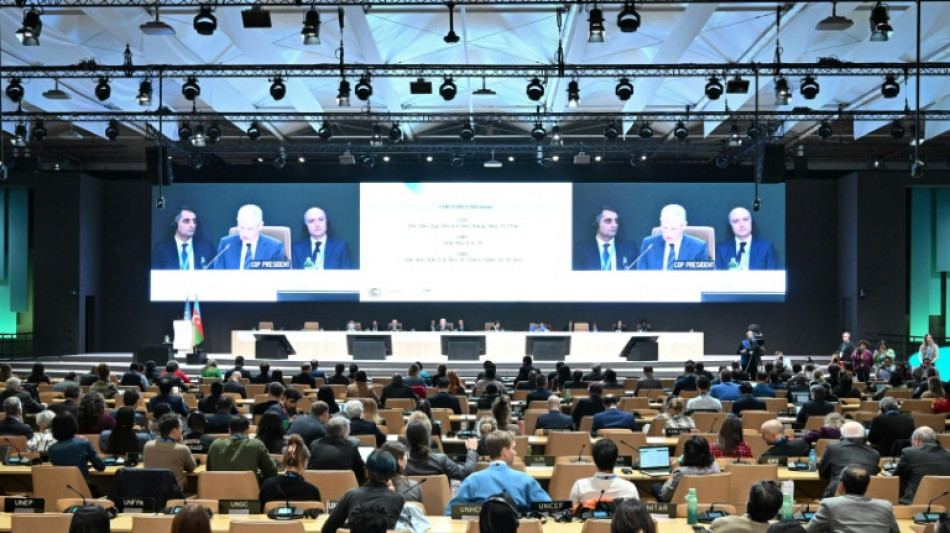
At climate talks, painstaking diplomacy and then anger / Photo: STRINGER - AFP

 Asian Games set to close after records, rancour and rain

 Cry for help as French-Swiss lake dries up

 Sabalenka swept out of China Open in third round

 US urges 'restraint' as Ethiopia's Tigray crisis rocks region

 Teens on target again as USA down Mexico 3-0

 World records prove Asian Games were a hit, says top official
 US prison chief who oversaw botched execution resigns
 'Chaotic' Asian Games threaten Japan hopes of hosting Olympics again

 Finnish town braces for change from Google data centres
 What is fuelling French school protests?

 Without lawyers, migrant children face deportation from the US
 Three-peat seeking Dodgers open playoffs with a win, Rays hold off Yankees

 Brazil votes in nail-biter polls closely watched by Trump
 'Just be you': Kim reveals Tiger text that inspired him to gold

 Myanmar migrants returned to war-torn nation from Malaysia

 ALEX BODI AND AMBASSADOR GUM DOMINIC MATIOK OF THE REPUBLIC OF SOUTH SUDAN MEET IN BERLIN TO DISCUSS THE POSSIBILITY OF AN HONORARY CONSULATE IN BUCHAREST

 Lula, Bolsonaro wrap up campaigns ahead of Brazil's knife-edge vote
 Toulouse edge Castres in Top 14 derby

 Murakami homer propels White Sox to MLB playoff win over Guardians

 Israel targets top Hamas leader in deadly Gaza strike on anniversary

 Houthis say struck oil facility near Riyadh, as Saudis hit Sanaa

 AI needs safety layers like nuclear plants: ex-OpenAI engineer

 MVP Judge will miss Yankees' MLB playoff series against Rays

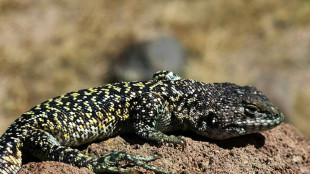 New lizard species discovered in Peru

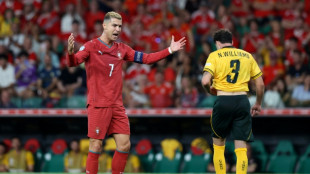 Fernandes hails Portugal's 'greatest symbol' Ronaldo, calls for unity
After three sleepless nights of back and forth among negotiators, all it took to seal a contentious global deal on climate finance was the hammering of a gavel. And just as quickly, the denunciations began.
In a year expected to be the hottest on record, the fate of the fight against climate change was haggled over for two weeks inside Azerbaijan's Olympic Stadium, which has never held the Olympics but was transformed into a cavernous, windowless maze of conference rooms.
The key issues showed no sign of resolution by the scheduled closing time of 6:00 pm on Friday, with Azerbaijan only convening a final session after midnight more than a day afterwards.
But at nearly 3:00 am on Sunday, Azerbaijan's stoic, silver-haired COP president Mukhtar Babayev raised the gavel. The deal, he announced, had been adopted.
Most of the delegates took to the floor, some applauding loudly and others -- such as those from oil producer Saudi Arabia -- just watching politely.
But no sooner was word of the deal out than countries were lining up to lodge complaints.
Cuba and India both took to the floor to denounce it, as did Chile and typically amenable Switzerland.
In a fiery address, India's representative said the figure agreed in the deal -- $300 billion a year to be paid by wealthy countries to poorer ones worst affected by climate change -- was "abysmally low".
Chandni Raina accused Babayev of ignoring objections and going ahead to announce the agreement by consensus -- a tactic repeatedly used at UN climate talks.
"This has been stage-managed and we are extremely, extremely disappointed with this incident," she said as she looked at him, while climate activists in the back of the room roared and pounded their desks in approval.
Babayev, unflinching, responded, "Thank you for your statement."
- Down-to-wire talks -
India is known for its fierce independence and criticism of Western climate policies, but it had not been as visible as some other countries, both rich and poor, in the breakneck diplomacy to reach the COP29 deal.
During a pause in the closing session, John Podesta, a close adviser to outgoing US President Joe Biden, smiled broadly as he shook hands and chatted with his Chinese counterpart, who in turn was seen speaking to Saudi officials who then passed around a telephone.
Panama's negotiator Juan Carlos Monterrey Gomez, a recognisable presence in Baku with his national hat and outspoken criticism of rich nations -- which hours earlier he said had been offering "crumbs" -- told AFP as the closing session got underway, "We are beginning to see the light."
Mindful of the lessons of the troubled 2009 Copenhagen climate summit, the Azerbaijani hosts made sure to attend to practicalities, with a coffee stand remaining open late into the night for bleary-eyed participants.
But as the clock ticked, some delegates came to the plenary hall with hulking suitcases as they rushed to catch their flights, with one activist dozing off on a desk next to a plastic bag full of nuts and potato chips.
Azerbaijan, an authoritarian oil and gas exporter, had come under heavy criticism for its handling of COP29.
Its president, Ilham Aliyev, opened the conference in an unusually confrontational way by attacking Western nations that have criticised his rights record and praising fossil fuels as a divine gift.
But after pounding the gavel on a deal, in a plenary room named after Azerbaijan's national poet, the usually taciturn Babayev took a short victory lap.
"Since the beginning of this journey, people doubted that Azerbaijan could deliver. They doubted that everyone could agree. They were wrong on both."
M.Gameiro--PC