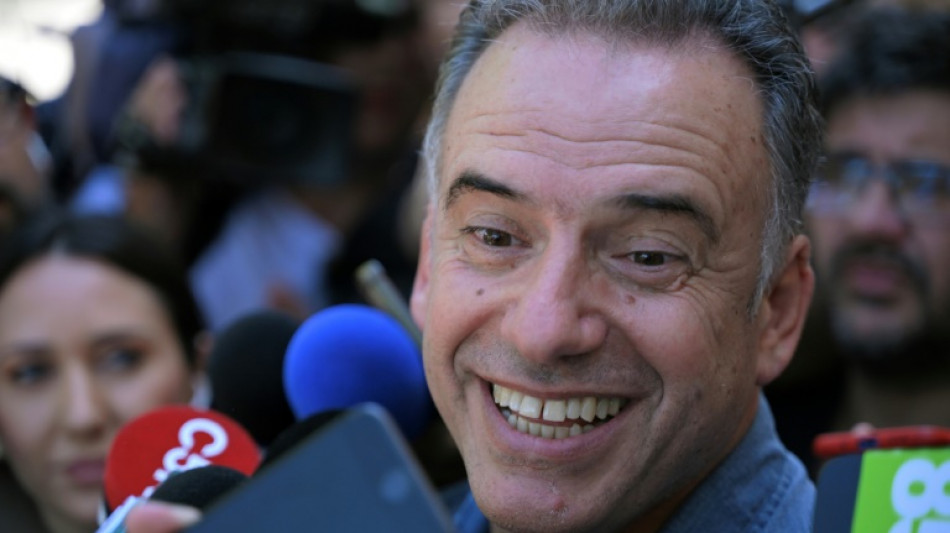
Left-wing candidate Orsi projected to win Uruguay election / Photo: Eitan ABRAMOVICH - AFP

 Asian Games set to close after records, rancour and rain

 Cry for help as French-Swiss lake dries up

 Sabalenka swept out of China Open in third round

 US urges 'restraint' as Ethiopia's Tigray crisis rocks region

 Teens on target again as USA down Mexico 3-0

 World records prove Asian Games were a hit, says top official

 US prison chief who oversaw botched execution resigns
 'Chaotic' Asian Games threaten Japan hopes of hosting Olympics again
 Finnish town braces for change from Google data centres
 What is fuelling French school protests?

 Without lawyers, migrant children face deportation from the US
 Three-peat seeking Dodgers open playoffs with a win, Rays hold off Yankees

 Brazil votes in nail-biter polls closely watched by Trump

 'Just be you': Kim reveals Tiger text that inspired him to gold

 Myanmar migrants returned to war-torn nation from Malaysia

 ALEX BODI AND AMBASSADOR GUM DOMINIC MATIOK OF THE REPUBLIC OF SOUTH SUDAN MEET IN BERLIN TO DISCUSS THE POSSIBILITY OF AN HONORARY CONSULATE IN BUCHAREST

 Lula, Bolsonaro wrap up campaigns ahead of Brazil's knife-edge vote

 Toulouse edge Castres in Top 14 derby

 Murakami homer propels White Sox to MLB playoff win over Guardians

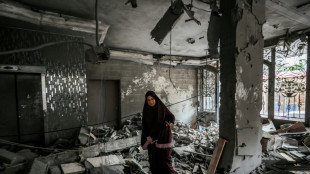 Israel targets top Hamas leader in deadly Gaza strike on anniversary

 Houthis say struck oil facility near Riyadh, as Saudis hit Sanaa

 AI needs safety layers like nuclear plants: ex-OpenAI engineer

 MVP Judge will miss Yankees' MLB playoff series against Rays

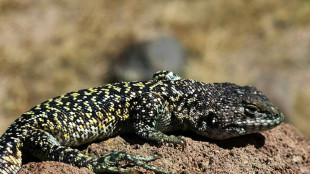 New lizard species discovered in Peru

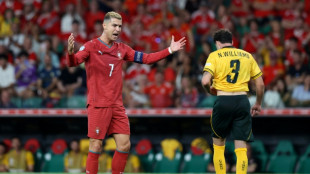 Fernandes hails Portugal's 'greatest symbol' Ronaldo, calls for unity

Left-wing candidate Yamandu Orsi was projected to win Uruguay's presidential election, media reported Sunday, in a rebuke by voters of five years of conservative rule.
Uruguayans went to the polls for the second round of voting in what became a tight race between Orsi, of the Frente Amplio (Broad Front) alliance, and Alvaro Delgado of the National Party, a member of outgoing President Luis Lacalle Pou's center-right Republican Coalition.
Orsi received 49 percent of the vote to Delgado's 46.6 percent, according to an Equipos Consultores poll carried by TV station Canal 10, while the leftist politician was projected to have 49.5 percent of the vote against 45.9 percent for his opponent in a Cifra poll cited by Canal 12.
Orsi's campaign was boosted by support from Jose "Pepe" Mujica, a former guerrilla lionized as "the world's poorest president" because of his modest lifestyle during his 2010-2015 time in office.
Orsi, seen as an understudy of Mujica, had garnered 43.9 percent of the October 27 first-round vote -- short of the 50 percent needed to avoid a runoff but ahead of the 26.7 percent of ballots cast for Delgado.
The pair came out on top of a crowded field of 11 candidates seeking to replace Lacalle Pou, who has a high approval rating but is barred constitutionally from seeking a second consecutive term.
Polls had pointed to a narrow race Sunday, with Orsi only marginally ahead in stated voter intention in South America's second-smallest country.
Polls closed at 7:30 pm (2230 GMT).
- 'A very different world' -
Mujica, who is battling cancer and had to use a cane to walk into his polling station to vote, said Sunday: "Personally, I have nothing more to look forward to. My closest future is the cemetery, for reasons of age.
"But I am interested in the fate of you, the young people who, when they are my age, will live in a very different world."
A smiling Orsi cast his ballot Sunday in the rural Canelones region, to applause from supporters.
Delgado shook hands with polling station officials as he cast his vote in Montevideo.
"If I win, tomorrow I plan to invite candidate Orsi to come have some mate," Delgado said, referring to a traditional herbal infusion Uruguayans sip frequently.
Other parties within the Republican Coalition had thrown their support behind Delgado since the first round, boosting his numbers.
- Insecurity a worry -
A victory for Orsi will see Uruguay swing left again after five years of center-right rule in the country of 3.4 million inhabitants.
The Frente Amplio coalition broke a decades-long conservative stranglehold with an election victory in 2005, and held the presidency for three straight terms.
It was voted out in 2020 on the back of concerns about rising crime blamed on high taxes and a surge in cocaine trafficking through the port of Montevideo.
Polling numbers ahead of the vote showed perceived insecurity remains Uruguayans' top concern five years later.
A 72-year-old retiree who voted, Juan Antonio Stivan, said he just wanted the next government to guarantee "safety -- to be able to go out in the street with peace of mind, as an old person, as a young person, as a child."
Another voter, Aldo Soroara, a 60-year-old winegrower, said he expected whoever is elected as president to do "the best he can for the people," adding: "You can't ask for much more in these difficult times."
Voting is compulsory in Uruguay, one of Latin America's most stable democracies, with comparatively high per-capita income and low poverty levels.
During the heyday of leftist rule, Uruguay legalized abortion and same-sex marriage, became the first Latin American country to ban smoking in public places and the world's first nation, in 2013, to allow recreational cannabis use.
M.A.Vaz--PC