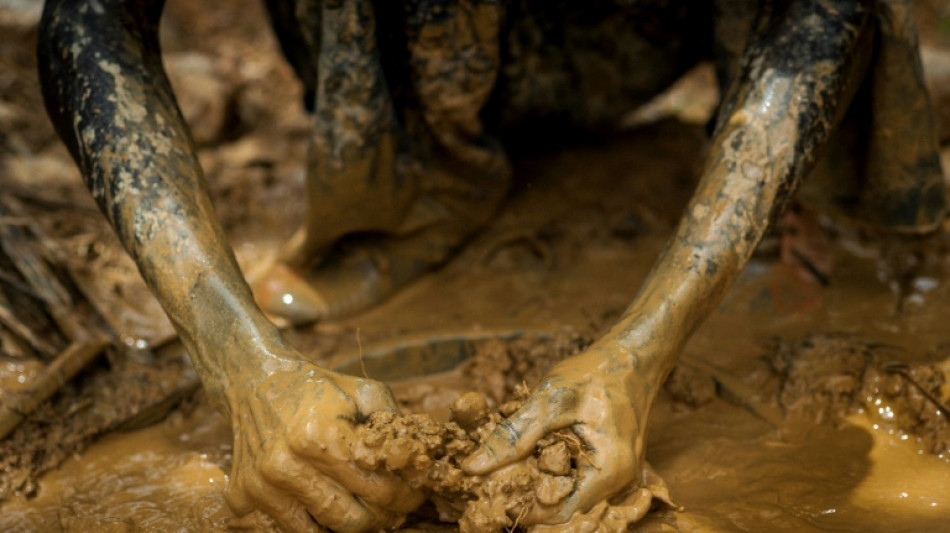
Ghana's illegal mining boom seeps into presidential election / Photo: CRISTINA ALDEHUELA - AFP

 Calgary budget hearing delayed during debate over Tourette syndrome accommodation

 Business phone systems gain AI tools, but human oversight remains essential
 Huawei outlines 2030 network plans at Africa Tech Festival

 Governments and courts tighten restrictions on camera-equipped smart glasses

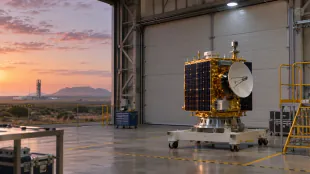 South Africa’s sovereign satellite plan remains stalled despite higher cost

 EasyEquities faces pressure for clearer answers after security outage

 US patent disputes involving Korean chipmakers reach record level

 SK hynix doubles daily share purchases after steep stock decline
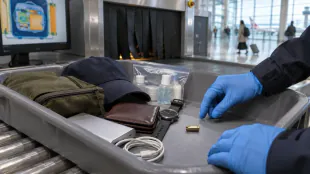 Former soldier stopped with blank round at Incheon Airport
 Korea Post breach exposes data of at least 113,855 customers
 Many AAPI Candidates Win Seats in Orange County Local Elections

 Holly Ramsay and Adam Peaty Welcome Daughter Daphne June at Portland Hospital

 Honda and Toyota Recall 1.6 Million Vehicles Over Takata Airbag Risks

 Court Dismisses Fenech’s Bid to Revoke Theuma’s Pardon
Dressed in a white singlet with a scarf tied around his head, Frank crouched near a muddy pit, preparing to plunge his hands into the soil in search of gold.
Around him, shirtless men, their bodies smeared with dirt and glistening with sweat, worked tirelessly under the blazing sun, near Ghana's capital Accra.
Some shovelled sand into makeshift washing troughs. Others operated excavators roaring through the degraded landscape, a stark reminder of the environmental cost of the country's boom in illegal mining.
Known locally as "galamsey", illegal mining and its ecological and economic impacts have been a flashpoint ahead of Saturday's election, when voters will choose the successor to President Nana Akufo-Addo.
Ruling New Patriotic Party (NPP) candidate Vice President Mahamudu Bawumia is vying against opposition candidate and former president John Mahama of the National Democratic Congress (NDC) party in what looks like a tight race.
"For 16 years, this is what I've done to survive," Frank told AFP, asking for his real name not to be used.
"We know our activities harm the land and pollute the rivers, but what choice do we have? There are no jobs."
Driven by unemployment and poverty, miners risk their lives for survival, earning a weekly income of around $180 that rivals a teacher's monthly salary.
But their activities come at a cost -- degraded farmlands, polluted water bodies, shrinking forests and damage to Ghana's cocoa crops, a major source of export revenue.
- Growing crisis -
Ghana, the world's sixth-largest gold exporter and second-largest cocoa producer, is grappling with the damaging effects of galamsey as the country goes to the ballot box.
Once-thriving cocoa farms in regions like Western and Ashanti have been decimated, with over 19,000 hectares (47,000 acres) lost to mining.
Rivers poisoned by mercury and cyanide runoff from mining operations are now threatening drinking water supplies for millions of Ghanaians, according to the utility provider Ghana Water Company Limited.
In the town of Osino, a three-hour drive from Accra, vast areas of fertile land have been stripped bare and their topsoil washed away.
"The government needs to support us to mine responsibly," Frank said.
"Instead of sending soldiers to destroy our equipment, they should create decent jobs for us. We don't want to turn to crime to survive."
His frustrations echo sentiments among miners who feel targeted by government crackdowns but ignored in national planning.
Akufo-Addo and his NPP promised in 2017 to end galamsey.
Yet the practice has grown, fuelled by rising gold prices and youth unemployment.
Demonstrations have intensified in recent months, with hashtags like #stopgalamseynow trending among Ghana's youth and diaspora.
Protesters have called for immediate action to halt the environmental damage, but scepticism lingers over political promises.
"None of the parties have outlined a clear, enforceable strategy to tackle illegal mining," said Clement Abaidoo, executive director of the Center for Environment, Natural Resources and Sustainability.
"We need deliberate and effective stakeholder engagement, but that has been lacking."
- 'Devastating impact' -
Galamsey has destroyed more than 4,700 hectares (11,700 acres) of land in seven of Ghana's 16 regions, according to Ghana's Forestry Commission.
"The impact on our environment is devastating," Abaidoo told AFP.
Illegal mining contributes 40 percent of Ghana's gold production and employs over one million people, many of them young men like Frank, according to Ghana's natural resources ministry.
But the trade operates outside legal frameworks, enriching criminal syndicates and depleting natural resources.
The authorities have launched operations to halt illegal activities, but enforcement efforts have been criticised as inconsistent and poorly coordinated.
Facing public pressure, Akufo-Addo recently deployed naval boats to protect water bodies from mining operations.
"The use of force won't solve the problem," Frank said, adding that transitioning to responsible mining is key.
For Ghana's younger voters, the issue is also a symbol of government failure.
Many see the ongoing crisis as evidence that politicians prioritise short-term gains over long-term sustainability.
For Frank and others in the trade, the vote represents a chance to demand solutions -- and for environmental advocates like Abaidoo, to protect the West African country's natural heritage.
"We can't be deliberate in solving the problem without engaging all the stakeholders," Abaidoo said.
O.Salvador--PC