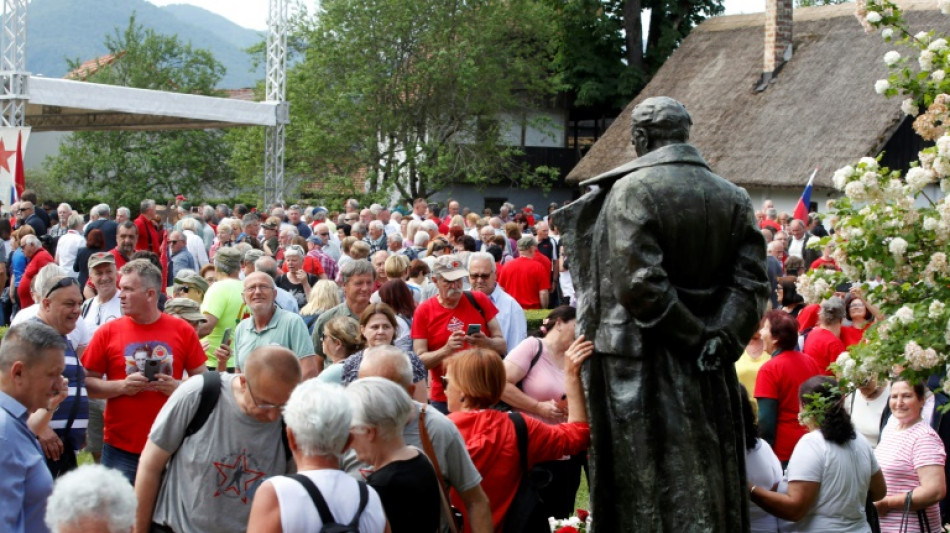
Thousands mark late Yugoslav leader Tito's birth anniversary / Photo: Denis LOVROVIC - AFP

 The High-Stakes Announcement of the Next James Bond: Lessons from Past Casting Debacles
 Argentina to Return to World Rally Championship Calendar in 2028

 Newark Welfare Deficit Exceeds £140m Annually, Report Finds
 PUK Leader Declares Largest Political Crisis in Kurdistan Region History

 Digi Power X Reports Q3 2026 Revenue Up 85% and AI Revenue Up Over 400% Compared to Q2
 Ole Miss inquiry expands after video and monkey-noise allegations

 General Hospital actor Randall England dies at 75

 Boris Herrmann Claims Second Place in IMOCA Class at Route du Rhum
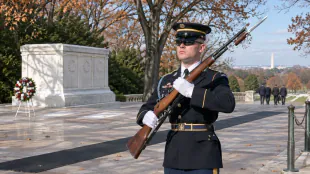 Arlington sentinel rebukes Pete Hegseth entourage for laughter near memorial
Several thousand fans of former Yugoslav leader Josip Broz Tito marked the 130th anniversary of his birth on Saturday in the Croatian village where he was born.
Admirers of the late communist leader gathered in front of the house where he was born in 1892, now a museum in Kumrovec, northern Croatia
They had come from all over the former Yugoslav federation to celebrate Tito's achievements, notably leading the partisan fighters who drove out the Nazi German occupying forces in World War II, standing up to Soviet leader Joseph Stalin and founding the Non-Aligned Movement.
"The reason (for gathering) is the remembrance, not only of the past, but of the time in which we lived both richer and safer," said Jovan Vejnovic, head of an association of Tito supporters.
Many of Tito's admirers waved former Yugoslavia flags and were dressed in T-shirts bearing the former leader's image.
Tito ruled Yugoslavia from the end of WWII until his death in 1980.
A decade later, the federation collapsed in a series of bloody wars that claimed more than 100,000 lives.
Under Tito's rule, Yugoslavia remained independent of the then Soviet Union and became one of the most prosperous communist nations.
Tito remains a controversial figure in the countries that emerged after Yugoslavia's collapse -- Bosnia and Herzegovnia, Croatia, Kosovo, Macedonia, Montenegro, Serbia and Slovenia -- adored by some but considered a dictator by others.
F.Ferraz--PC