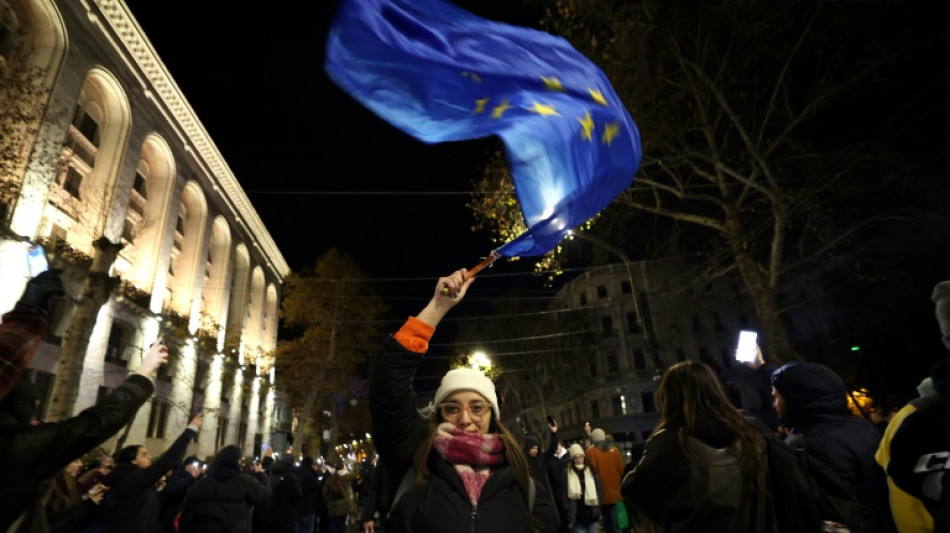
Georgia crisis deepens as government set to name far-right president / Photo: Giorgi ARJEVANIDZE - AFP

 Many AAPI Candidates Win Seats in Orange County Local Elections

 Holly Ramsay and Adam Peaty Welcome Daughter Daphne June at Portland Hospital
 Honda and Toyota Recall 1.6 Million Vehicles Over Takata Airbag Risks
 Court Dismisses Fenech’s Bid to Revoke Theuma’s Pardon
 Fundraiser launched for Daniel Buttigieg after boat accident

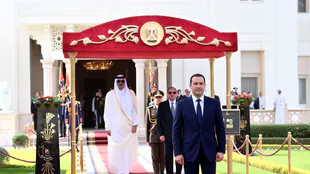 Egypt and Qatar Call for Gaza Ceasefire Implementation and Regional De-escalation
 INGLOT Malta offers Black Friday discounts of up to 60%
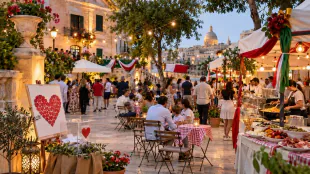 Italian Village event in Malta raises funds for Puttinu Cares
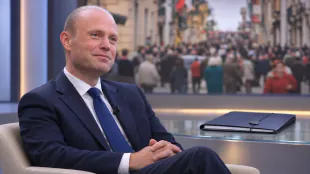
 Malta launches second national AI strategy with 86 measures
Georgia's political crisis deepened Friday after new pro-Europe protests were announced ahead of the controversial nomination of a far-right government loyalist as president.
The Black Sea nation has been in turmoil since the governing Georgian Dream party claimed victory in contested October parliamentary elections, with its decision last month to delay EU accession talks igniting a fresh wave of mass rallies.
More unrest is expected on Saturday when Georgian Dream will appoint far-right former footballer Mikheil Kavelashvili as president in a controversial election process.
The pro-Western incumbent, President Salome Zurabishvili, has refused to step down and is demanding new parliamentary elections, paving the way for a constitutional showdown.
Opposition groups accuse Georgian Dream of rigging the parliamentary vote, democratic backsliding in office and moving Tbilisi closer to Russia -- all at the expensive of the Caucasus nation's bid for EU membership.
A forceful police crackdown on the protestors has also triggered outrage at home and condemnation abroad.
Washington imposed fresh sanctions on Georgian officials overnight, barring visas for around 20 people accused of "undermining democracy in Georgia", including sitting ministers and parliamentarians, the State Department said.
Police have used tear gas and water cannons to disperse the rallies, arresting more than 400 demonstrators, and the country's rights ombudsman has accused security forces of "torturing" those detained.
- 'Unprecedented constitutional crisis' -
Pro-EU demonstrators have staged daily rallies across Georgia for the last two weeks, with more to take place across Tbilisi on Friday.
On Saturday, an electoral college controlled by Georgian Dream is expected to elect Kavelashvili as the country's new figurehead president, in an indirect vote boycotted by the opposition.
Kavelashvili, 53, is known for his vehement anti-West diatribes and opposition of LGBTQ rights.
Georgian Dream scrapped direct presidential elections in 2017.
With Zurabishvili refusing to leave office, opposition lawmakers boycotting parliament and protests showing no signs of abating, critics are questioning Kavelashvili's legitimacy before he even takes up the role.
One author of Georgia's constitution, Vakhtang Khmaladze, has argued that all decisions by the new parliament are void because the body started work before awaiting the outcome of the lawsuit brought by Zurabishvili.
"Georgia is facing an unprecedented constitutional crisis," Khmaladze told AFP.
It remains unclear how the government will react to Zurabishvili's refusal to step down after her successor is inaugurated on December 29.
A former French diplomat, Zurabishvili is a hugely popular figure among protesters who view her as a beacon of Georgia's European aspirations.
"Let them try to kick Salome out of the presidential palace -- we will all stand up to defend her," Otar Turnava, a 23-year-old protester, told AFP at a rally outside parliament on Thursday.
"She is the only legitimate leader we have had since Georgian Dream stole the election, and she will lead us into the EU."
- 'Brutal violence' -
In power for more than a decade, Georgian Dream has pushed increasingly conservative policies in recent years, including measures targeting civil society, independent media, opposition parties and the LGBTQ community.
Critics say the moves mirror repressive Russian-style legislation and Brussels has called them "incompatible" with EU membership.
Amid the latest crisis, police have raided the offices of opposition parties and the prime minister has repeatedly pledged to "eradicate liberal fascism".
Announcing the latest visa bans on top Georgian figures, US State Department spokesman Matthew Miller said: "The United States strongly condemns the Georgian Dream party's ongoing, brutal, and unjustified violence against Georgian citizens, including protesters, members of the media, human rights activists, and opposition figures."
Georgia's parliament speaker Shalva Papuashvili called the move "incomprehensible and meaningless", accusing the outgoing US administration of "deliberately worsening relations with Georgia".
He struck back at critics of Kavelashvili, saying "it is vital to have a president who does not fall under the influence of a foreign power, as is the case with Ms. Salome Zurabishvili".
French President Emmanuel Macron also condemned the ongoing repressions in a phone call to Georgian Dream's honorary chairman and founder, Bidzina Ivanishvili.
The secretive billionaire, widely assumed to be Georgia's real power broker, raged against the West on the campaign trail earlier this year.
A.Aguiar--PC