Ghost towns left in the wake of fighting for Colombia's drug spoils / Photo: JOAQUIN SARMIENTO - AFP

 What scientists know so far about Nepal's deadly floods

 US general visits Colombia to discuss war on drugs

 Meta settlement puts social media industry on notice: 'There will be more'

 NFL owners approve record Seahawks sale

 Nigerian armed groups net nearly $6 mn in ransoms: study

 Savio scores on debut as Spurs advance in League Cup

 Mbappe hits treble as Real Madrid thrash Real Sociedad

 At Dollywood, superfans honor the late singer and local hero

 Stocks mixed as oil drops, US inflation stays high
 Bolivia's Paz appoints new economy minister amid bailout talks

 US designates UK-based Palestine Action as foreign 'terrorist group'
 'Rocky Horror Picture Show' star Tim Curry dead at 80
 American Moll wins women's pole vault at Zurich city event

 As Canada takes on US tariffs, what's behind the David and Goliath fight?

 UEFA 'likely' to drop threat to boycott FIFA tournaments: source

 US disrupts platforms allegedly used by Chinese hackers

 The foreign tourists missing in Nepal's flash floods

 Hundreds missing after Nepal-Tibet flood kills 98

 CIA director was on 'semi-routine' mission in Moscow: Trump
 Aldeguer switches to Rossi's VR46 for next season

 Rent TRON Energy and Reduce USDT Fees : TronBid Expands Marketplace

 Pakistan captain Babar Azam returns against England '90 percent fit'

 Stocks mixed as oil drops, inflation stays high

 Improving standards transform pole vault as spectacle, says Duplantis

 India close in on win despite Sri Lanka fightback in second Test
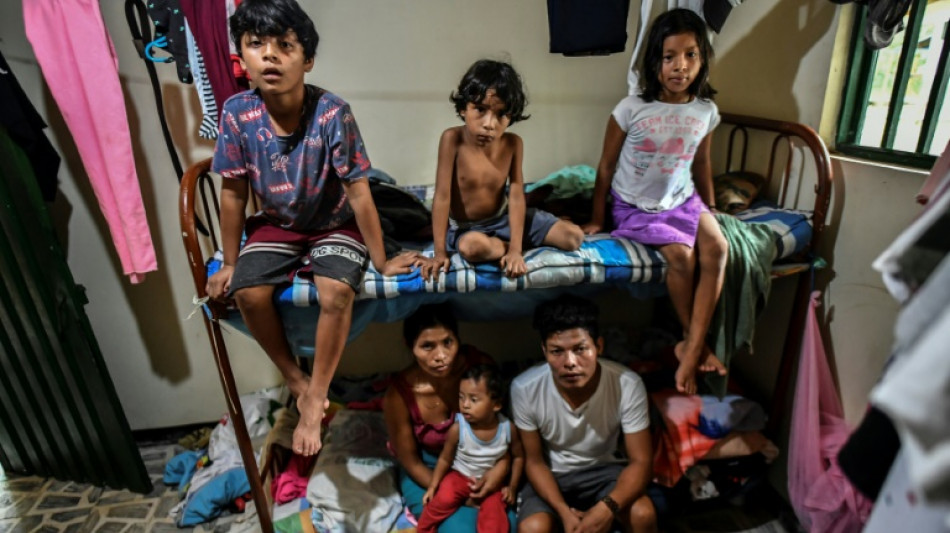
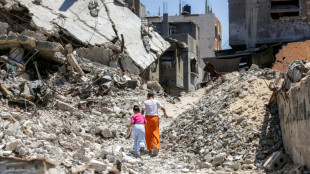
Empty streets and hurriedly abandoned homes pocked with bullet holes: a war for control of the lucrative drug trade is laying waste to rural communities along Colombia's Pacific-bound cocaine export route.
Tens of thousands have fled as fighting between guerrillas and narcos vying for control of farmland and smuggling routes has shifted from the mountains to right in the midst of rural communities.
Some of the fighters set up operations bases in the newly abandoned homes.
"What we have had to go through, see and hear is unspeakable," a bitter-ender who declined to give his name, told AFP in the village of La Colonia, near the port city of Buenaventura, where armed groups recently moved in.
The civilians who stay behind "are confined, threatened, frightened," added Diego Portocarrero, who himself had escaped La Colonia for Buenaventura in February.
At highest risk are villages on the banks of the Calima and San Juan rivers -- key arteries for cocaine smuggling via the Pacific to the United States.
Homes in these communities pay testament to the battle: riddled with bullet holes, boarded up and locked with rudimentary chains.
Buildings sport the competing graffiti tags of the main protagonists in the fighting: the ELN guerrilla group and the Gulf Clan drug cartel (AGC).
As control changes hands, the tag of the victor is simply spray-painted over that of their rival.
- Recent phenomenon -
Nancy Hurtado, 52, is one of those who fled to Buenaventura in April after an attack on her village of San Isidro.
"They came in shooting, taking people out of houses, children too," she told AFP.
Life in exile is hard -- sharing space with hundreds of others in a sports stadium with improvised kitchens, laundry rooms and sleeping on the floor.
But the alternative is infinitely worse.
"That they catch you, chop you up, throw the pieces in a bucket... who wants to die like that?" asked Hurtado, who fashioned a make-shift bedroom with blankets and towels thrown over a netted football goal.
Dozens of members of the Wounaan Nonam ethnic group have taken refuge at the offices of an indigenous radio station in the city, where they have access to water for five hours a day, every other day.
They fled from fighting in the nearby village of Bajo San Juan in February.
"All that stayed behind was our homes, the dogs, the chickens," said Edgar Garcia, 45.
Juan Manuel Torres, a researcher at the Peace and Reconciliation Foundation (Pares), said armed groups settling among communities, "even camouflaged and armed," was a relatively recent and ever-more common phenomenon.
"They take over houses in the middle of the community, they don't have camps like before, and this is a... factor that makes some (inhabitants) move," he said.
This is happening in spite of the 2016 peace agreement that disarmed the FARC guerrilla group and was meant to end the violence after nearly six decades of internal conflict.
Many of the areas abandoned by the FARC have since become battle grounds for the ELN, drug cartels and FARC dissidents who rejected the 2016 pact.
- Always 'the losers'-
Nestled between the ocean, the jungle and mangrove forests, the city of Buenaventura has seen some 300,000 people displaced by violence in the past six years.
Many live in shelters; nine in ten are AfroColombian.
On top of a poverty rate of 41 percent and unemployment at almost 20 percent, the displaced also have to contend with the violence and extortion meted out by gangs that operate from the port.
The number of homicides in Buenaventura rose from 73 in 2017 to 195 last year, official data shows.
Often, dismembered bodies are thrown into the sea, according to witness accounts and rights groups.
The displaced express little hope of better days emerging from presidential elections this week, in which they cannot participate anyway as they are exiled from the areas where they are registered to vote.
"We will always be the losers" in an ongoing tug-of-war for territory and influence, said Portocarrero.
M.A.Vaz--PC