For the first time, Syrians 'not afraid' to talk politics / Photo: ANWAR AMRO - AFP

 'Glad it's over': Kim powers to Games gold and military exemption

 After 11 World Cups, football finally comes home for one Indian fan

 Marc Marquez wins sprint at Japan MotoGP, Martin grabs pole
 Alcaraz fends off Arnaldi to reach Japan Open quarters
 Antonelli tops times in final practice at Bahrain GP
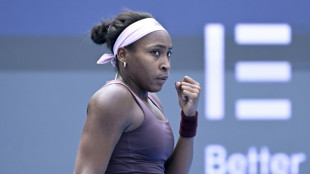 Gauff digs deep to beat Osorio in China Open second round
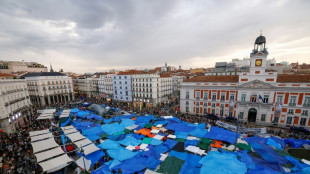 Fresh protests to hit Spain after housing measures defeated
 'He's here with me': Japan cycle queen dedicates gold to late brother

 Japan Olympic chief says 'lot more' athletes at Games than expected

 Asian carmakers besting US rivals at home, China poised to strike

 Widgets & Web Offers All-Inclusive Investor Relations Websites for Public Companies, IPOs and SPACs

 Adams named new US captain to 2030 World Cup

 China a better influence in Latin America than US: poll

 Judge pauses construction of border project in Texas national park

 Belgium's De Bruyne fires double to sink Turkey, France held by Italy

 US jobs data boosts stocks as oil prices dip

 US Supreme Court to hear high-stakes climate case

 Trump expected to name intel chief Clayton as AI czar: reports

 Argentina unveils passports-for-investment scheme

 Brazil election debate chaos sparks censorship row

 England's Carse charged by cricket body over nightclub incident

 Amazon vows $1 bn for data center towns, decries 'myths'

 Oil prices drop on G7 fuel release, US jobs data boosts stocks
 G7 agrees deal to ease global energy supply concerns
 Spain's government dealt blow as lawmakers reject housing bills
For decades, any Syrian daring to broach political topics got used to speaking in hushed tones and with a watchful eye trained for a listener among the crowd.
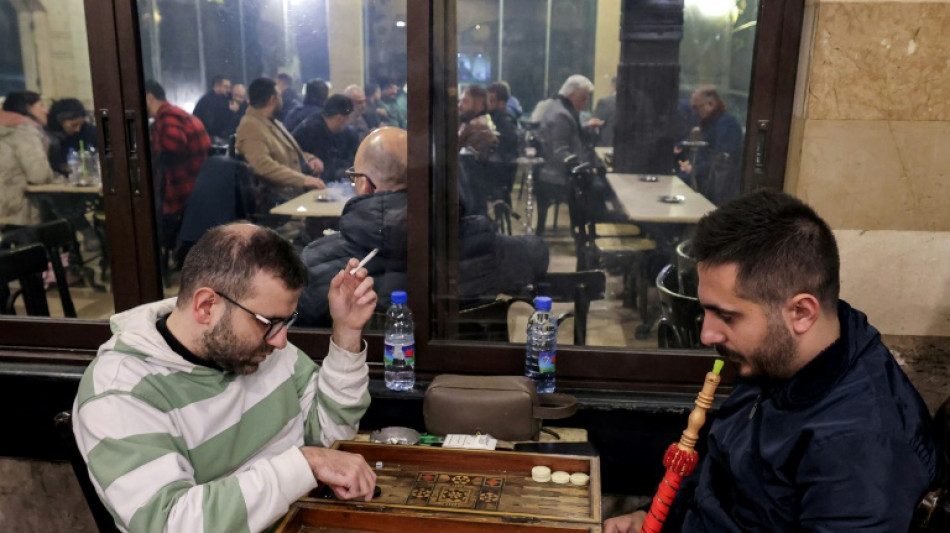
"There were spies everywhere," Mohannad al-Katee said in Al-Rawda cafe in Damascus, adding almost in disbelief: "It's the first time that I sit in a cafe and I can talk about politics.
"It was a dream for Syrians," said Katee, 42, a researcher in political and social history.
Until now, he like thousands of others had grown accustomed to watching for the proverbial flies on the walls of Damascus's renowned cafes.
Today, those same cafes are alive and buzzing with the voices of patrons speaking freely about their country for the first time.
Such discussions "were banned under the previous regime, then there was a relative opening during the Damascus Spring", Katee said.
He was referring to the year 2000, when Bashar al-Assad took over from his late father Hafez and slightly loosened the reins on political life in Syria.
Initially, the young Assad had opened up an unprecedented space, allowing for political salons to flourish alongside calls for reform in a country that had long grown accustomed to fear and silence.
"But it didn't last," said Katee.
A few months after his succession, Assad rolled back those gains, putting an end to the short-lived "Damascus Spring".
In the subsequent years, according to Katee, informants were ubiquitous, from "the hookah waiter to the man at the till, it could have been anyone".
- 'The walls have ears' -
Politically active since 1998, he fled to Saudi Arabia in 2012, a year after the outbreak of Arab Spring protests whose violent repression led to the eruption of the nearly 14-year civil war.
"Political life consisted of secret meetings," he said. "We were always taught that the walls have ears."
Today, "Syrians can never go back to obscurantism and dictatorship, to accepting single-party rule," he said.
A little further on, in the Havana cafe once known as a meeting point for intellectuals and activists in a distant past, Fuad Obeid is chatting with a friend.
Himself a former owner of a cafe he had to shut down, the 64-year-old said: "The intelligence services spent their time at my place. They drank for free as though they owned the place."
For over 50 years, the Assads maintained their vice grip on society, in large part through the countless informants that walked among the population.
On Saturday, Syria's new intelligence chief, Anas Khattab, announced that the service's various branches would be dissolved.
Obeid said: "I used to keep a low profile so they wouldn't know I was the owner. I told customers not to talk politics for fear of reprisals."
Now, he noted, in Havana cafe as in others, the difference is like "night and day".
- 'Truly free' -
Back in Al-Rawda, discussions are in full swing over hookahs and games of backgammon.
The owner Ahmad Kozorosh still can't believe his eyes, having himself witnessed numerous arrests in his own cafe over the years.
"I am now seeing almost exclusively new faces," he said. "People who had been sentenced to death, imprisoned."
To celebrate the new era, he is holding weekly symposiums in the cafe, and will even launch a new political party to be named after it.
Real estate agent Nesrine Shouban, 42, had spent three years in prison for carrying US dollars, a punishable offence in Assad's Syria.
Alongside thousands of others who found freedom when the doors of prisons were flung open, she was released on December 8 from the notorious Adra prison.
"They had dangled in front of us the possibility of an amnesty" from Assad's administration, she said. "Thankfully, the amnesty came from God."
"At cafes, we didn't dare say anything. We were even afraid that our phones were bugged," she said.
Now, for the first time, she said she felt "truly free".
Despite concerns over the radical Islamist background of Syria's new rulers, a breath of freedom has washed over the country for the first time, with public demonstrations being organised -- an unthinkable prospect just one month earlier.
"We are not afraid anymore," said Shouban. "If Jolani makes mistakes, we will denounce them," she added, referring to Syria's new leader Ahmed al-Sharaa, known by his nom de guerre Abu Mohammad al-Jolani.
"In all cases, it can't be worse than Bashar al-Assad."
L.E.Campos--PC