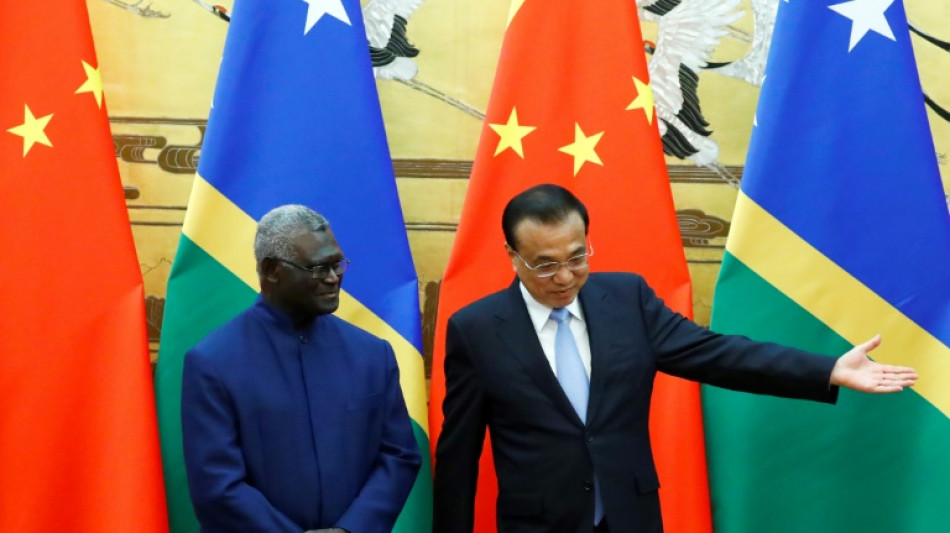
China offers South Pacific nations security, free trade agreements / Photo: THOMAS PETER - POOL/AFP/File

 UEFA set to withdraw FIFA boycott threat ahead of Champions League draw
 Sumo moves to beat Japan summer heat as temperatures rise
 'Be more honest': Markets crave clarity from cryptic Fed chair
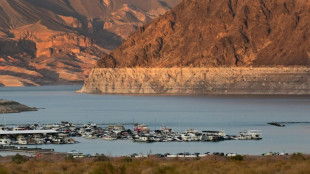 Climate change leaves its mark on America's largest reservoir
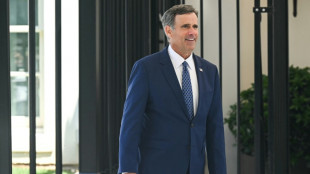 CIA director warned Russia not to attack NATO members: US media
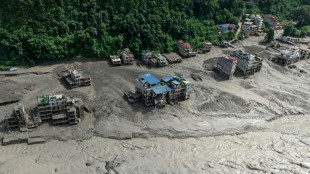
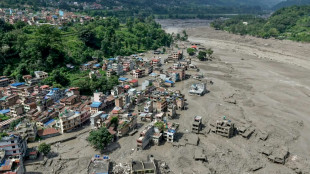 Search for missing after Nepal-Tibet floods kills at least 160
 Meta, US states agree $18 bn settlement in landmark teen safety case

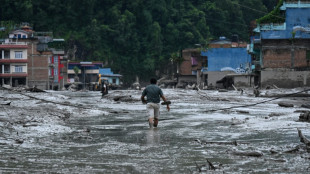 What scientists know so far about Nepal's deadly floods

 US general visits Colombia to discuss war on drugs
 Meta settlement puts social media industry on notice: 'There will be more'
 NFL owners approve record Seahawks sale

 Nigerian armed groups net nearly $6 mn in ransoms: study

 Savio scores on debut as Spurs advance in League Cup

 Mbappe hits treble as Real Madrid thrash Real Sociedad

 At Dollywood, superfans honor the late singer and local hero
 Stocks mixed as oil drops, US inflation stays high

 Bolivia's Paz appoints new economy minister amid bailout talks

 US designates UK-based Palestine Action as foreign 'terrorist group'
 'Rocky Horror Picture Show' star Tim Curry dead at 80
 American Moll wins women's pole vault at Zurich city event

 As Canada takes on US tariffs, what's behind the David and Goliath fight?

 UEFA 'likely' to drop threat to boycott FIFA tournaments: source

 US disrupts platforms allegedly used by Chinese hackers

 The foreign tourists missing in Nepal's flash floods

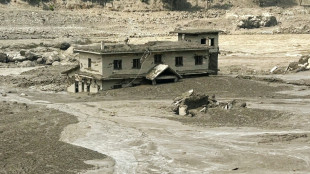 Hundreds missing after Nepal-Tibet flood kills 98
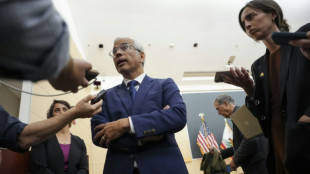
China has put forward plans to dramatically expand security and economic cooperation with South Pacific nations, with one regional leader calling it a thinly veiled effort to lock them into "Beijing's orbit".
The wide-ranging draft agreement and a five-year plan, both obtained by AFP Wednesday, will be the subject of discussion when Chinese foreign minister Wang Yi visits Pacific nations from Thursday.
It would offer ten small island-states millions of dollars in Chinese assistance, the prospect of a China-Pacific Islands free trade agreement and access to China's lucrative market of 1.4 billion people.
China would in return train local police, become involved in local cybersecurity, expand political ties, conduct sensitive marine mapping and gain greater access to natural resources.
The "comprehensive development vision" is believed to be up for approval when Wang meets regional foreign ministers on May 30 in Fiji.
The South Pacific is increasingly a theatre for competition between China and the United States -- which has been the primary power in the region for the last century.
Beijing has sought to develop a greater military, political and economic foothold, but until now has made only limited and uneven progress.
The plan, if agreed, would represent a step change, facilitating everything from the deployment of Chinese police to visits by Chinese "art troupes."
Flights between China and the Pacific Islands would increase, Beijing would appoint a regional envoy, supply training for young Pacific diplomats and provide 2,500 government "scholarships".
But it is already raising alarm bells in regional capitals.
- 'Control of our region' -
In a stark letter to fellow Pacific leaders, Federated States of Micronesia President David Panuelo warned the agreement seems "attractive" at first glance, but would allow China to "acquire access and control of our region".
Calling the proposals "disingenuous," Panuelo said they would "ensure Chinese influence in government", Chinese "economic control" of key industries and allow "mass surveillance" of calls and email.
It was, he said, "demonstrative of China's intention to shift Pacific allegiances in their direction".
"The result," he said, would be "the fracturing of regional peace, security and stability."
Micronesia has a compact of free association with the United States, making it one of the region's closest US allies.
But other Pacific leaders may see the Chinese proposal as possibly lucrative or beneficial.
The document is certain to cause consternation in Washington, Canberra and Wellington, where policymakers are still reeling from revelations that the Solomon Islands secretly negotiated a security agreement with Beijing.
A leaked draft of the agreement contained a provision allowing Chinese naval deployments to the island nation, which lies less than 2,000 kilometres (1,200 miles) from Australia.
It also prohibited the Solomon Islands from speaking publicly about the deal's contents without China's permission.
News of the deal -- which the United States and its allies fear could lead to a Chinese military presence in the region -- sparked a frantic round of telephone and shuttle diplomacy to limit implementation.
Beijing's latest proposal would effectively expand key elements of the Solomon Islands deal to nine other small Pacific nations.
For Washington and its allies, the presence of Chinese forces in the South Pacific would spell an end to decades of efforts to contain China inside the "first island chain".
It could also require a dramatic repositioning of US forces.
In a sign of how seriously the South Pacific is now being treated, Australia's Foreign Minister Penny Wong will visit Fiji on Thursday, her first solo foreign visit since taking office just days ago.
New Zealand's foreign minister on Wednesday held talks with her Solomon Islands' counterpart, winning assurances "that the agreement will not lead to a Chinese military base".
But there is still widespread unease.
US Assistant Secretary of State for East Asian and Pacific Affairs Daniel Kritenbrink recently slammed the "complete lack of transparency" around the China-Solomon Islands agreement.
"We do know that (China) is seeking to establish a more robust overseas logistics and basing infrastructure that would allow the PLA [People's Liberation Army] to project and sustain military power at greater distances."
For Beijing, a base or even port access would challenge US hegemony in the region and ease what it sees as encirclement by the West.
Top Chinese diplomat Wang is expected to arrive in Solomon Island's capital Honiara on Thursday. kicking off a lengthy, eight-nation regional tour.
Travelling until June 4, Wang will also stop in Papua New Guinea, Fiji, Kiribati and Samoa, as well as hold video calls with Micronesia and the Cook Islands -- a self-governing part of New Zealand.
In Honiara, the trip has already stirred local controversy.
Solomon Islands' journalists are threatening to boycott coverage after a "joint press conference" planned for Thursday evening was to feature only questions from state media.
A.Santos--PC